Healthcare Web Design, UX/UI & Development Services
We create HIPAA-compliant products with enterprise-grade approach for telehealth, MedTech, and digital health teams.

“Arounda produced amazing work and delivered exactly what we imagined, making a successful partnership. ”



“They were very professional and responsive to our feedback and needs.”

“Their ability to understand the complexity of our product and business is impressive.”

“Arounda has excellent designers. The team has managed the project excellently and communicated remarkably. ”





Arounda is your perfect choice in terms of
{1}
HIPAA compliance and WCAG accessibility by default
{2}
Enterprise-grade design systems
{3}
Conversion-focused patient flows
+68%



Patient Onboarding Completion
Streamlined intake flows that reduce drop-offs
3.2x



Booking Conversion
Appointment journeys redesigned around patient intent
−47%



Clinician Task Time
Cleaner workflows that give providers time back with patients


Works that
power growth

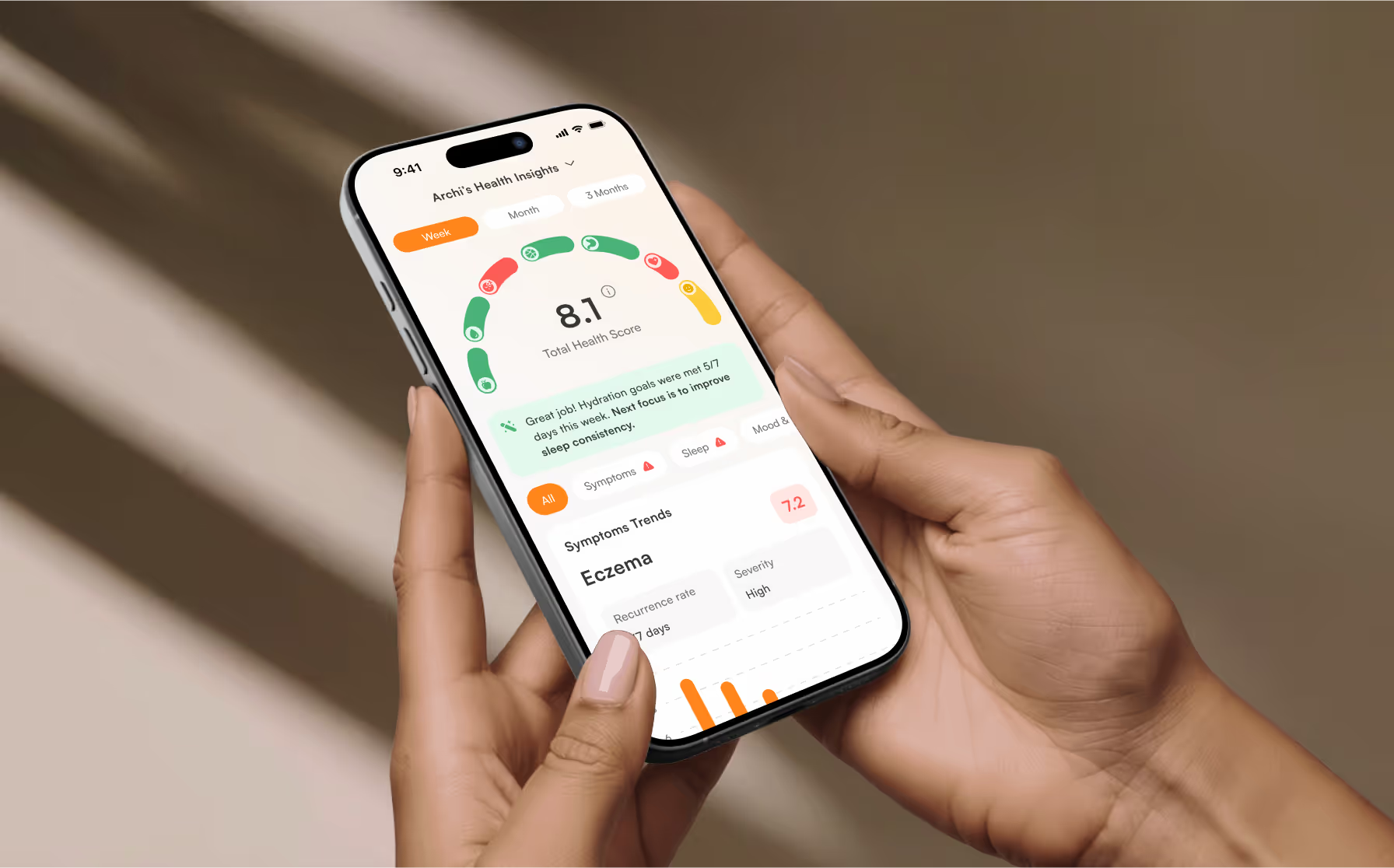
Mobile App Redesign for a Children's Health Tracking App

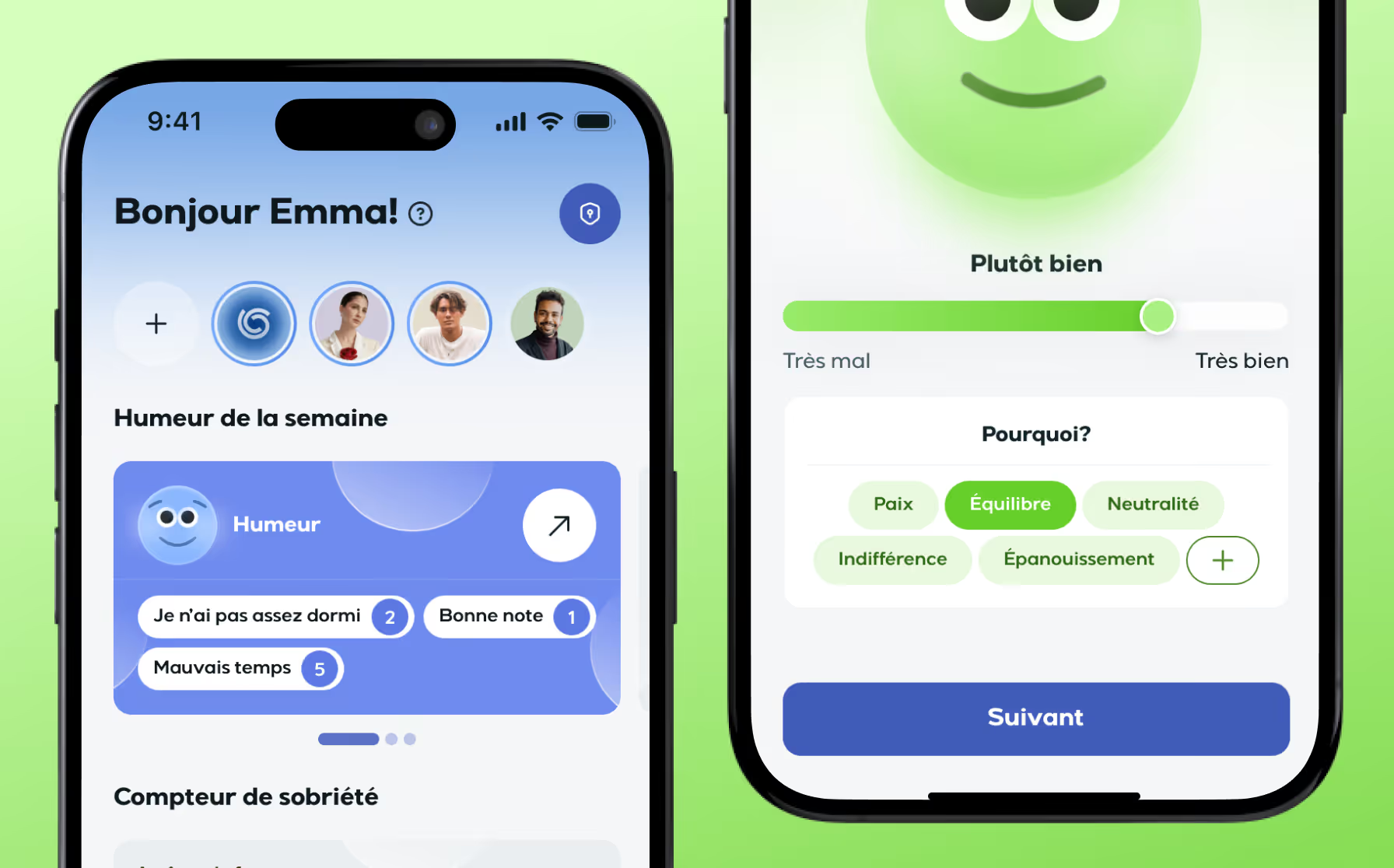
Mental Health App Design: Mobile and Web experience

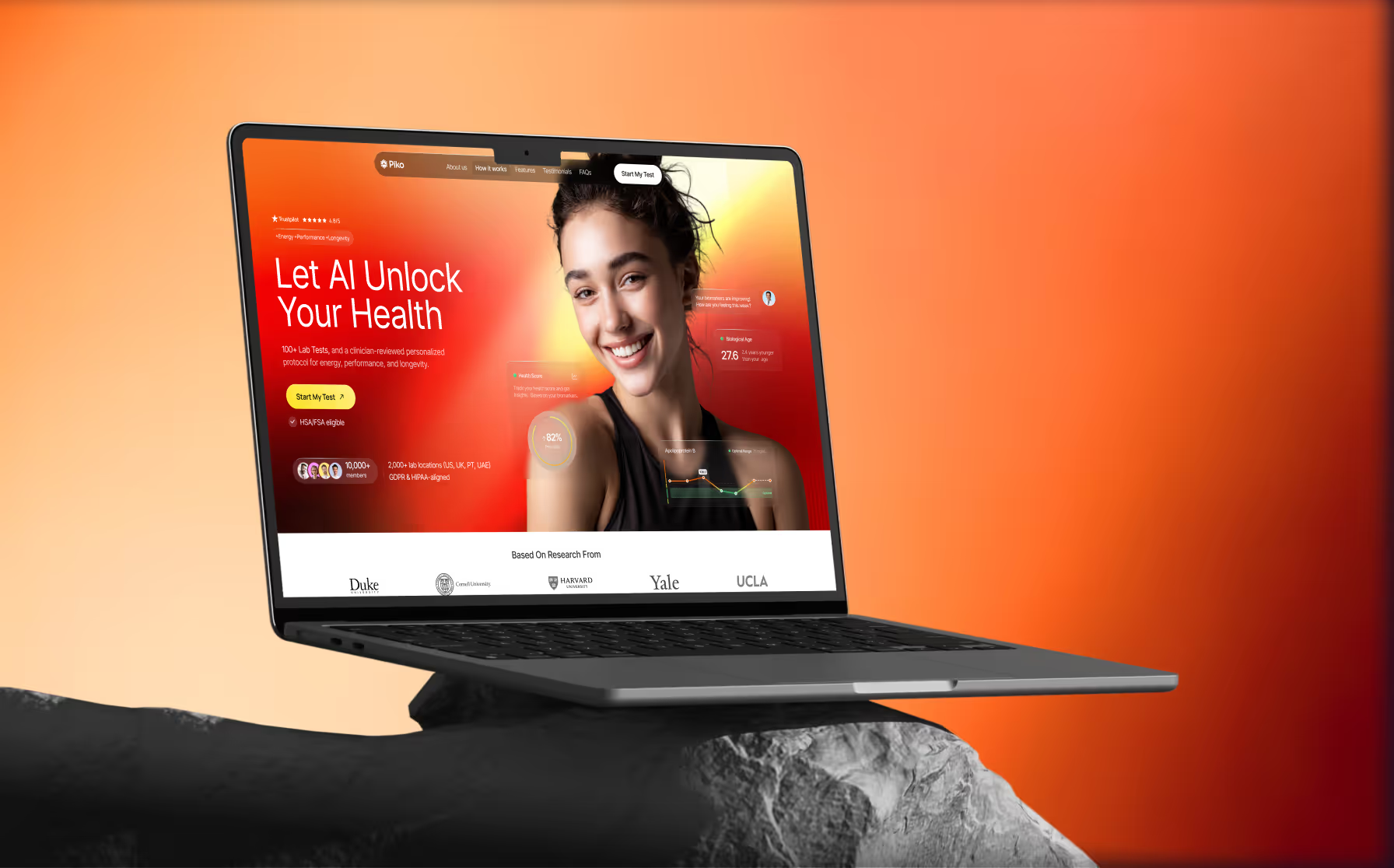
UX and Branding for a Personalized Health and Longevity Platform
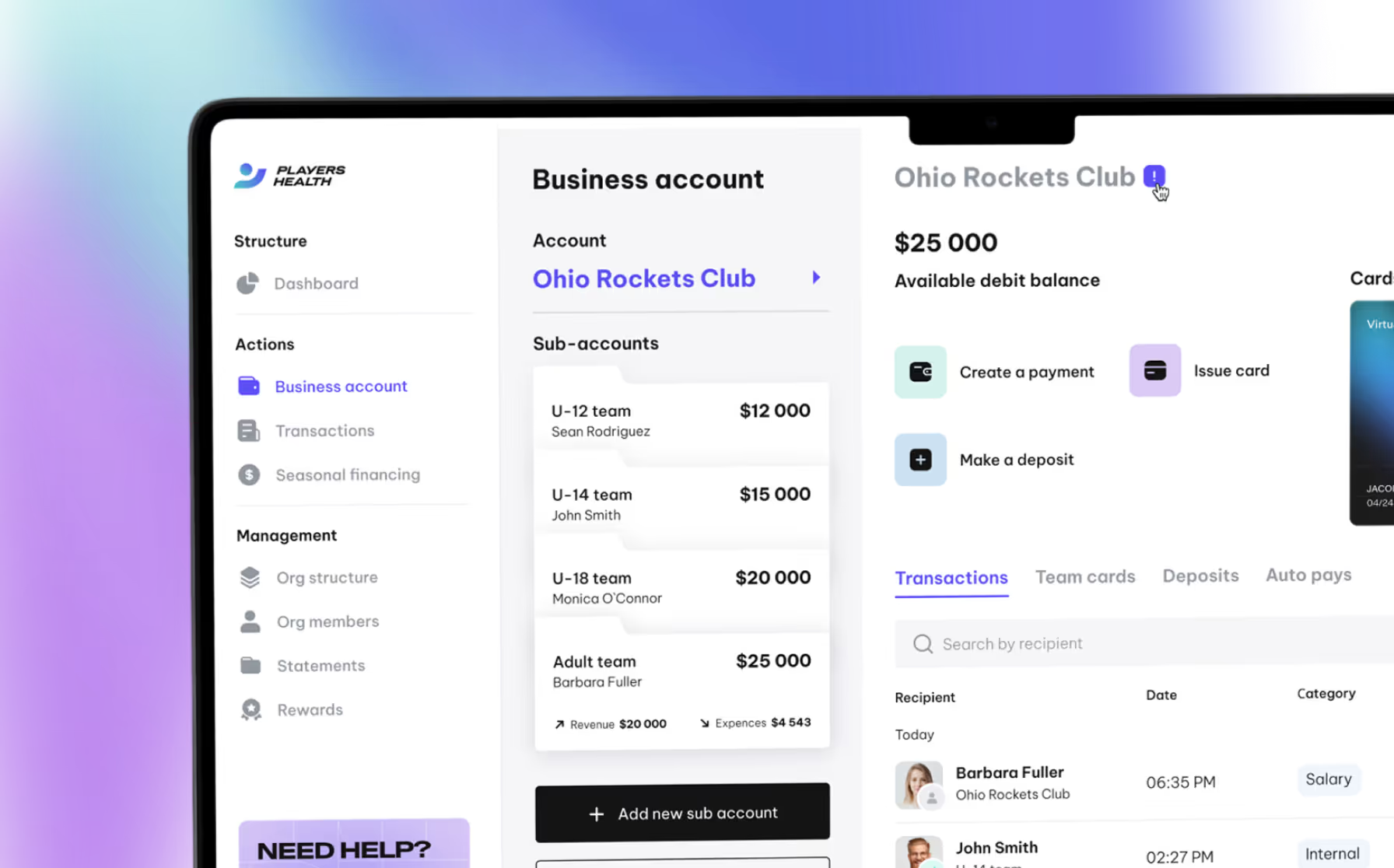
What product leaders say about us


"Arounda produced amazing work and delivered exactly what we imagined, making a successful partnership. The team was responsive and receptive to feedback and implemented it well."
"They were very professional and responsive to our feedback and needs."
"Arounda's efforts have resulted in satisfactory deliverables that meet the client's expectations. The team has managed the project excellently and communicated remarkably via virtual meetings throughout the engagement. Moreover, Arounda's designers have been the project's hallmark."

"Their ability to understand the complexity of our product and business is impressive."

"Their UI/UX design skills were very impressive. Modern, creative, and best in class, plus they were intuitive and 'got what we wanted' without any hand-holding and minimal direction."


"The process was something to be admired, they have a great idea of how to turn an idea into a visual product. They would also immediately make changes to any improvements we mentioned."


"They understood our idea and gave us more feedback than expected. They did more than we asked them to do, which was excellent. Arounda produces excellent quality work."


"I was impressed with the high levels of detail and polish for all the features."

"Arounda excels with meticulous attention to detail, commitment to excellence, and creative problem-solving. Their inventive solutions captivate visually and significantly enhance the user experience."



Our partners who chose structured execution










Why choose Arounda for your healthcare web design & development project








See our design process in action
Three things derail healthcare products: stakeholder misalignment, compliance gaps, and scope drift. Our five-stage process addresses each one, so your product ships on time and passes an audit.

Healthcare products that we can create together

Telehealth Platforms
Patient Portals
Mental Health Apps
Chronic Disease Management
Remote Patient Monitoring (RPM)
Electronic Health Records (EHR/EMR)
Wellness & Fitness
MedTech & Medical Devices
Health Insurance (InsurTech)

How Our Healthcare UX/UI Design Process Works for Your Product

Usability, Accessibility, and Inclusive Design
Every product ships WCAG 2.2 AA-compliant, covering 1 in 4 adults with a disability and protecting you from ADA compliance risk.

Embedded in Your Team From Day One
You get a cross-functional team in your workflows from week one. Full process visibility, direct access, and support that doesn't end at launch.

Healthcare UX Design That Builds Patient Trust
Since 2016, we've paired clinical research with UX that cuts drop-offs at onboarding, intake, and follow-u

Scalable Medical Web Design and Development That Performs
Our medical website design services and healthcare website development services run on enterprise design systems and architectures that scale from MVP to nationwide rollout.



89+ Reviews
on Clutch

Top Rated Plus Agency
on Upwork

Top 50 Trending team
on Dribbble

Projects are Featured on Behance platform

Latest articles on Healthcare Design









FAQ
What does a healthcare website design engagement typically include?
A healthcare website design engagement with Arounda covers four core stages: discovery, design, testing, and development.
- Discovery starts with stakeholder interviews, clinical workflow research, competitor analysis, and compliance scoping. Our medical design agency maps HIPAA, WCAG, and any region-specific requirements (GDPR, FDA, SOC 2) before the wireframing stage.
- Design moves through information architecture, user flows, wireframes, interactive prototypes, and high-fidelity UI built on a scalable design system. We include accessibility checks and responsive layouts for web and mobile.
- Testing sessions depend on your product. It covers usability sessions with patients, clinicians, or admins, as well as QA reviews and iteration cycles before handoff.
- Development includes front-end build, integration support for EHR systems, FHIR/HL7 APIs, payment gateways, or third-party tools.
You will get a documented design system, technical documentation, and a clear post-launch support plan. Every engagement runs with a dedicated PM, designers, and engineers embedded in your workflows. Our team always provides transparent sprints, shared backlog, and direct access throughout.
How do you ensure healthcare web design meets HIPAA and accessibility requirements?
Our healthcare UX/UI design agency incorporates HIPAA compliance and accessibility into our design process.
For HIPAA, we map data flows during discovery. Arounda team identifies every point where protected health information (PHI) enters, moves through, or leaves the product. We design with the technical and administrative safeguards required by the HIPAA Security Rule:
- encrypted data transmission
- role-based access controls
- secure authentication
- audit logging
- session timeout patterns.
Our engineers work with HIPAA-ready infrastructure. We coordinate with your compliance officer or legal team at each milestone.
For accessibility, we design to WCAG 2.2 AA from wireframes onward and cover:
- color contrast
- keyboard navigation
- screen reader compatibility
- focus states, form labeling
- plain-language content
Every release goes through accessibility audits with automated tools and manual testing with assistive technologies. So, you can be sure that your product will meet ADA compliance standards, reduce legal risk, and work for the 1 in 4 adults living with a disability.
How long does it take to design and develop a healthcare website?
A healthcare website typically takes 8 to 16 weeks from kickoff to launch (discovery, design, and development). But it depends on page count, content readiness, and compliance scope. For example, our healthcare UX design agency creates:
- Focused marketing website of a clinic, practice, or MedTech product with up to 10 pages in 8 to 10 weeks.
- A larger corporate or hospital website with 15+ pages, multi-language support, or a provider directory in 12 to 16 weeks.
For websites that require patient login, appointment scheduling, or the collection of protected health information (PHI) via forms, assessing the architecture and security for HIPAA compliance takes 2 to 4 weeks. We conduct an accessibility audit concurrently with quality assurance. As a result, compliance with WCAG standards never becomes an obstacle to launch.
But! Stakeholder approval cycles and content delivery from your team are the two biggest variables that can slow down the delivery process. Our team flags them at the beginning and plans around them.
If you're working against a funding round, regulatory deadline, or rebrand date, we'll scope your timeline and prioritize launch-critical pages first.
Can you redesign an existing medical website without losing SEO rankings?
Yes. The Arounda team redesigns websites with an SEO focus and works closely with your SEO team to maintain your current search engine rankings. We preserve the URL structure wherever possible, set up redirects for any changes, and keep title tags, meta descriptions, heading hierarchies, and Schema markup unchanged on pages that drive traffic.
Our healthcare graphic design agency also protects the design elements that support E-E-A-T signals (author bios, medical reviewer credentials, citation layouts, and trust patterns Google weighs heavily for health content).
Our developers build the new site with clean semantic HTML, fast load times, mobile-first responsive layouts, and structured data.
Every design and development decision on our side protects your existing rankings. But we don't run SEO campaigns or keyword strategy. That stays with your SEO partner, and we coordinate closely with your SEO team throughout the redesign.
Do you design for both patients and medical staff within the same product?
Of course. Our UX design agency for healthcare usually designs for at least two audiences. But often it can be three: patients, clinicians, and administrative staff. We understand that each group uses the product for different reasons, in different environments, with different levels of urgency and technical comfort.
Our process starts with separate user research tracks. We interview:
- patients about clarity, trust, and emotional context
- clinicians and admins about speed, workflow density, and integration with existing tools.
Screens for patients feature simple language, large touch controls, ease of use, and the ability to provide reassurance in stressful situations.
Interfaces for medical staff maximize information density, use key combinations, switch quickly between records, and minimize the number of clicks required for frequently performed tasks.
Admin dashboards concentrate on bulk processes, reporting, and permission control.
We connect these experiences using a shared identity design framework that includes consistent components, tokens, and patterns. Your product will be consistent without compromising any audience. Role-based access, contextual navigation, and clear visual hierarchies help each user focus on what's important to them.
How do you handle sensitive patient data in the design and development process?
Protected health information (PHI) is a key element in Arounda design and development process. During discovery, our healthcare UI design agency maps every place PHI enters, moves through, or exits the product. Then, we design data flows that minimize exposure.
We create mockups and prototypes and conduct usability testing using synthetic or anonymized data. No real patient information is stored in our design tools, on shared drives, or in test environments.
When it comes to development, our engineers use HIPAA-compliant infrastructure, apply data encryption during transmission and storage, configure role-based access control, and integrate audit logs into all points of interaction with patient health information (PHI). We design authentication schemes that meet the criteria of the HIPAA Security Rule.
Before beginning a project, our employees sign non-disclosure agreements and operate in access-controlled environments.
What services do you provide?What healthcare products have you designed, and what results did they deliver?
Since 2016, we've designed and built healthcare personalized health platforms, mental health apps, children's health tracking systems, telehealth ecosystems, fitness platforms, medical aesthetics websites, healthcare fintech solutions, and more.
Some of our clients are Player's Health (US), Lyynk (France), IMed (UAE), Reforge (Australia), Piko Health (Portugal), Health HQ (US), Rydeon (EU), Smoothline (Switzerland), Mine'd (US), and other partnerships.
Results we helped our clients achieve:
- 4.8★ app store rating
- 42% increase in retention
- 3x booking conversion
- 100k+ app downloads during the first month after release
- $34M raised in funding
- 33% reduction in operational cost
- +68% patient onboarding completion
- −47% clinician task time
Explore our cases: arounda.agency/works