UI/UX Design Agency in Los Angeles
Our UI/UX design company in Los Angeles helps growth-stage companies and enterprise teams launch faster, spend less than in-house, and increase engagement, retention, and conversions.

on Clutch
completed in various niches
rating on Clutch



Design Services We Offer in Los Angeles
Arounda product designers craft custom solutions that balance your business value with seamless user experience. Only proven industry methods that work.
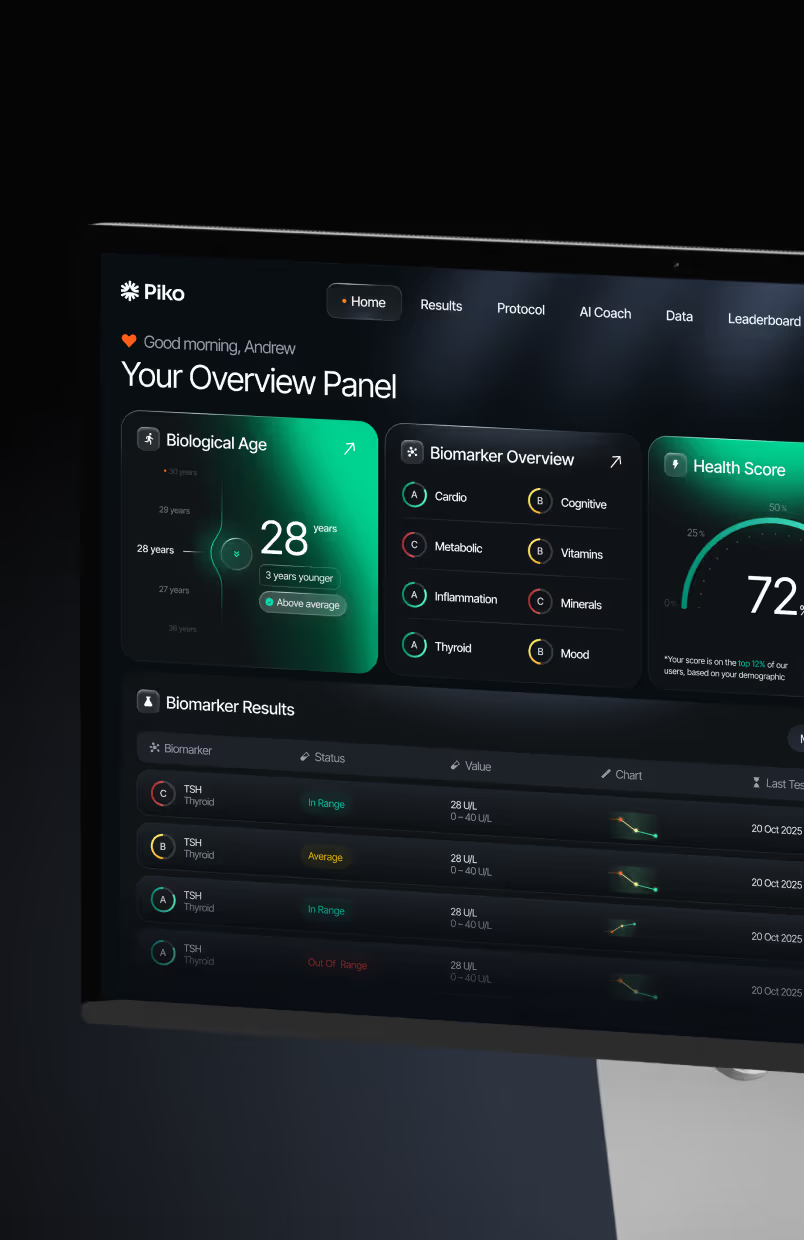
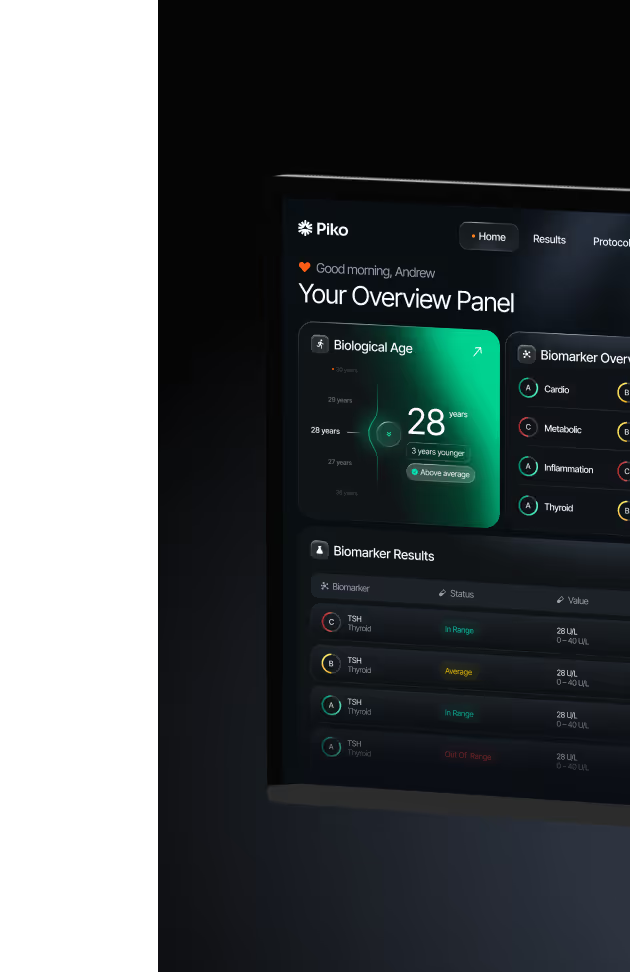
Selected Work for Los Angeles Enterprises
Over 500+ companies have trusted our UI/UX design services. Explore the case studies with our approach and results.

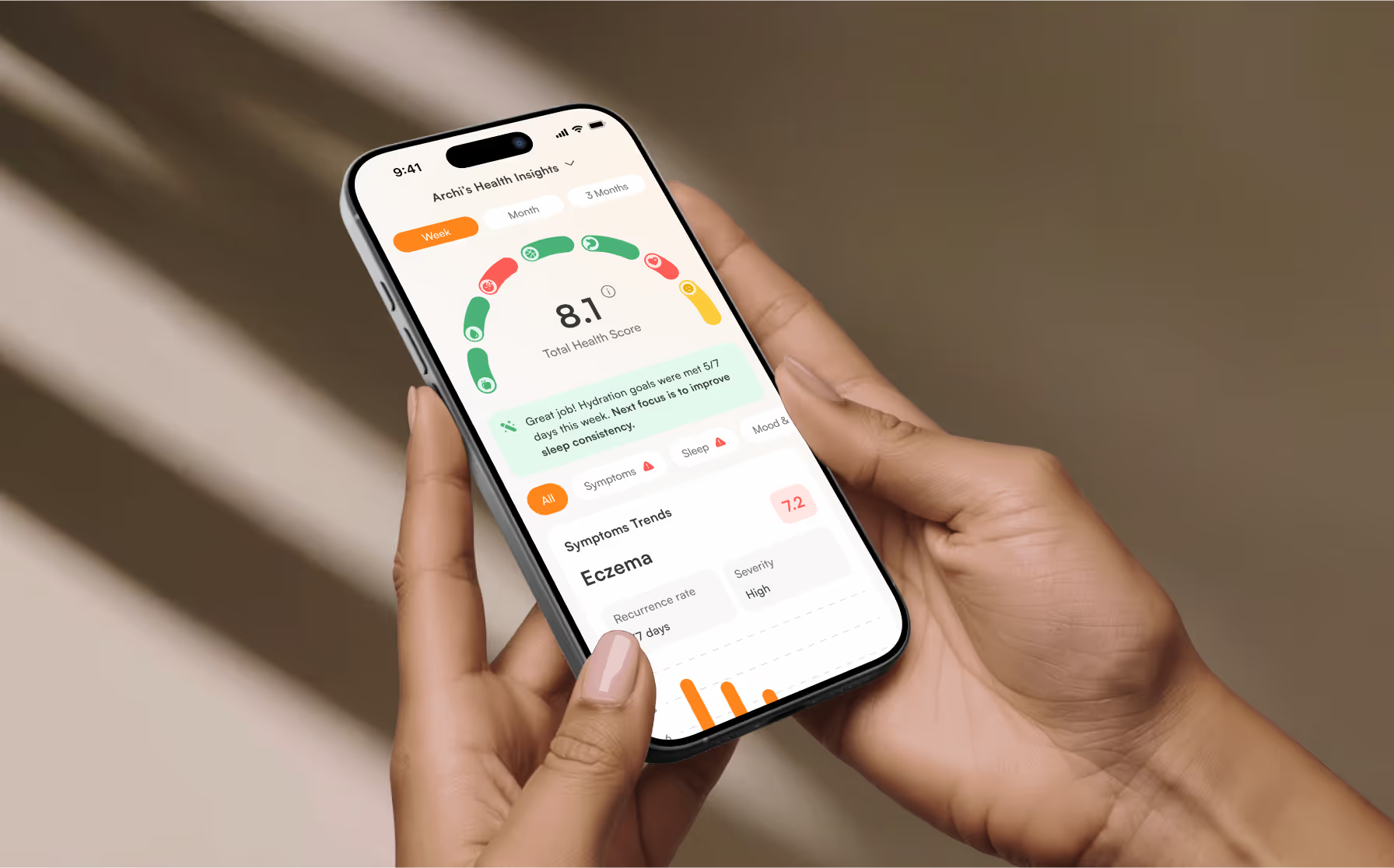
Mobile App Redesign for a Children's Health Tracking App
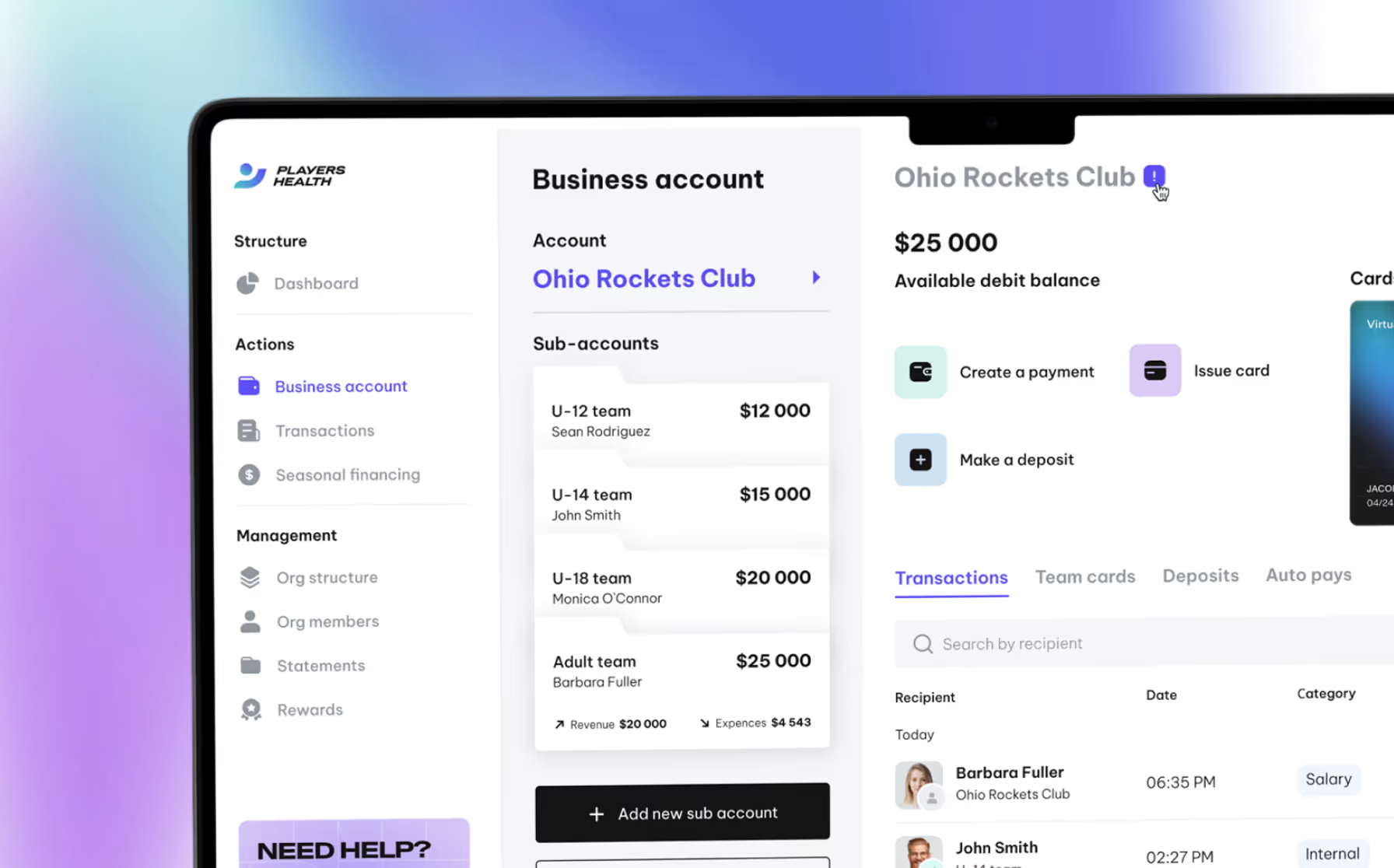
Design Solutions for Athletes' Insurance Platform

Results We've Delivered Across Products
For over 10 years, we have worked to solve your business problems with custom design solutions. Faster launches, measurable conversion lift, lower churn, and retention that compounds month over month.

33%
Lower Operational Costs
Optimized fintech and insurance tools cut manual work for Player's Health, freeing the team to scale without growing headcount.

87%
User Retention Rate
A sharper UX kept Mine'd users coming back, and pulled 25% more users into the upgraded mobile app.
+28%
Conversion Rate Increase
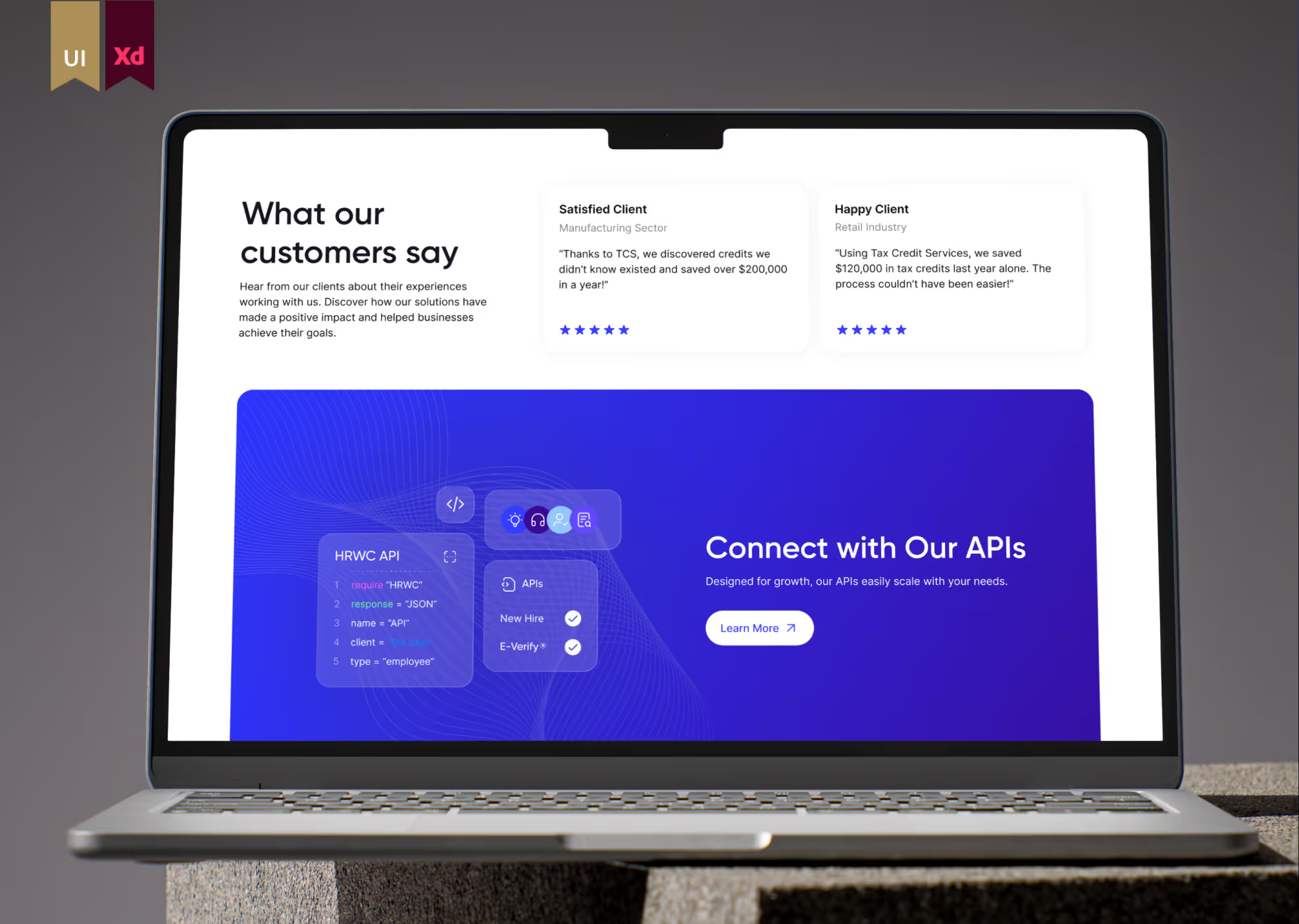
Clear visual storytelling and obvious entry points moved HRWorkCycles' decision-makers from evaluation to adoption faster.



While the growth of our clients is what matters most, it`s nice to get awards


89+ Reviews
on Clutch

Top Rated Plus Agency
on Upwork

Top 50 Trending team
on Dribbble

Projects are Featured on Behance platform

How We Approach Every Project in LA
We run every project on our proven framework with clear stages, defined deliverables, and decisions tied to your business goals and strategy.

What Strong UI/UX Design Does for Your Product

Users Stay Longer and Come Back
You’ll get clear flows and interfaces that cut friction at every step. As a UI/UX design agency LA teams trust, our solutions increase signups, engagement, and revenue without spending more on acquisition.

Satisfaction That Builds Word of Mouth
Products that feel effortless turn users into advocates. They refer peers, leave reviews, and renew without being asked. Our teams create experiences worth recommending, lowering your CAC and compounding growth.

Conversions That Reflect Design Quality
Our focus is on sharp visual hierarchy, clear CTAs, and frictionless flows. We research, architect, and design your product and website to lift signup, trial-to-paid, and revenue per user without inflating ad spend.

Clients recognize many reasons to trust our services





“I was impressed with the high levels of detail and polish for all the features.”

Jimmy Hosang
Founder & CEO

“Their professionalism, dedication, responsiveness, and determination are commendable.”

Emil Ljesnjanin
Founder & CEO

“Their expertise and guidance were instrumental. They demonstrated their commitment to creating a product that resonated with our target audience, which led to improved user satisfaction.”

Aetienne Sardon
Founder, MYSO Finance


“Working with Arounda is really smooth in terms of communication and workflow”

Stephane Heip
CMO, Enzyme

Our partners who chose structured execution



We get things done With Quality

HIPAA compliance and WCAG accessibility

End-to-end product delivery

Enterprise-grade design systems

Retention-focused user flows
Our location
89+ Reviews
on Clutch
Top Rated Plus Agency
on Upwork
Top 50 Trending team
on Dribbble
Projects are Featured on Behance platform
FAQ on UI/UX design services in Los Angeles
What does a UI/UX design company in LA do?
Arounda partners with founders, product teams, and enterprises to turn business ideas into digital products that users adopt and that hit measurable revenue goals. As a UX design agency Los Angeles teams choose for outcomes, Arounda runs every project on a business-driven and user-centered process. We start by analyzing your target audience, business goals, and current product gaps. Then we map user flows directly to your KPIs. For example, onboarding completion, activation, conversion, retention, etc. Every design decision is tied to a number you report on.
Our scope includes:
- UX research, competitor analysis, and user journey mapping
- Information architecture and wireframes
- UI design, design systems, and interactive prototypes
- Branding and product visual identity (when needed)
- Developer handoff or full-cycle development under one roof
Our team of over 55 designers produces transparent daily reports and meets all project milestones. We have launched over 500 products across various industries. Our clients achieved an average 60% increase in conversion rates, a 35% reduction in customer churn, and a 2–3x acceleration in adoption following launch.
How do you measure the success of a design project?
We measure success the same way you measure your business in numbers. Before we build a single page, our experts communicate with your team about business goals and KPIs that are important to you. For example, conversion rate, activation, retention, onboarding completion, support ticket volume, and profit per user. Those metrics become a part of the brief.
Our UX design agency in Los Angeles tracks design impact across three layers:
- Business metrics. Conversion rate growth, registration-to-payment conversion rate, impact on monthly recurring revenue (MRR), customer acquisition cost, and reduction in operating expenses. Our work delivered the following results: a 62% increase in lead-to-call conversion for AdvisorWorld, a 33% reduction in operating costs for Player's Health, and a 28% increase in conversion for HRWorkCycles.
- Product metrics. Feature engagement, retention curves, churn points, session duration, and onboarding completion. For Health HQ, we reduced onboarding churn by 31% and increased session duration by 34%.
- User metrics. Satisfaction scores, NPS, task success rate, and qualitative feedback from usability testing. HRWorkCycles hit a 91% user satisfaction score after our redesign.
Throughout the project, you will have complete transparency with daily reporting, time tracking, access to working files, and regular checkpoints where we will analyze progress against the KPIs we have set. After launch, we recommend a 90-day measurement window to collect relevant behavioral data.
What is your approach to product redesign for established companies?
Redesigning an existing product differs from designing from scratch because existing users, live income, technical debt, and team practices must all be considered.
As a UX design company Los Angeles businesses trust for redesigns, Arounda runs a four-phase process that protects existing performance.
- Audit and discovery. We start with a deep UX audit of your current product. Our team uses heuristic evaluation, analytics review, funnel analysis, and user interviews. Our goal is to identify the source of your problem. It can be drop-off points, friction in core flows, or confusing IA. We also align with stakeholders on business goals, technical constraints, and non-negotiables.
- Strategy and prioritization. Not every screen needs to be changed. Our experts analyze the results based on their impact on the business and update only what affects your key performance indicators (KPIs). This allows us to meet tight deadlines and ensures a return on investment (ROI).
- Design and validation. We create prototypes and test every major modification with real users before beginning development to avoid costly surprises after launch.
- Phased deployment and measurement. We advocate a staged launch so that you can assess the impact and reverse any changes that do not meet expectations. Following launch, we monitor the KPIs we created during the analysis and improve any weak points.
One of our project’s results from this approach is HRWorkCycles. Our team unified three fragmented products into one ecosystem and lifted conversion 28%.
A redesign should pay for itself in the first quarter. That's the standard we design to.
How do you handle design decisions when stakeholders disagree?
We understand that founders, product managers, engineers, marketing, and sales see the product from different angles. And each angle is valid. Our job isn't to pick sides. It's to bring the discussion back to data and business goals so the decision becomes obvious.
This is how we manage this task:
- Connect each choice to the KPI it affects. When perspectives differ on a flow, button placement, or feature priority, we change the question to "Which option moves activation or retention more?"
- Bring user evidence. To avoid bias and preferences, we use usability testing, user interviews, analytics, and heuristic data.
- Use prototypes. Static mockups encourage disagreements. Interactive prototypes allow stakeholders to experience the alternative before making a decision, which typically alters the discourse from "I don't like it" to "this flow feels heavier than that one."
- Clarify the trade-offs. Every important decision comes with a document that explains what we decided, why, and which measure it serves. This facilitates alignment and avoids the "why did we do this again?" discussion three months later.
- Determine who will make the final decision before starting our work. When consensus is not feasible, we agree on who will make the final decision during kickoff. It is typically the founder, product lead, or steering committee.
During our ten years of working with SMEs and organizations, our UI UX design company in Los Angeles discovered that 90% of stakeholder issues are resolved once the conversation turns from taste to outcomes. For the remaining 10%, a clear decision-making process and shipped MVP data will resolve the issue faster than another meeting.
What does the onboarding process look like when starting a new project in Los Angeles?
As a UX design firm Los Angeles teams choose for fast and predictable starts. Here's how the process starts:
- Kickoff call and discovery brief. A 60 minute working session with your team. We align on business goals, target users, KPIs, scope, timeline, success metrics, and decision-makers. You receive a written project brief that captures every agreement.
- Access, team, and tooling setup. We onboard a dedicated team and set up shared workspaces in Figma, Slack, Notion, or your preferred tools. You get direct access to our designers.
- Materials review and research kickoff. We dig into everything relevant: existing product, analytics, user feedback, brand guidelines, competitor landscape, and prior research. If you don't have it, we run the research ourselves. It included user interviews, heuristic audit, and competitor analysis within the first week.
- First deliverables and rhythm established. By the end of the second week, you'll see the first results (user flows, sitemap, wireframe drafts, or audit findings). Weekly demos, daily Slack updates, and time-tracked reports will become the standard from now on.
One more advantage: a free 3-day trial. Before signing anything, you can work directly with one of our designers on a real task to test fit, communication, and quality. If it doesn't click, you walk away with no obligation.
How do you ensure design consistency across platforms and touchpoints?
A robust design system is the most cost-effective approach to keep a growing product looking and feeling like a single entity. We provide standardization throughout the web, mobile, and other consumer touchpoints:
- Every project employs a scalable design system that includes color tokens, typography, space, grid logic, components, states, and interaction patterns. We document the system, including usage recommendations, do's and don'ts, and component variations.
- We use reusable components such as buttons, forms, cards, modals, and navigation patterns. When you deploy a new feature later, your team adds to existing components instead of recreating them. This decreases design time per feature by 40-60% while keeping the product visually consistent.
- Cross-platform logic. Web and mobile require a consistent brand and behavior, but not identical layouts. We design platform-specific rules so that each environment feels natural but still recognizable as the same product.
- Brand and product alignment. Marketing websites, apps, dashboards, emails, and onboarding funnels frequently diverge because they are owned by various teams. We link the UI design system with brand guidelines to support the same identity for each touchpoint.
- Governance after launch. We deliver documentation, contribution rules, and training for your in-house team, or stay on as a long-term design partner to keep the system updated as the product evolves.
What engagement model works best for long-term product teams?
For UI UX design services in Los Angeles teams need on an ongoing basis, we offer two engagement models:
- Dedicated design team (most common for product teams). A fixed monthly engagement with assigned designers embedded into your sprints. They join your standups, plan with your PMs, and ship alongside engineering.
- Team extension (best for existing in-house teams). We slot one or more senior designers into your team to fill specific gaps. For example, UX research, design systems, mobile, or specialized industry work. You manage them directly through your existing workflow.
The best model depends on your in-house team size, release velocity, and how design-mature your organization is.
What makes long-term partnerships work, regardless of model:
- Direct designer access.
- Transparent process.
- Flexible scaling.
- Institutional knowledge stays with you.
100+ clients have worked with us across multiple years and product stages. From MVP to scale to enterprise expansion. The engagement evolves as the product does.
How do you collaborate with in-house design or development teams?
As a UX UI design agency Los Angeles product teams partner with, here's how we work alongside in-house teams in practice:
- We adopt your tools and rituals. Figma, Slack, Notion, Jira, Linear, GitHub, whatever your team uses, we use. We join your standups, sprint planning, retros, and design reviews to avoid parallel processes and duplicate meetings.
- Before the start, we map out who owns what. Your in-house lead designer remains the decision-maker. We handle execution, specialized work, and capacity overflows.
- Your designers collaborate directly with ours using shared files. We adhere to your name conventions, component structure, and design system rules. If you don't have a system currently, we'll create one that your team can own and expand.
- Tight loop with engineering. Our designers work in dev-ready files and join engineering syncs, walk through builds, and review front-end implementation. We also offer a full delivery cycle (design + development).
- We document design rationale, research findings, system guidelines, and component logic. Your team can pick up any file six months later and know exactly what's going on.
- Arounda works across time zones with most US clients. Daily written updates, recorded Loom walkthroughs, and clearly tagged Figma comments mean your team isn't blocked waiting for a meeting.