UI/UX Design Agency in San Francisco
Our UI/UX design company in San Francisco assists mid-market businesses and enterprises in designing products people adopt faster, use regularly, and trust from the start.
on Clutch
completed in various niches
rating on Clutch



Design Services We Offer in San Francisco
From enterprise MVPs to product redesigns, we create digital experiences that solve business challenges. Built on patterns proven across complex products.
Selected Work for San Francisco Enterprises
Over 500 companies have trusted our UI/UX design agency San Francisco team. Explore the case studies behind these results.

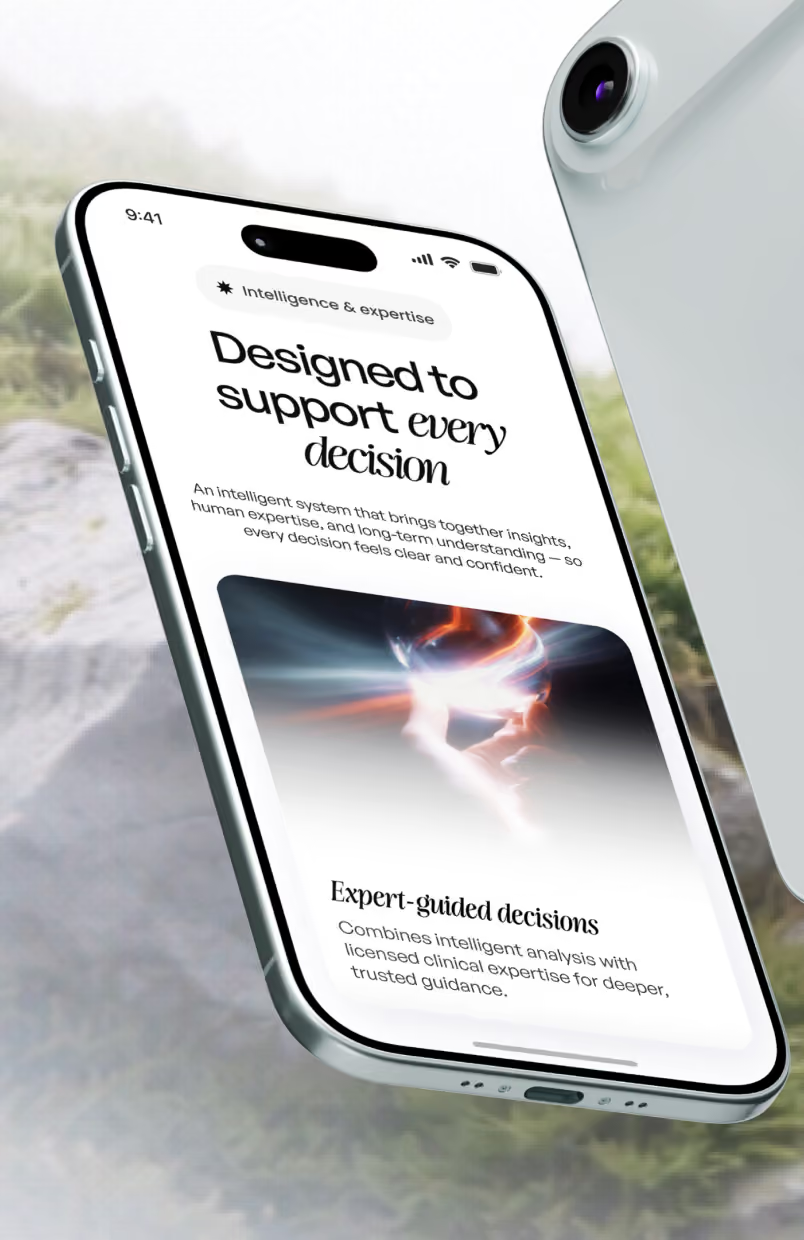
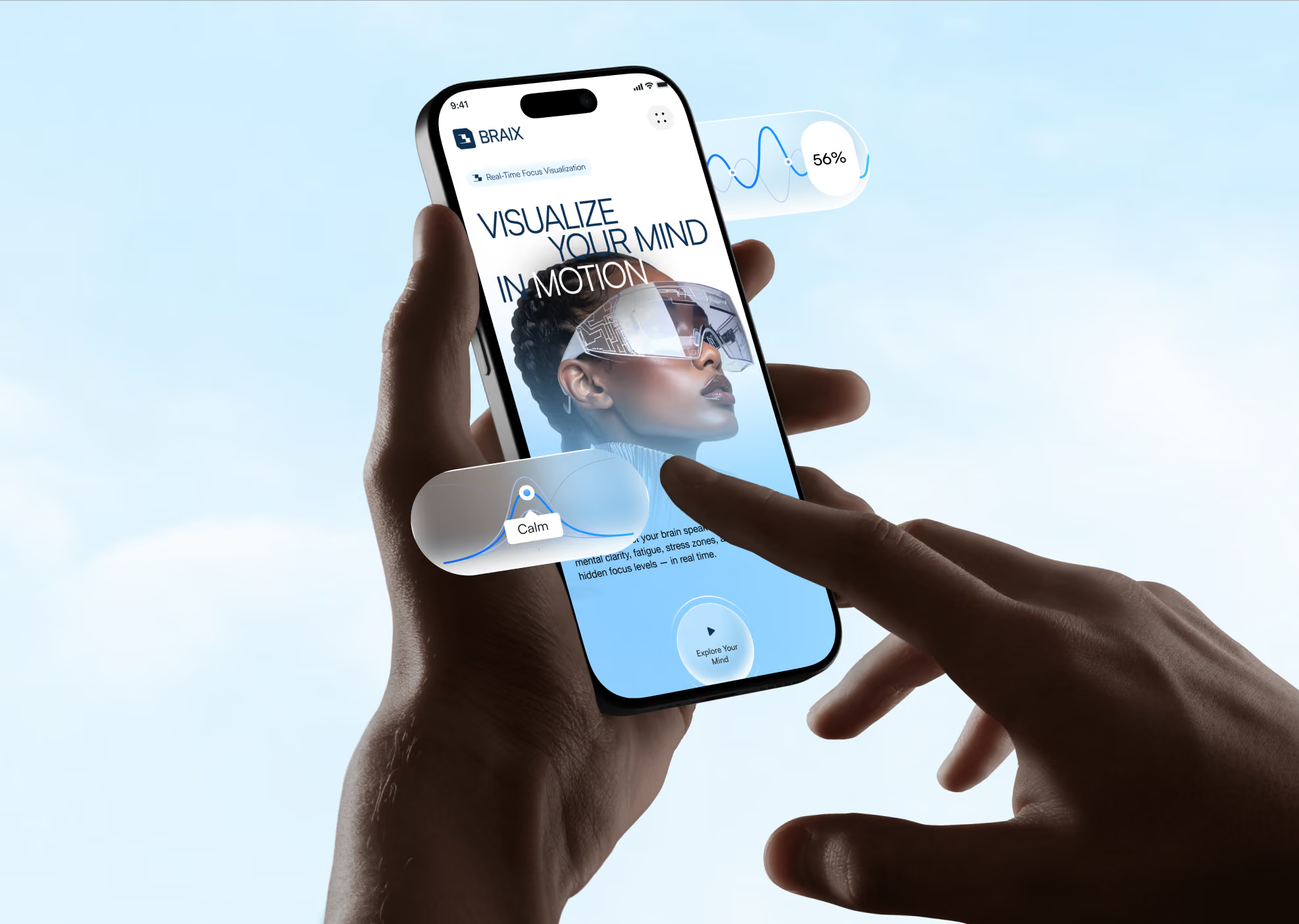
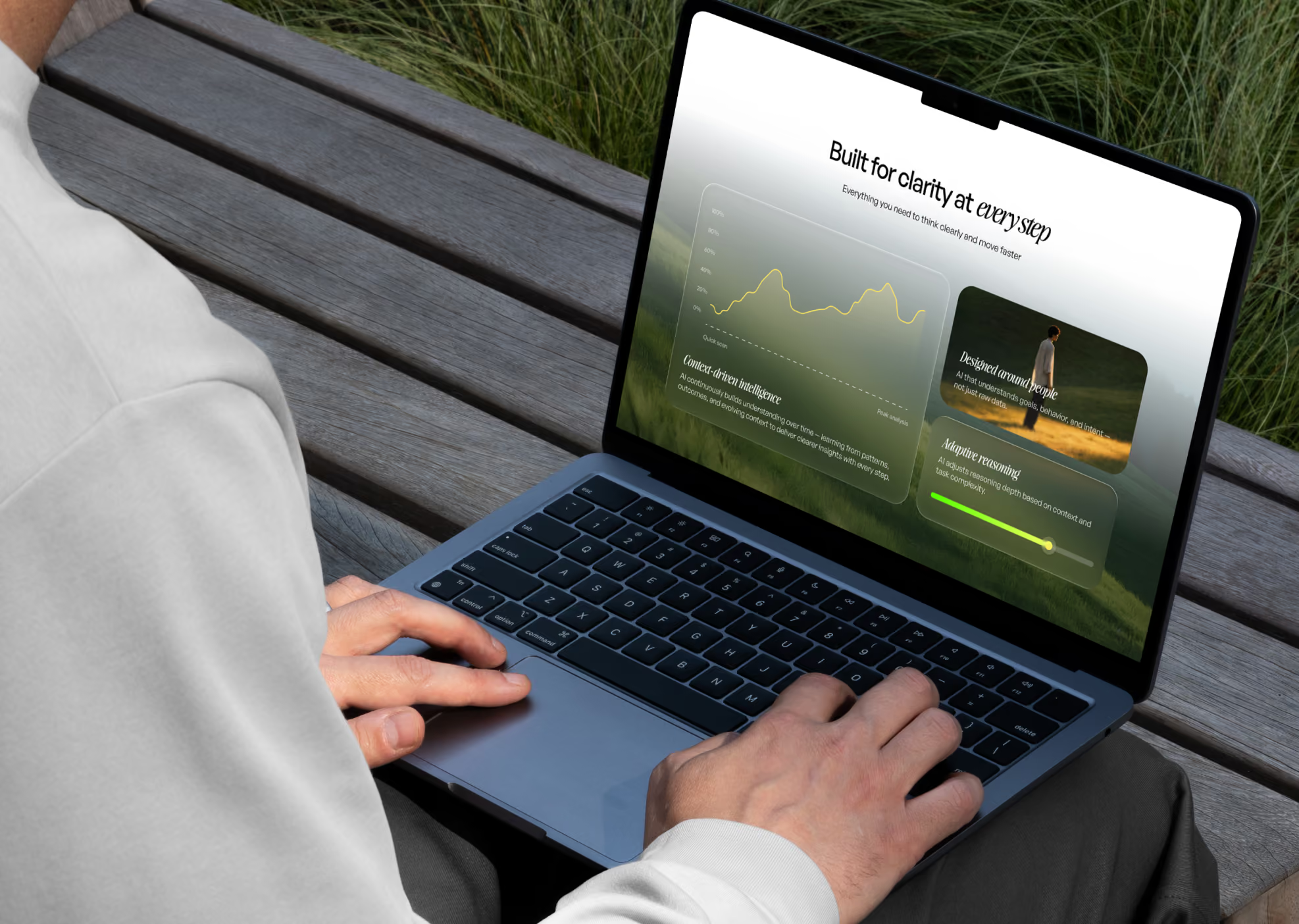
Website Design for an AI Neurotechnology Platform
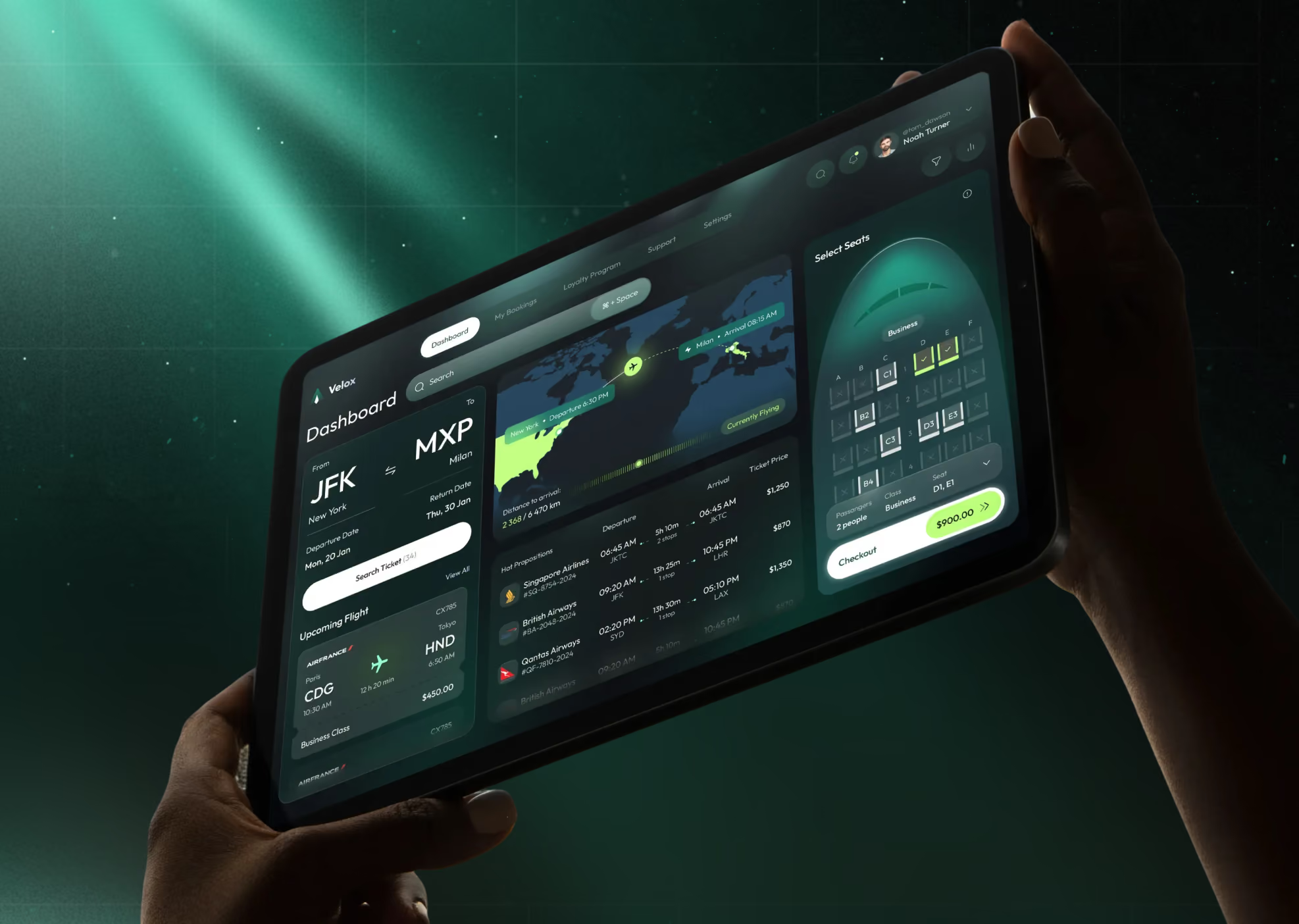
UI/UX Design for an Airline Booking Platform

Results We've Delivered Across Products
For 10+ years, we have helped companies identify and solve product experience issues that slow growth. Our design decisions support stronger adoption, higher conversion rates, and long-term customer retention.

33%
Lower Operational Costs
Optimized fintech and insurance tools cut manual work for Player's Health, freeing the team to scale without growing headcount.

87%
User Retention Rate
A sharper UX kept Mine'd users coming back, and pulled 25% more users into the upgraded mobile app.

+28%
Conversion Rate Increase
Clear visual storytelling and obvious entry points moved HRWorkCycles' decision-makers from evaluation to adoption faster.



While the growth of our clients is what matters most, it`s nice to get awards




89+ Reviews
on Clutch

Top Rated Plus Agency
on Upwork

Top 50 Trending team
on Dribbble

Projects are Featured on Behance platform

How We Approach Every Project in San Francisco
Each stage answers a specific product question before we move forward. Every deliverable and decision stays connected to your goals, priorities, and user needs.

What Strong UI/UX Design Does for Your Product

Users reach value faster
Well-structured user flows reduce unnecessary steps and help people complete key actions sooner. Faster progress makes people more interested and more likely to use the product again.

Experiences people choose to return to
When products help people accomplish their goals effortlessly, they gain loyalty. With well-planned UX, consumers are more likely to trust the brand, which in turn boosts repeat use and loyalty.

Conversions built into the user flow
We strategically place CTAs in areas where users have all the necessary information to take action. Without rushing users through the process or confusing them, price cues, evidence blocks, and obvious next steps keep their attention focused.

Clients recognize many reasons to trust our services





“I was impressed with the high levels of detail and polish for all the features.”

Jimmy Hosang
Founder & CEO

“Their professionalism, dedication, responsiveness, and determination are commendable.”

Emil Ljesnjanin
Founder & CEO

“Their expertise and guidance were instrumental. They demonstrated their commitment to creating a product that resonated with our target audience, which led to improved user satisfaction.”

Aetienne Sardon
Founder, MYSO Finance


“Working with Arounda is really smooth in terms of communication and workflow”

Stephane Heip
CMO, Enzyme

Our partners who chose structured execution



We get things done With Quality

HIPAA compliance and WCAG accessibility

End-to-end product delivery

Enterprise-grade design systems

Retention-focused user flows
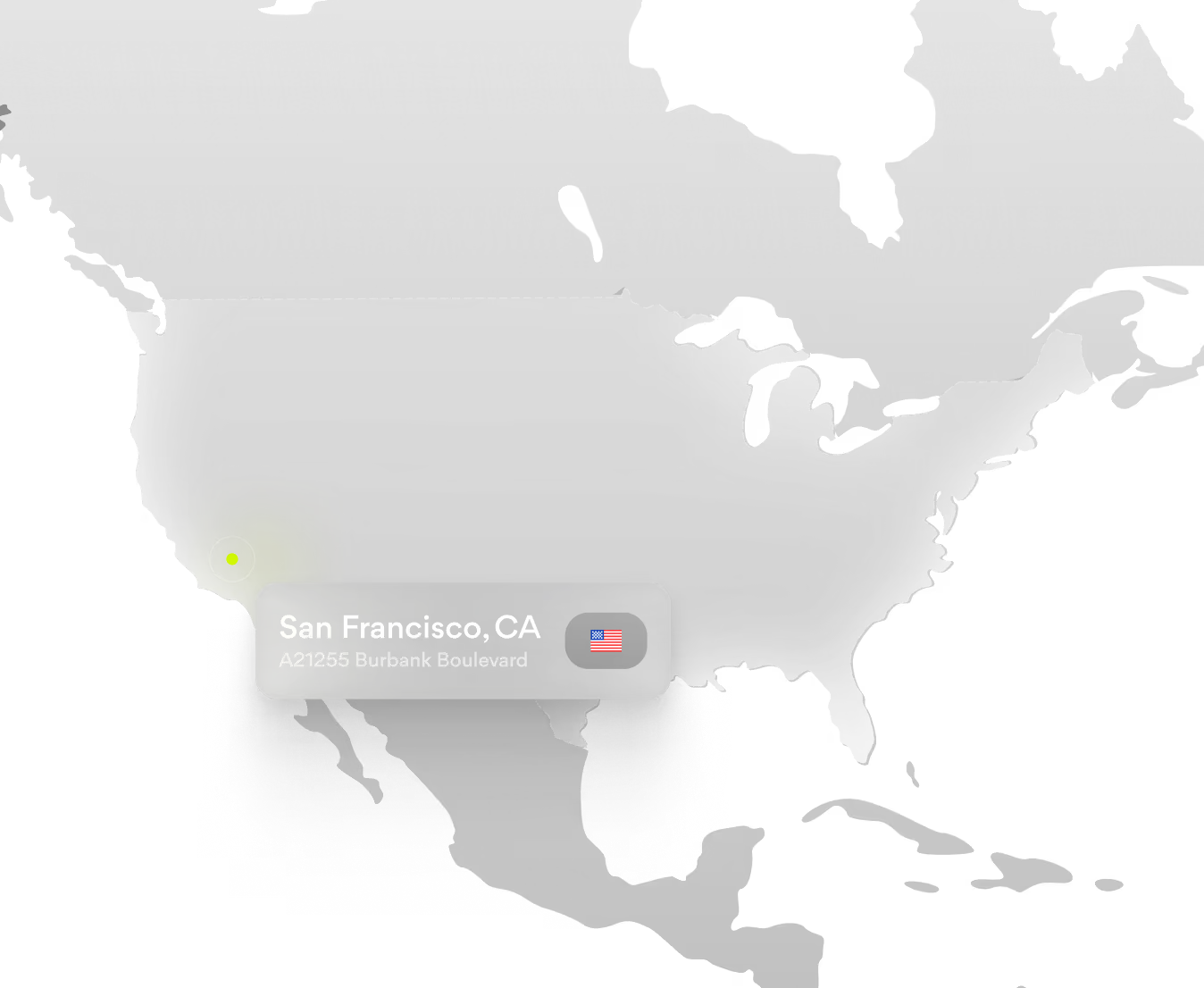
Our location
89+ Reviews
on Clutch
Top Rated Plus Agency
on Upwork
Top 50 Trending team
on Dribbble
Projects are Featured on Behance platform
FAQ on UI/UX design services in San Francisco
What does a UI/UX design company in San Francisco do?
When companies search for a UX design agency San Francisco teams can rely on, they usually need a strategy behind the interface. Arounda helps shape product ideas, existing platforms, and new features into experiences people can use with confidence.
Our team works with SaaS, AI, fintech, healthcare, and other industries where design affects how users make decisions. We study the product logic, define priority flows, and turn unclear journeys into structured screens that support business goals.
Arounda supports clients with:
- UX research and product audits
- User journey mapping
- Information architecture
- Wireframes and interactive prototypes
- UI design for web and mobile products
- Design systems and component libraries
- Developer handoff and implementation support
Our 55+ designers have delivered 500+ products across multiple industries. This experience helps us recognize patterns quickly, prioritize the right improvements, and connect design work with business objectives.
How do you measure the success of a design project?
For us, success starts with defining what the product needs to achieve before design work begins. As a UX design agency in San Francisco, Arounda works with clients to establish performance indicators tied to business goals, product usage, and user behavior. Those benchmarks become part of the project roadmap and guide design decisions throughout the engagement.
We typically evaluate results across three areas:
- Business performance - conversion rates, acquisition efficiency, operational costs, and revenue-related metrics
- Product performance - adoption, onboarding progress, feature usage, and task completion
- User experience - satisfaction scores, usability testing results, and behavioral feedback
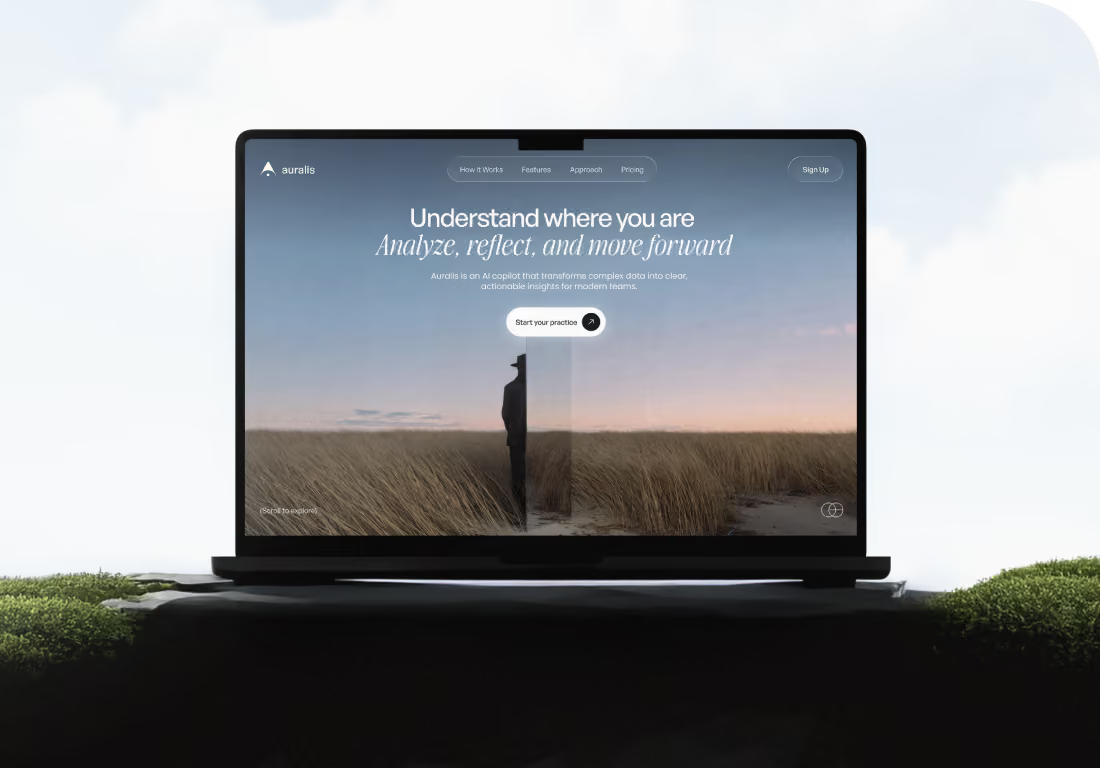
Recent project outcomes demonstrate how this approach works in practice. BRAIX achieved a 93% product comprehension rate and reduced bounce rates by 42% through clearer product communication. Velox reached a 94% task completion rate while keeping booking errors below 3%. Auralis increased work speed by 81%, improved feature engagement by 45%, and raised user confidence in AI recommendations by 87%.
These numbers come from various product situations, so we never use a single standard model for success. In order to determine if design improvements assisted users in completing the right tasks with less effort, our team sets KPIs based on the product's role, user journey, and business priority.
What is your approach to product redesign for established companies?
When teams disregard what really drives company performance in favor of focusing on screens, redesign attempts almost always fail. Arounda starts from a different point. A product's adoption, conversion, trust, and operational efficiency can be improved by focusing on the areas that have the most impact on these metrics.
As a UX design company San Francisco organizations work with on mature products, we rarely recommend changing everything at once. Existing products already contain valuable user behavior data. Analytics, stakeholder interviews, support requests, and user feedback often reveal which workflows deserve attention first.
Our redesign work typically focuses on:
- Navigation and information structure
- Onboarding and activation journeys
- Conversion-critical pages and user flows
- Design systems that support future scaling
- Areas with high drop-off rates or usability issues
AdvisorWorld is one example. The platform had strong market recognition, but its website no longer reflected the quality of the service. Our team reworked the information hierarchy, clarified service positioning, and strengthened conversion paths throughout the experience. The redesign increased lead conversion by 62%. Visitors spent twice as much time on the website. Brand trust perception improved by 45%, while onboarding time dropped by 35%.
Successful redesigns come from understanding which parts of the experience create measurable business impact. Visual updates follow that strategy, not the other way around.
How do you handle design decisions when stakeholders disagree?
As a UX design firm San Francisco companies trust with complex digital products, Arounda creates alignment around a shared objective before discussing solutions. We start by defining what the team wants to achieve and which metrics will indicate success. This creates a common reference point for future decisions.
Several tools help us reach agreement faster:
- User interviews and testing of usability
- Product analytics and user behavior
- Interactive prototypes for evaluating alternatives
- Workshops with stakeholders from different departments
- Documentation that records decisions and their rationale
Prototypes are especially useful. When teams see a workflow in action, they usually respond differently than when they see a static screen. Participants assess the solution's performance rather than their personal preferences, leading to a more practical discussion.
Our designers facilitate these conversations throughout the project. The goal is not to eliminate different viewpoints. The goal is to turn those viewpoints into better decisions. Across 500+ delivered products, we have found that alignment happens much faster when conversations focus on user outcomes, business priorities, and evidence collected from the product itself.
What does the onboarding process look like when starting a new project in San Francisco?
In the first focused discovery session of onboarding, we will establish common ground regarding objectives, scope, timeframe, decision-makers, and anticipated results. For companies looking for UI UX design services in San Francisco, this helps turn an early request into a clear working plan.
Then we set up the project environment:
- Dedicated design team and project manager
- Shared Figma workspace
- Slack, Notion, or preferred tools
- Access to existing product materials
- Reporting rhythm and review schedule
Analytics, user reviews, company needs, brand standards, and prior studies are all part of what our team looks at. We do UX audits, competitor analysis, or user interviews prior to beginning design work when necessary context is lacking.
First deliverables usually appear within 1-2 weeks. Depending on the project, you may receive user flows, sitemap updates, wireframe drafts, audit findings, or early interface concepts.Clients can also start with a free 3-day trial to test our communication, design quality, and approach on a real task.
How do you ensure design consistency across platforms and touchpoints?
Teams lose consistency when product, marketing, and development work from separate rules. Arounda prevents this by creating one design logic for the entire product ecosystem.As a UX UI design agency San Francisco teams bring into growing products, we connect web apps, mobile screens, dashboards, websites, and onboarding flows through shared components and documented usage rules.
Our team defines:
- Core UI components
- Layout and spacing logic
- Typography and color rules
- Interaction states
- Responsive behavior
- Handoff notes for developers
We also integrate product UI with brand standards to ensure that marketing pages and product screens don't appear to have been created by separate entities. When multiple teams work on the same product simultaneously, this becomes important.
Your team will get well-structured Figma files, component documentation, and update guidelines after delivery. In order to discover errors before they reach users, our designers can also participate in implementation reviews.
What engagement model works best for long-term product teams?
The best engagement model depends on where the product stands today and what the team needs next. Some companies require ongoing design support across multiple releases. Others need experienced specialists who can strengthen an existing team during a period of growth.
We typically work in two ways:
- Dedicated Design Team - designers become part of your delivery process and collaborate with product managers and engineers on a daily basis.
- Team Extension - senior specialists join your internal team to support specific initiatives such as UX research, mobile design, design systems, or product optimization.
Strong long-term partnerships usually have several things in common:
- Direct Access to Designers
- Clear Priorities for Every Sprint
- Fast Communication Between Teams
- Documented Design Decisions
- Flexible Resource Planning
Many companies continue working with the same design partner for years because product knowledge compounds over time. Designers gain a deeper understanding of customer behavior, business goals, and platform constraints. Teams spend less time transferring context and more time improving the product itself.
Our designers have supported products through launches, expansion phases, major redesigns, and new market entries. The engagement model can change as priorities evolve, but continuity often creates the greatest long-term value.
How do you collaborate with in-house design or development teams?
Most companies already have established processes before we join the project. Our role is to strengthen the team without disrupting the way work gets delivered.
What we do first:
- Define ownership and decision-makers
- Go over the current processes and methods of communication
- Audit design files and documentation
- Understand development processes and release cycles
- Identify gaps where additional support is needed
How we work with in-house designers:
- Stick to the guidelines set out by the current design system
- Integrate preexisting Figma libraries and component structures
- Directly participate in ongoing product initiatives
- Help with product design, UX research, or other specific jobs
- Document decisions so knowledge stays inside the company
How we work with engineering teams:
- Prepare dev-ready design files
- Specify the interaction in great detail.
- Analyze the execution of the development process
- Leave comments directly in builds when needed
- Take part in review sessions and engineering syncs
How communication stays efficient:
- Direct access to designers
- Daily or weekly progress updates
- Recorded Loom walkthroughs for async collaboration
- Transparent task tracking
- Shared project documentation
Arounda has earned the trust of 100+ clients across all stages of product design and development by maintaining an open, realistic, and results-oriented approach to our work.