HR Tech Design Services
Our HR tech product design services replace fragmented recruiting, payroll, and performance modules with one consistent product your HR teams will learn once and use for years.

“Arounda produced amazing work and delivered exactly what we imagined, making a successful partnership. ”



“They were very professional and responsive to our feedback and needs.”

“Their ability to understand the complexity of our product and business is impressive.”

“Arounda has excellent designers. The team has managed the project excellently and communicated remarkably. ”




Arounda is your trusted partner for HR Tech product design
{1}
Design for GDPR, SOC 2, and multi-country payroll compliance
{2}
Role-based UX and multi-country design
{3}
Integration-ready UI
{4}
Onboarding UX that cuts support tickets
{5}
Error-proof payroll flows
91%


User satisfaction score
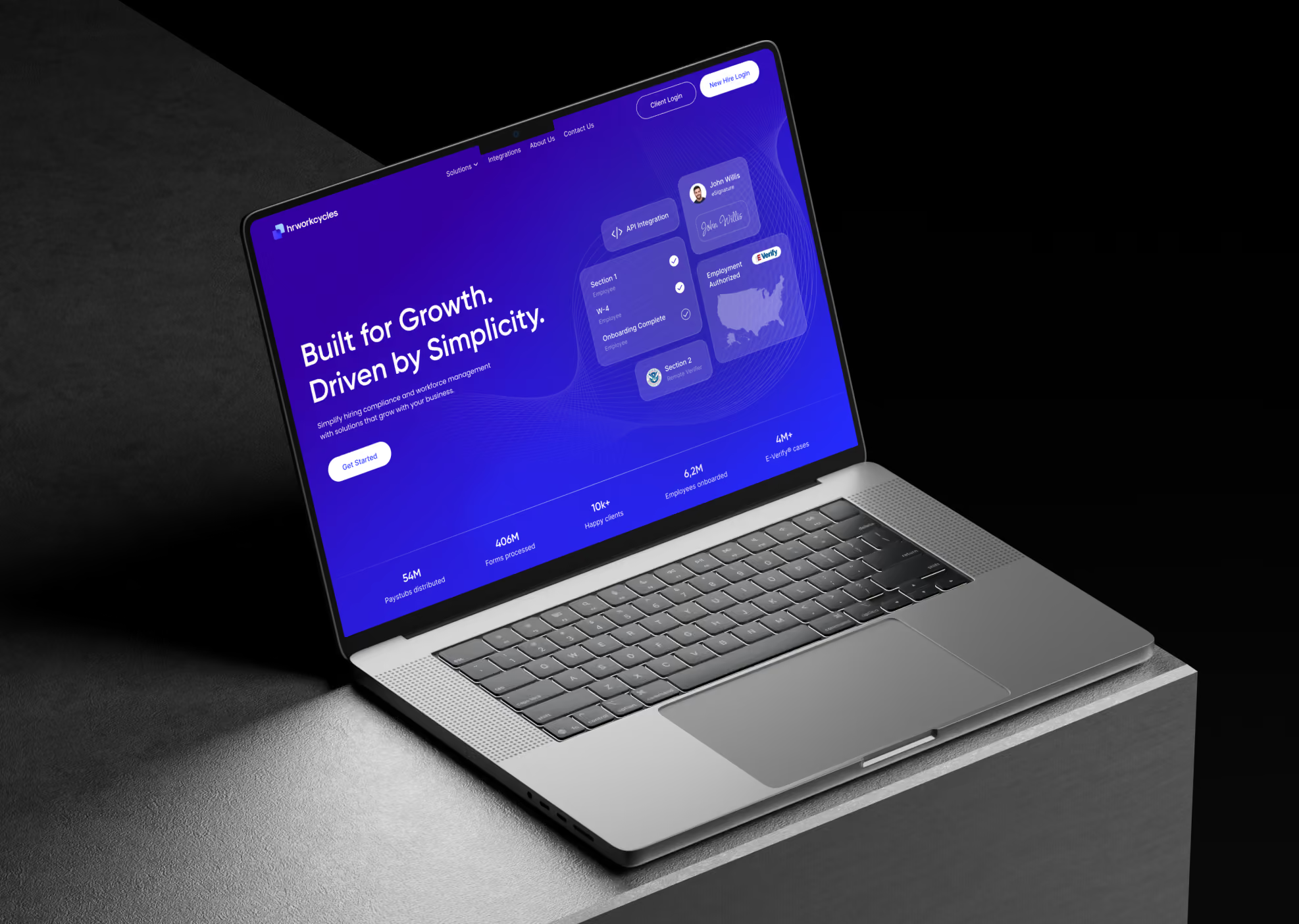
Our HR management system design replaced three separate HRWorkCycles tools with one shared brand and design system, earning a 91% score for clarity and ease of use.
x35



Improved customer reach
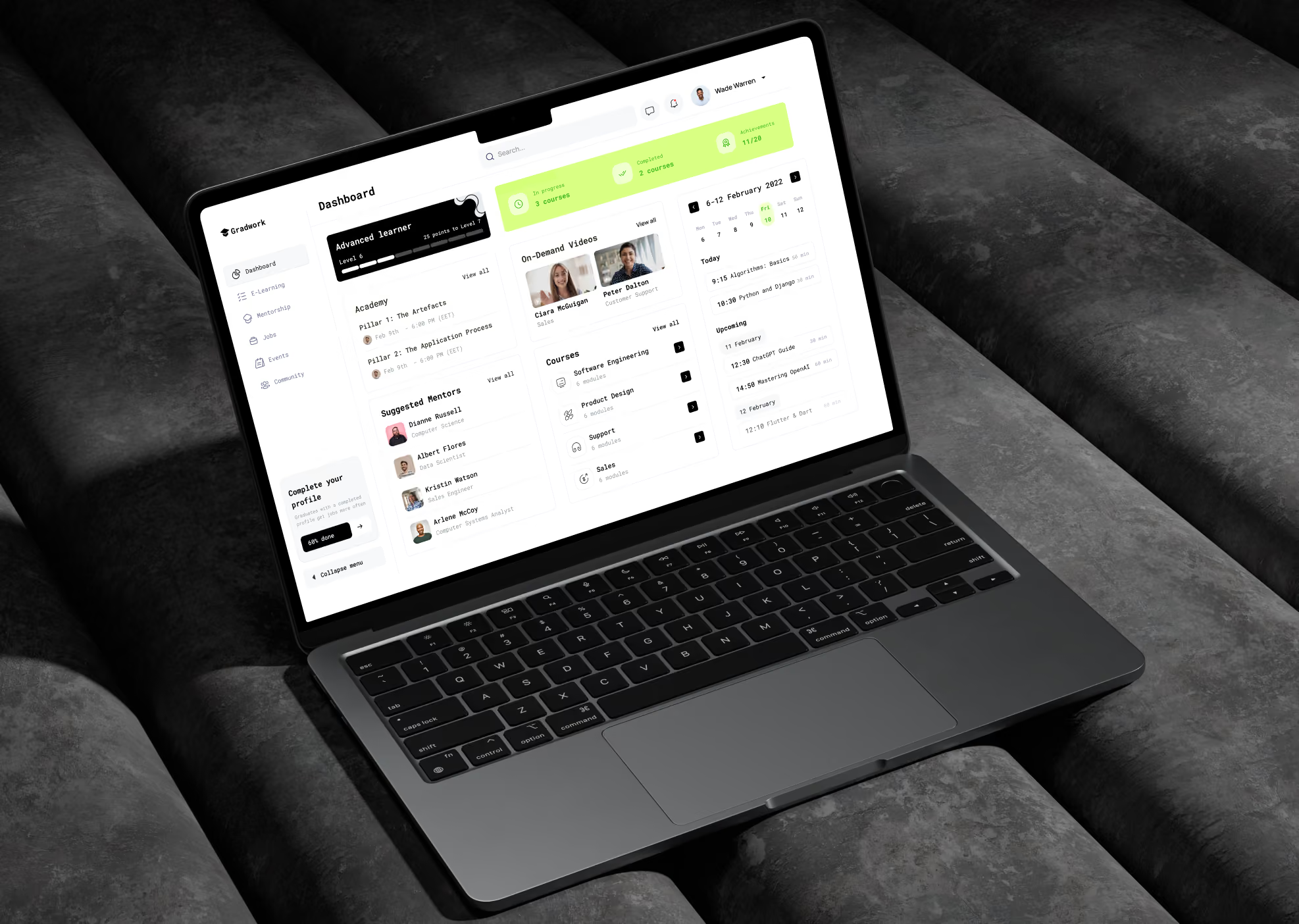
Arounda recruitment product design helped Gradwork increase the flow of new visitors and convert them into active users across a consistent web and mobile experience.
x3,5



Traffic and engagement boost
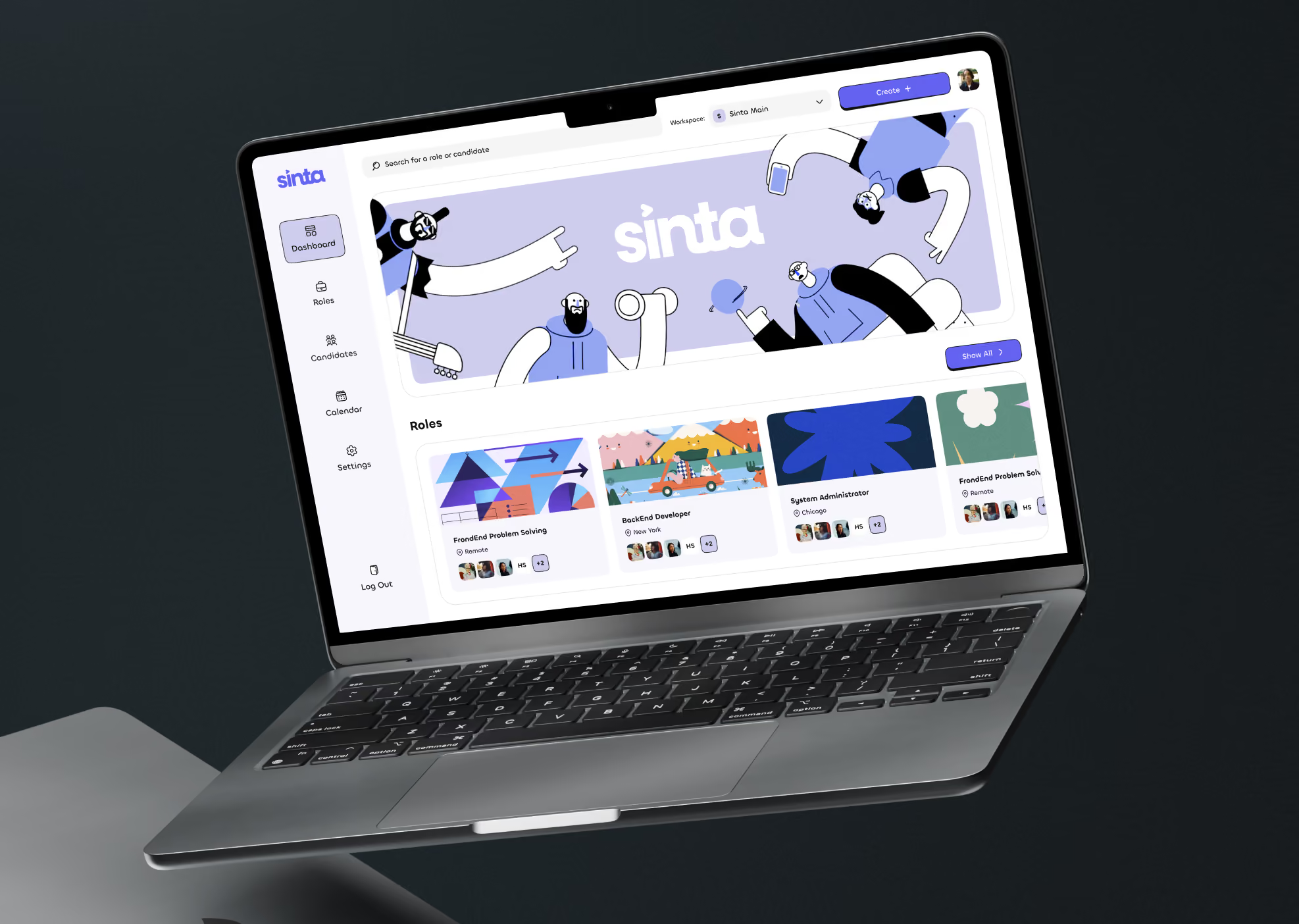
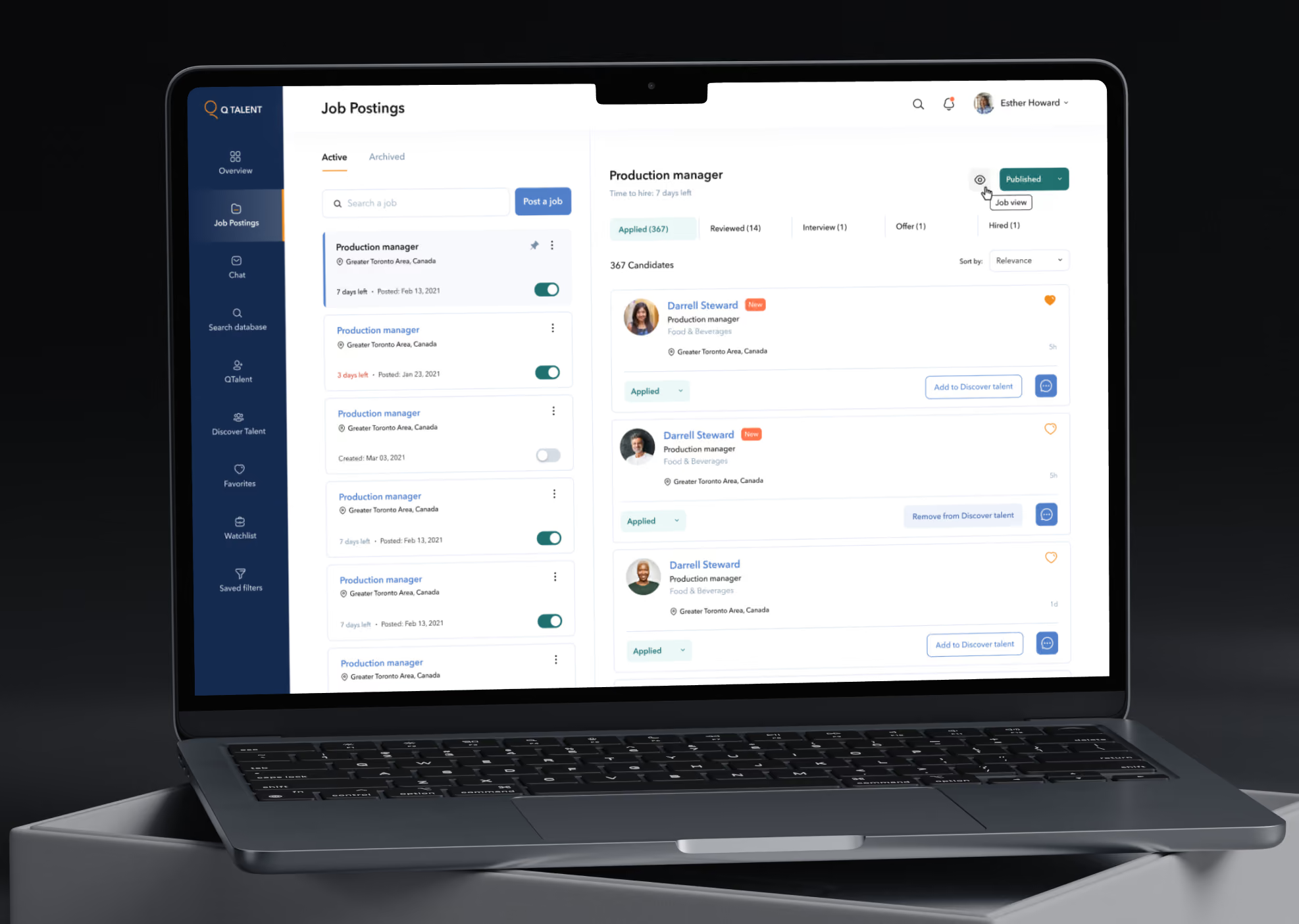
Our HR software design services built QTalent's design system to support upgraded functionality. Users engage longer and recommend the platform.


What HR tech product leaders say about us


"Their UI/UX design skills were very impressive. Modern, creative, and best in class, plus they were intuitive and 'got what we wanted' without any hand-holding and minimal direction."


"The process was something to be admired, they have a great idea of how to turn an idea into a visual product. They would also immediately make changes to any improvements we mentioned."


"I was impressed with the high levels of detail and polish for all the features."


"Arounda had a group of passionate and trustworthy people working over there. That means a lot when selecting a partner. Someone willing to listen, think out of the box, and be guided, yet also opinionated in a professional manner. I would do it again."

"Highly adaptable, flexible, professional, best-practice guidance, modern approach, no drama. Just a great team committed to excellence in all areas."

"They proactively brought forward improved suggestions, enhanced UI/UX flows, and thoughtful feature recommendations that strengthened our platform’s design system, making it more cohesive and elevating the overall user experience."

"The process was seamless, and the team exceeded my expectations at every step."


"They understood our idea and gave us more feedback than expected. They did more than we asked them to do, which was excellent. Arounda produces excellent quality work."

"We're impressed with their creativity, professionalism, and rapid response times throughout the project."



HR and recruitment teams that trusted us with their product





What sets Arounda apart as an HR tech design partner







See our HR design process in action
Our HR Tech design company divided the design process into five stages with set deliverables to remove the guesswork and misunderstanding caused by unclear scope or shifting requirements.

HR tech products that
we can create together

Recruitment & Applicant Tracking Interfaces
HR Chatbot & Self-Service Interfaces
Workforce Analytics & Reporting Dashboards
Learning & Development Platforms
Document & E-Signature Flows
Talent Management & Performance Dashboards
Benefits & Compensation Platforms
Compliance & Workflow Automation Tools
How Arounda HR tech products people adopt

Role-Based Interfaces That Fit Every User
HR admins, managers, and employees open the same product for different reasons. We design separate views for each role, so no one has to wade through screens they don't need.

Dashboards HR Teams Read Without Help
Workforce data means nothing if teams can't act on it. Arounda designers transform raw HR data into dashboards decision-makers use without a training session.

Design Systems That Cut Support Tickets
When tools aren't assembled properly, they cause confusion and added weight. Users only need to learn how to use the product once because we integrate components into a single design system.

Interfaces That Pass Enterprise Security Reviews
Before signing, enterprise buyers assess how mature a product is. Our professionals make sure that the permissions and access controls they create can stand up to scrutiny.


89+ Reviews
on Clutch

Top Rated Plus Agency
on Upwork

Top 50 Trending team
on Dribbble

Projects are Featured on Behance platform

Latest articles on HR Tech Design






FAQ
How is designing for HR tech different from designing for other B2B SaaS?
User diversity, data sensitivity, and process depth differ HR tech design from general B2B SaaS design.B2B SaaS products serve one primary user completing one workflow in most cases. HR tech products serve three to four roles on the same platform. Talent management UX design shows this: a performance review has to work as a quick task for a manager and a dense planning tool for an HR admin, on the same data.
Data sensitivity increases the bar even further. Payroll and personal employee data pose legal risks, whereas a marketing dashboard does not. This is also reflected in the applicant tracking system design. Candidate data and hiring decisions are subject to employment legislation. Therefore, the audit trails and bias-aware screening must be included from the start.
Process depth is important as well. Open enrollment, performance cycles, and onboarding are based on set dates and permission chains that most SaaS products lack. Before any screen is produced, the design team must plan out these processes.
How do you design for both HR admins and everyday employees using the same product?
We divided the product into role-based levels using a single shared design system. HR administrators require configuration control and extensive data views. Employees require brief, supervised assignments that they perform a few times per year.
A permission map is the first thing our HR Tech design agency does when creating an HR management system UI design. We keep track of what people can see, change, and approve. That map decides the depth of navigation, the amount of information, and the default views before the planning stage even starts. There are full menus, filters, and bulk tasks for admins. For example, when an employee wants to change a benefit or request time off, they only see one flow and don't have to deal with any others.A third gap, frequency, must be taken into account in workforce management design. Administrators go in daily and accept increased complexity in exchange for greater power. Employees log in seldom and leave anything that isn't evident on the initial screen. We design for that difference explicitly, while using the same underlying data and logic: progressive disclosure for administrators, linear guided flows for employees.
Can you redesign our HR platform without disrupting current users?
Yes. Audit current user flows, test new patterns with a small user group before deployment, and move data and permissions without downtime are our redesign phases. Since even tiny changes disturb critical daily flows (like payroll approval and candidate review), we redesign them last and validate hardest.Our recruitment software design agency follows your users' routines. Not all screens need rebuilding. We modify drop-off or support ticket causes and keep what people trust alone. Retraining time is reduced, and adoption metrics remain consistent during the shift instead of decreasing and recovering.
How do you improve onboarding flows to reduce employee drop-off?
People leave when onboarding asks for too much before giving them anything of value. Everything else, like optional benefit details or preference settings, is moved to a later step that the employee can do on their own time. We cut the flow down to what's needed for day one.
Designing for interruptions is another aspect of employee experience design. New employees fill out forms on their phones between meetings, without HR being there to help them. We save and restart at the end of every flow and fill in data that HR already has so they don't have to ask for it twice.
We use separate checklists for each job's onboarding procedure and build role-specific flows. Fewer unimportant steps reduce the chance of stalling and quitting.
How do you make HR software feel less "corporate" and more human?
Corporate feeling in HR software usually comes from bureaucratic language, dense forms, and a lack of acknowledgment that a real person is behind the screen. We fix this at the content and interaction level.Our talent management software design company replaces legal-sounding copy with plain language wherever policy allows it. "Submit request for leave of absence" becomes "Request time off." We write confirmation and error messages the way a helpful colleague would.
This approach carries over to branding and HR website design, too. The site should read like a company that understands people and their working routine. Direct headlines and clear next steps build more trust than generic corporate stock photography.
Good HR system design and implementation also accounts for the hard moments. Leave requests, benefits modifications, and performance conversations are emotional, so we employ calm design and supportive microcopy instead of legal text.
None of this damages trustworthiness. Enterprise buyers want secure and mature HR software UX. Visual language should be professional, but words and interactions should be straightforward and human.