UI/UX Design Agency in Atlanta
Every product decision our UI/UX design company in Atlanta makes helps SMEs and enterprises get clearer user flows, stronger product adoption, and interfaces built for long-term growth.
on Clutch
completed in various niches
rating on Clutch



Design Services We Offer in Atlanta
Our UI/UX design services in Atlanta give businesses a structured design process that keeps product decisions aligned with user needs, technical realities, and business goals.
Selected Work for Atlanta Enterprises
Arounda has completed 500+ product design projects worldwide. As a UI/UX design agency Atlanta businesses can partner with, we share selected product design work. Explore the case studies behind these results.

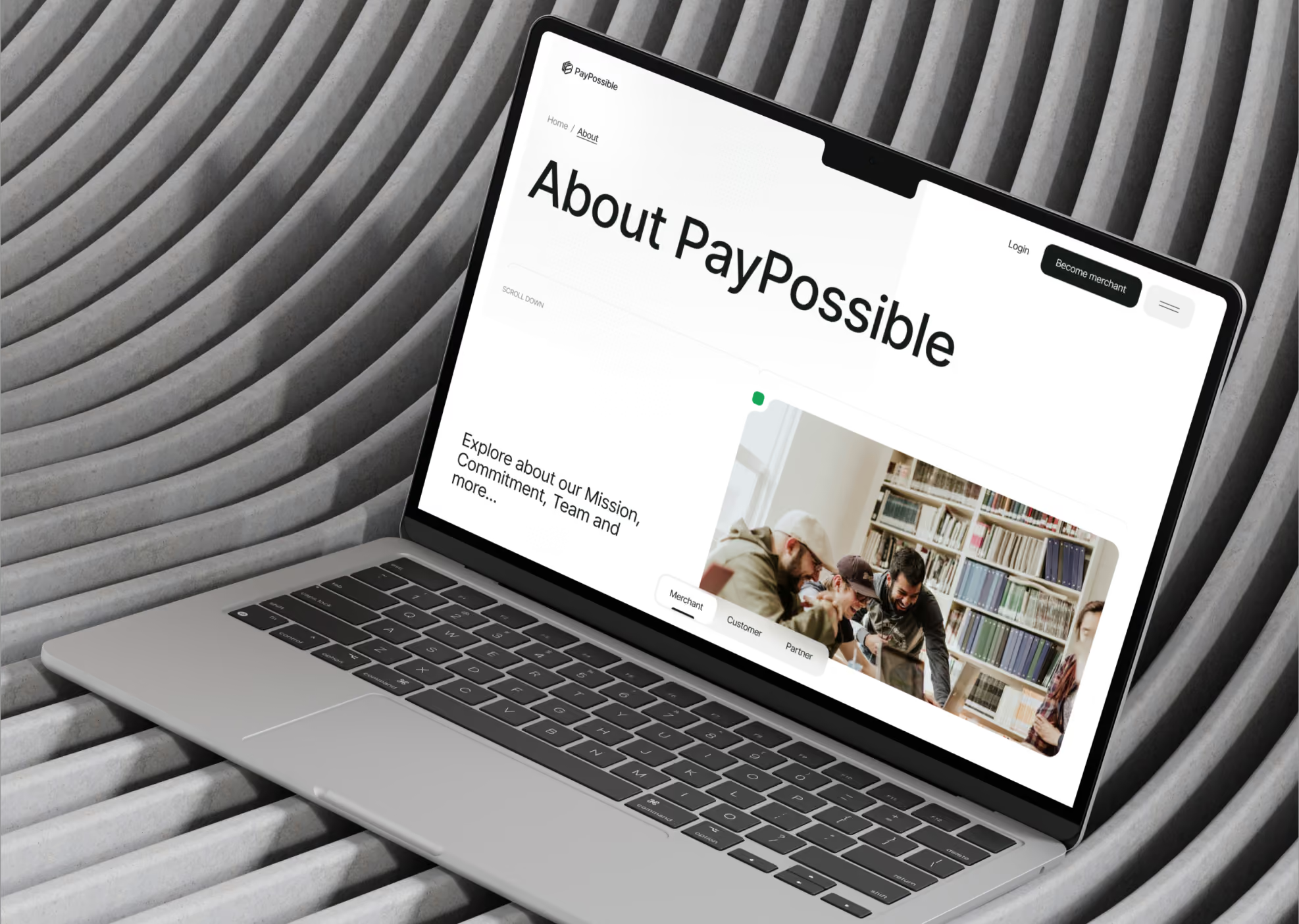
Website Redesign for a Multi-Lender Fintech Platform
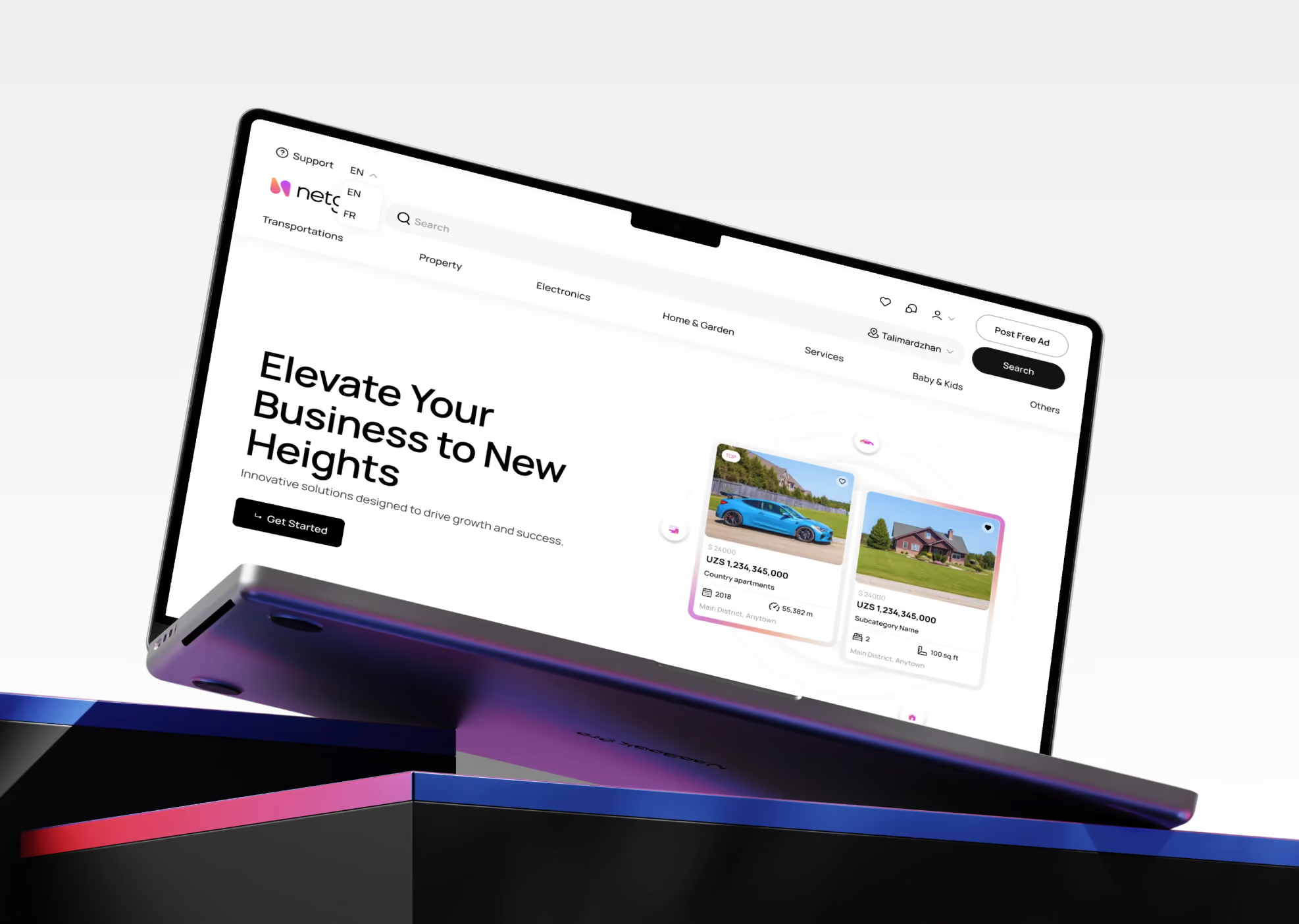
Marketplace Redesign for Better Product Discovery

Results We've Delivered Across Products
Products slow down when everyday actions feel too complicated. Our designers use 10+ years of product experience to find unclear flows, decision blockers, and interface gaps that affect adoption, conversion, retention, and scalability.

+62%
Lead Conversion
The redesigned website removed unnecessary decision points, making it easier for advisors to understand the value and convert into qualified leads.

2x
Merchant Signups
A clearer website structure, stronger trust signals, and guided registration encouraged more merchants to complete sign-up and start using the platform.

30%
User Satisfaction
The updated experience made blockchain data easier to work with, leading to higher user satisfaction across key platform interactions.



While the growth of our clients is what matters most, it`s nice to get awards



89+ Reviews
on Clutch

Top Rated Plus Agency
on Upwork

Top 50 Trending team
on Dribbble

Projects are Featured on Behance platform

How We Approach Every Project in Atlanta
We divide every project into focused stages, each with its own objective and expected outcome. This gives every design decision the context it needs before the team moves to the next phase.

What Strong UI/UX Design Does for Your Product

Cuts Time to Confident Decisions
People should never guess what to do next. We organize information, actions, and priorities so users can move through the product with confidence instead of hesitation.

Builds Trust Through Every Interaction
Trust develops over the course of hundreds of little interactions with the product. Over time, consumers will come to rely on your product because of its consistent interfaces, predictable behavior, and thoughtful details.

Supports Growth Without Rebuilding UX
As time goes on, products evolve to accommodate new features, consumers, and teams. We build flexible frameworks that keep the experience organized as your product grows.

Clients recognize many reasons to trust our services





“I was impressed with the high levels of detail and polish for all the features.”

Jimmy Hosang
Founder & CEO

“Their professionalism, dedication, responsiveness, and determination are commendable.”

Emil Ljesnjanin
Founder & CEO

“Their expertise and guidance were instrumental. They demonstrated their commitment to creating a product that resonated with our target audience, which led to improved user satisfaction.”

Aetienne Sardon
Founder, MYSO Finance


“Working with Arounda is really smooth in terms of communication and workflow”

Stephane Heip
CMO, Enzyme

Our partners who chose structured execution



We get things done With Quality

HIPAA compliance and WCAG accessibility

End-to-end product delivery

Enterprise-grade design systems

Retention-focused user flows
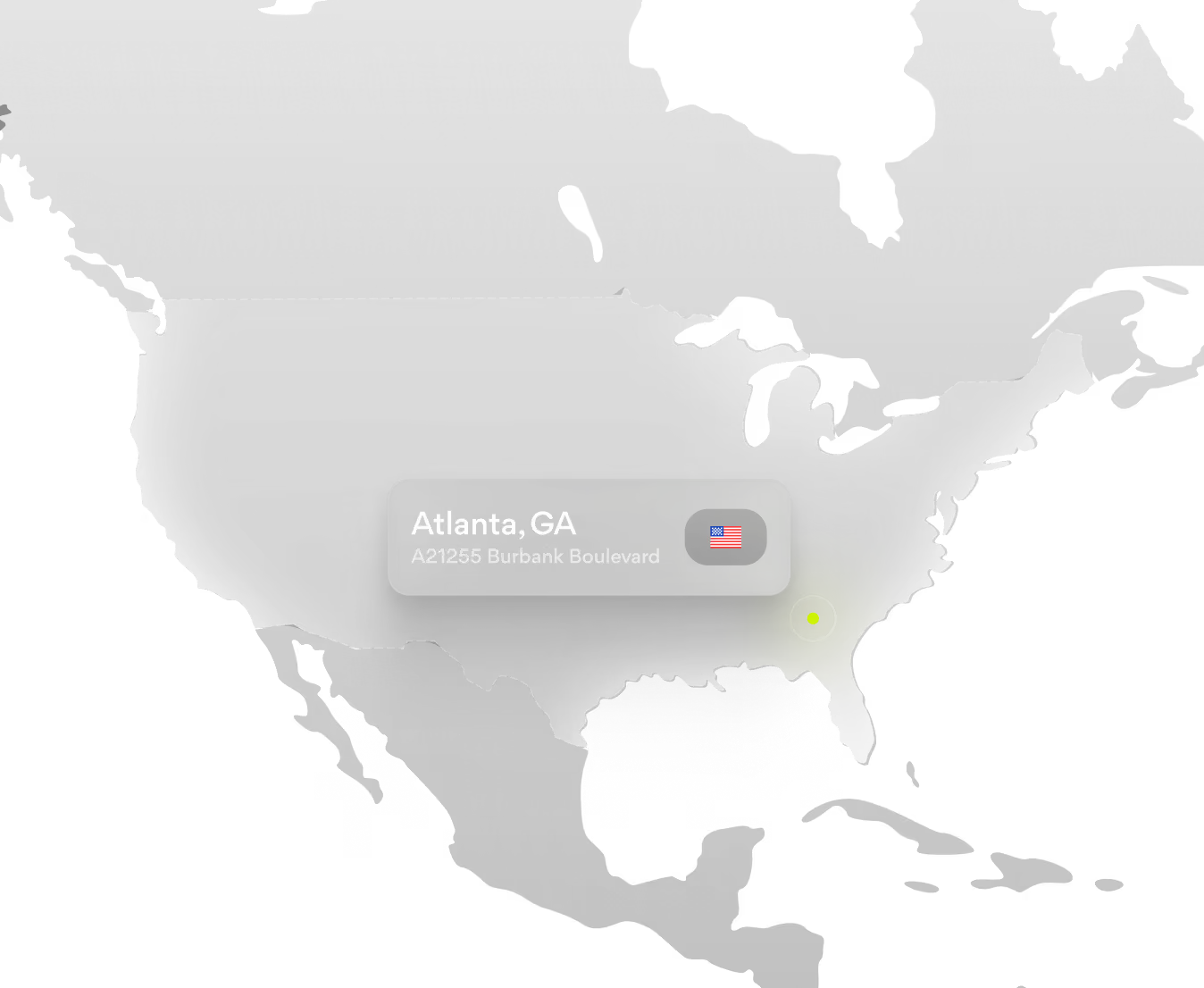
Our location
89+ Reviews
on Clutch
Top Rated Plus Agency
on Upwork
Top 50 Trending team
on Dribbble
Projects are Featured on Behance platform
FAQ on UI/UX design services in Atlanta
What does a UI/UX design company in Atlanta do?
Our UX design agency Atlanta companies hire usually steps in when product decisions need better structure. Arounda helps teams understand what users struggle with, what the business expects from the product, and which design changes create the biggest impact.
Our services cover the full product experience:
- UX research and product discovery: Every one of our projects starts with understanding the problem. Research uncovers user behavior, validates assumptions, reveals business priorities, and gives the team a reliable direction before design begins.
- UI/UX design for web and mobile: The nature of each interface is based on how users carry out specific activities. From the very first session, we work to perfect the screen layouts, navigation, interactions, and responsive behavior so that the user feels at ease.
- Website design and redesign: We reorganize content, strengthen visual hierarchy, simplify navigation, and build pages that guide visitors toward meaningful actions.
- UX/UI audit: In order to find out why consumers hesitate, quit, or lose trust, our team looks at user paths, interface logic, and friction points.
- Design systems: Products change continuously. We create a structured library of reusable components, documentation, and design rules to help teams release new features without creating visual inconsistency.
- Mobile app design: Smaller screens demand different priorities. Every interaction receives careful attention, from thumb-friendly navigation to gesture patterns and content hierarchy that works in motion.
- Branding and visual identity: Visual language shapes first impressions long before users explore individual features. Typography, color, illustration, iconography, and brand guidelines create a product people recognize and remember.
- Web and MVP development: Validated concepts move into development with support from the same team, helping preserve interaction quality and design intent throughout implementation.
Our designers have delivered 500+ products, giving the team deep experience with overloaded interfaces, complex user flows, and products that have outgrown their original structure. That background helps us recognize recurring UX patterns quickly and recommend solutions that fit the product instead of forcing a standard template.
How do you measure the success of a design project?
We measure design success through the product metrics that the design can influence. A UX design agency in Atlanta should connect interface decisions with specific outcomes. Before design starts, we define which part of the product needs to improve and which metrics will prove it.
Our team tracks results across several categories:
Business impact
- Merchant signups and lead generation
- Conversion rates
- Revenue-related metrics
- Operational efficiency
Product performance
- Feature adoption
- Task completion
- Navigation efficiency
- Time required to complete key actions
User experience
- User satisfaction
- Product comprehension
- Content readability
- Long-term engagement and retention
Looking at completed projects makes those metrics easier to understand.
- PayPossible doubled merchant signups after a website redesign that improved onboarding, clarified the financing journey, and strengthened trust throughout the experience. Financing application completion increased by 40%, user satisfaction reached 88%, and the project received a UI award for its design quality.
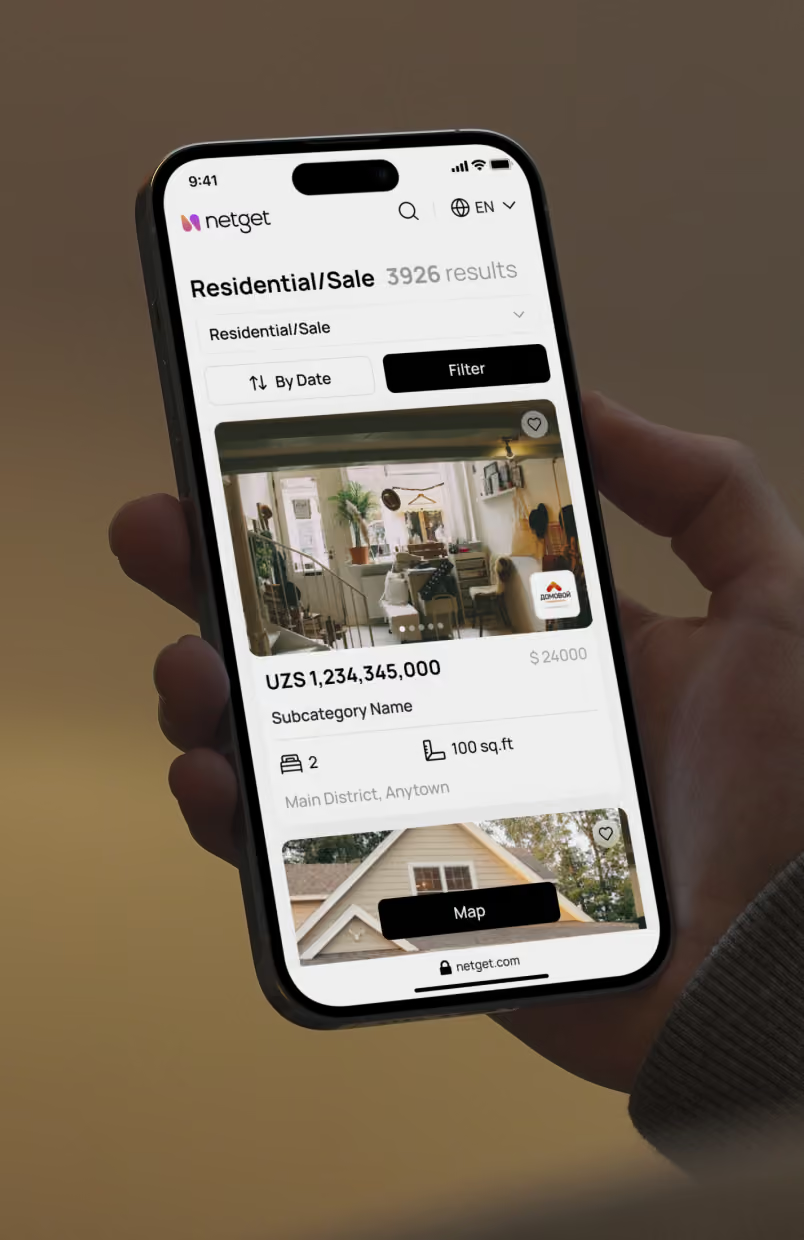
- NetGet focused on product discovery inside a busy marketplace. The redesigned experience improved navigation speed by 55%, increased platform usability by 45%, strengthened brand recall by 53%, and improved content readability by 41%.
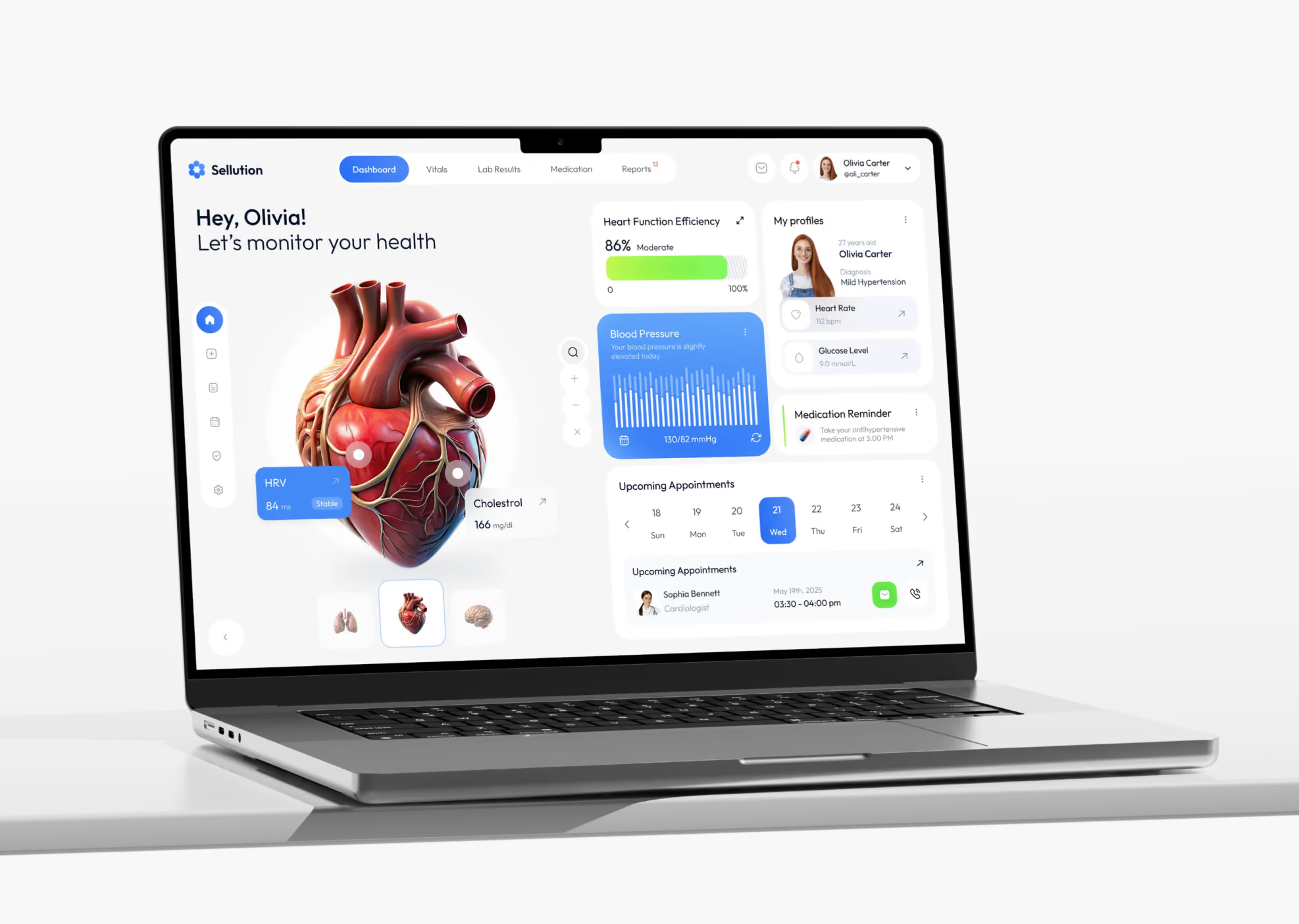
- Sellution required a dashboard that could present large amounts of health data without overwhelming patients. The new interface reduced the time needed to understand key health metrics by 3×; users found primary vitals in 0.8 seconds, the platform reached a 62% 30-day retention rate, and the design system expanded to 120+ reusable components.
We also follow up with post-launch analysis to see if the product team can add features to the revamped design without introducing new user experience issues, which flows were better, which screens require additional tweaks, and where customers are still hesitant.
What is your approach to product redesign for established companies?
Established products already have users, habits, data, and business logic. A UX design company Atlanta teams hire for redesign should improve the product carefully: fix what slows people down, keep what users trust, and prepare the interface for the next release cycle.
During product redesign, we focus on four areas:
- Current UX problems: we audit user journeys, navigation, analytics, and feedback to find where people hesitate, drop off, or misunderstand the product.
- Product structure: prior to making any changes to the user interface, our team examines the information architecture, role-based processes, dashboards, and feature logic.
- Interface quality: layouts, typography, spacing, interaction states, and visual hierarchy get refined so the product feels clearer and easier to use.
- Future scalability: we build or update design systems, component libraries, and responsive rules so new features fit into the product without visual chaos.
The main goal is to improve usability without damaging familiar patterns that already work. Users should feel the product became easier, not unfamiliar.
How do you handle design decisions when stakeholders disagree?
Different stakeholders rarely look at the product through the same lens. Founders think about growth, product managers focus on priorities, developers consider technical constraints, and marketing teams want stronger conversion. A UX design firm Atlanta companies rely on should bring those perspectives together and turn them into design decisions everyone understands.
When we disagree, we don't settle it based on our individual tastes. The evidence and product objectives always come up in these discussions. Before making a recommendation, our team considers the feature's intended use, analytics, business priorities, technological constraints, and user research.
When opinions differ, we typically ask questions such as:
- Does this option help users complete the task more successfully?
- How does the decision support the business objective behind the feature?
- Will the solution stay consistent with the rest of the product?
- Can the team develop, maintain, and expand this approach efficiently?
If two directions still have merit, we prepare design alternatives, explain the trade-offs, and recommend the option that creates the strongest long-term outcome. Teams can review each approach with full context instead of choosing between isolated design concepts.
What does the onboarding process look like when starting a new project in Atlanta?
A new project starts with a working session where we turn the initial request into a practical plan. As a U/I/UX design agency Atlanta companies can work with remotely, Arounda clarifies the product goal, decision process, timeline, scope, expected deliverables, and people involved from both sides.
After that, we organize the project setup:
- A dedicated design team and project manager
- Shared Figma files and design libraries
- Slack, Notion, Jira, or the tools your team already uses
- Access to current product files, analytics, brand materials, and research
- Review points, reporting rhythm, and feedback rules
The product's current level of context determines the next stage. Wireframes or interface concepts are the next logical step for some projects. Before beginning design work, some require a user experience audit, analysis of competitors, interviews with stakeholders, or product discovery. The team may then steer clear of visually appealing screens that are based on flawed product reasoning.
You can expect the first tangible outputs within 1–2 weeks. These may include user flows, sitemap updates, audit findings, wireframe directions, early UI concepts, or a clearer design roadmap.
Teams that want to test the collaboration first can start with a free 3-day trial. One Arounda designer works on a real product task, so you can assess communication, pace, thinking, and design quality before committing to a full engagement.
How do you ensure design consistency across platforms and touchpoints?
Through a unified system of design, we ensure that all platforms remain in sync. It governs the responsive behavior of web, mobile, and marketing pages as well as their font, spacing, colors, components, interaction states, and more.
Along with that, the system tells you how to use repeated interface patterns in various situations:
- Forms: Field states, validation messages, input behavior, and error handling.
- Navigation: Menus, tabs, breadcrumbs, and mobile navigation patterns.
- Dashboards: Data cards, filters, tables, charts, and empty states.
- Marketing pages: Hero sections, CTA blocks, pricing areas, and lead forms.
The development team receives well-structured Figma files, reusable components, and notes on the handoff. As a result, new screens can use the same product logic.
What engagement model works best for long-term product teams?
Long-term product work needs a setup where designers stay close to real product decisions. Each release builds on what the team has already learned, so new work starts with context instead of spending time rediscovering the product.
For ongoing collaboration, we usually recommend one of two formats:
Dedicated product design team
This works best when there is ongoing design work on your product roadmap, such as new features, redesigns, experiments, design system updates, mobile flows, or regular UX improvements. During the whole sprint, designers are actively involved in everything from planning to product evaluations and handoffs. The arrangement is similar to an internal team, but it benefits from Arounda's design knowledge.
Design team extension
This model fits teams that already have product or design leadership but need extra capacity. A senior designer, UX specialist, or design system expert joins your workflow and focuses on a specific area. For example, your internal team can keep the core product while Arounda handles a mobile app, audit, onboarding flow, or new feature direction.
The more time designers spend on a product, the more effective their decisions are. They remember what restrictions were in place, how users behaved, and why certain decisions were made. When the product goes through a redesign, expansion, or new release cycle, that context is really helpful because it saves time.
How do you collaborate with in-house design or development teams?
Companies with in-house product or development teams need design support that fits into their workflow without adding noise. Arounda joins existing processes, takes ownership of defined design tasks, and keeps communication clear between product, design, and engineering.
Collaboration can happen in several formats:
- With in-house designers: Our team can extend design capacity, refine complex flows, support design systems, or take ownership of separate product areas.
- With developers: We work closely with developers to ensure that implementation stays true to the agreed design by preparing organized Figma files, documenting interaction states, and explaining responsive behavior.
The working rhythm depends on your setup. We can join sprint planning, async reviews, design critiques, backlog discussions, or handoff calls. Every decision stays visible through shared files, comments, documentation, and project boards.
Over 100+ clients have trusted us to design and build their products because our work is always clear, reasonable, and focused on results, from the first meeting to the delivery.