UI/UX Design Agency in Boston
Our UI/UX design company in Boston partners with SME and enterprise teams that need digital products built for confident decisions, smoother user experiences, and long-term product growth.
on Clutch
completed in various niches
rating on Clutch



Design Services We Offer in Boston
Companies choose our UI/UX design services in Boston when complex products need clearer experiences and stronger product direction. Our team brings structured design processes, reliable delivery, and decisions connected to business priorities.

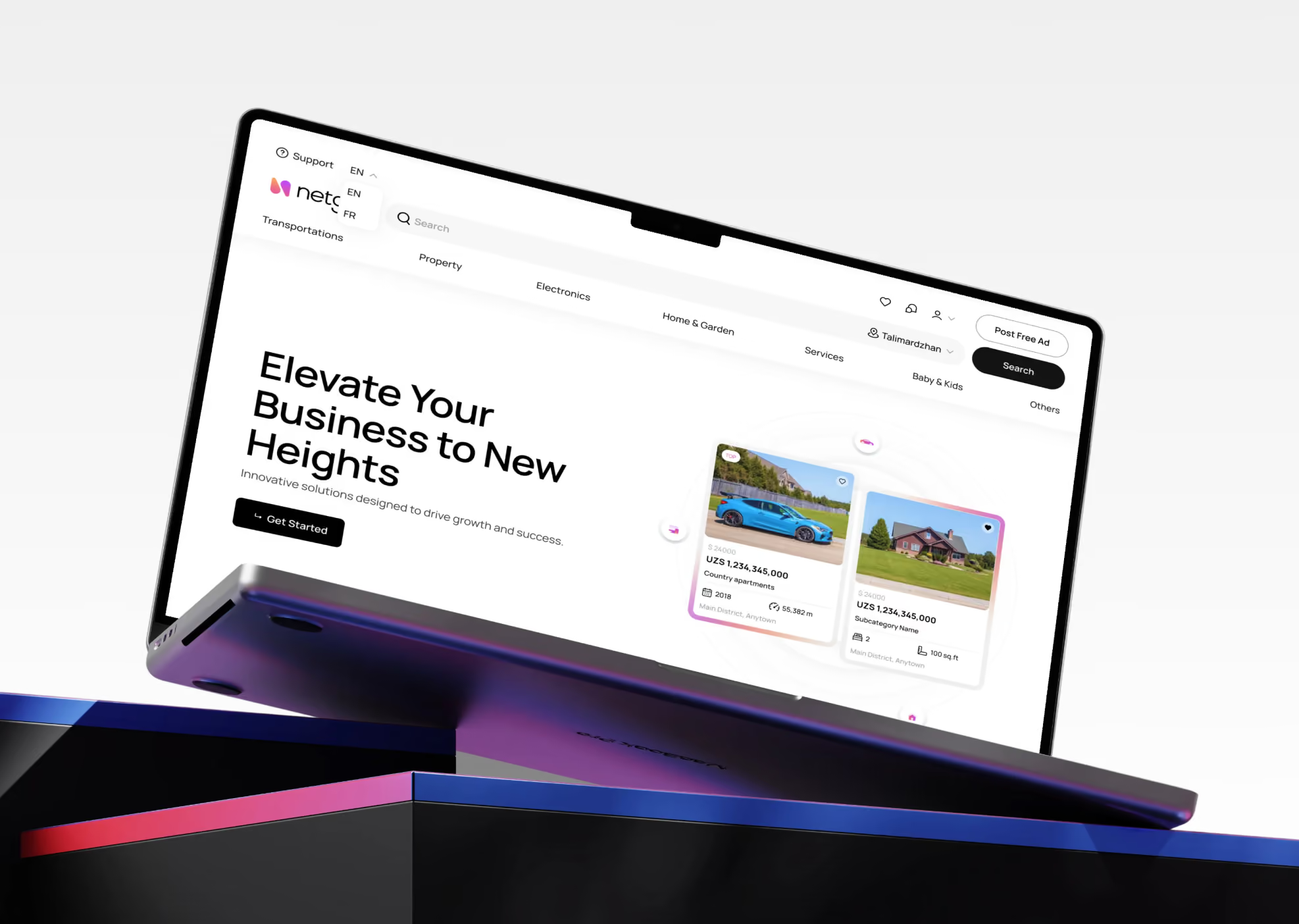
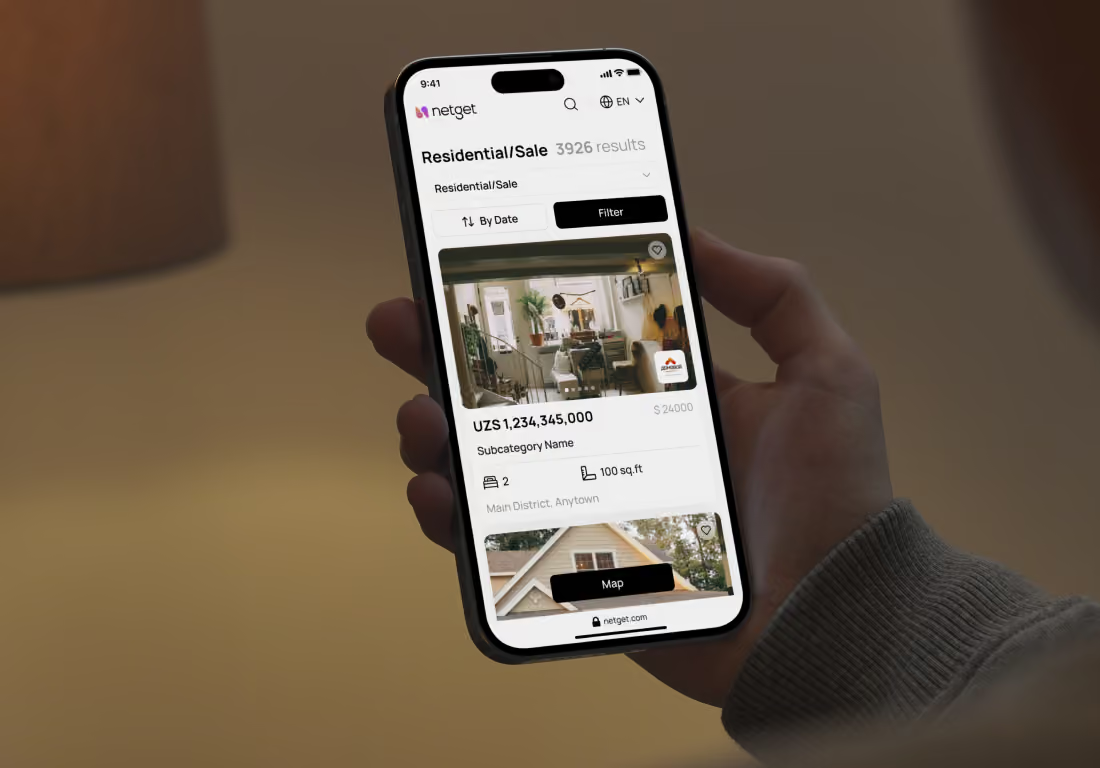
Selected Work for Boston Enterprises
Over 500+ companies have trusted our UI/UX design services. Explore the case studies with our approach and results.

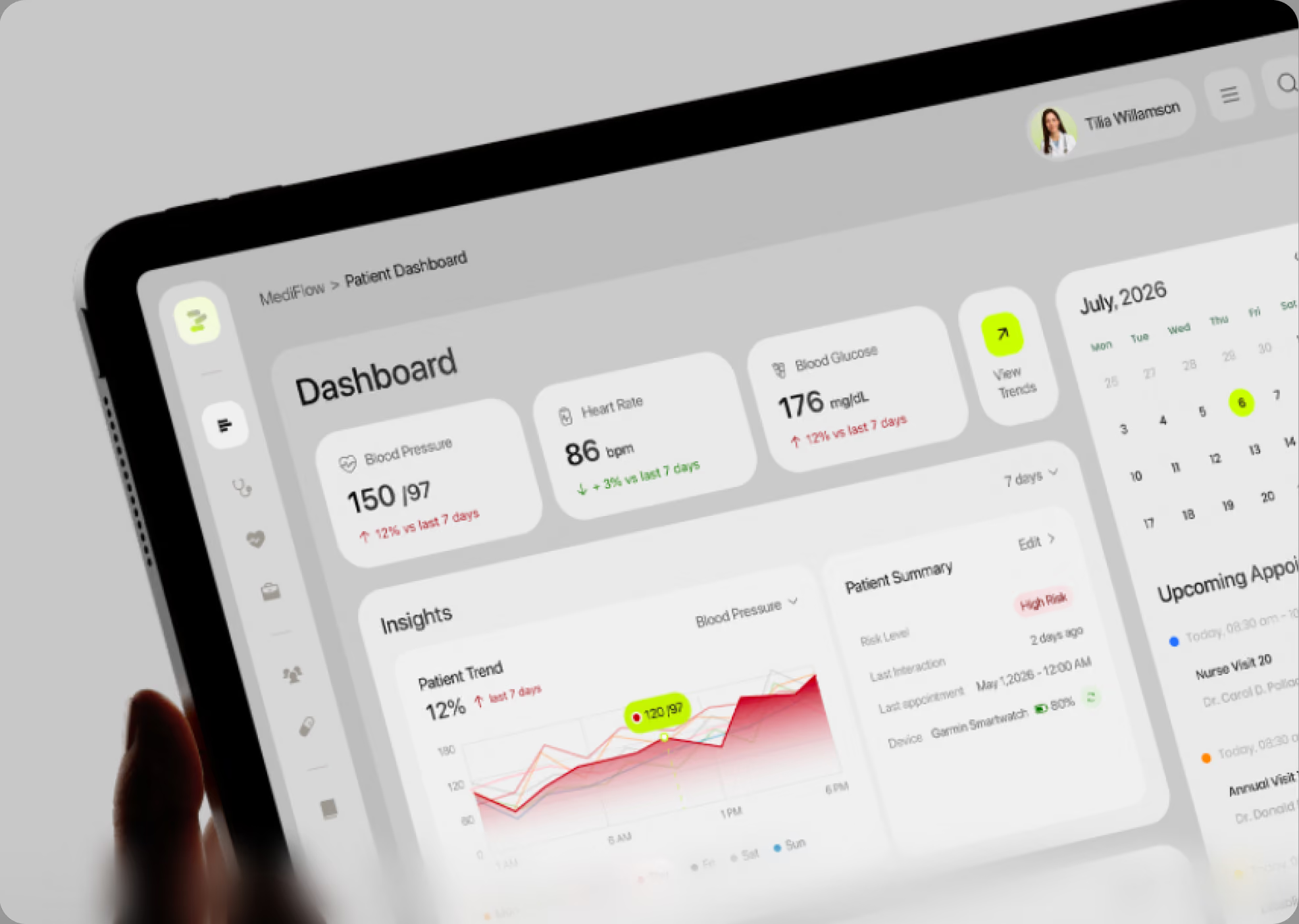
Healthcare Dashboard Design for Faster Clinical Decisions
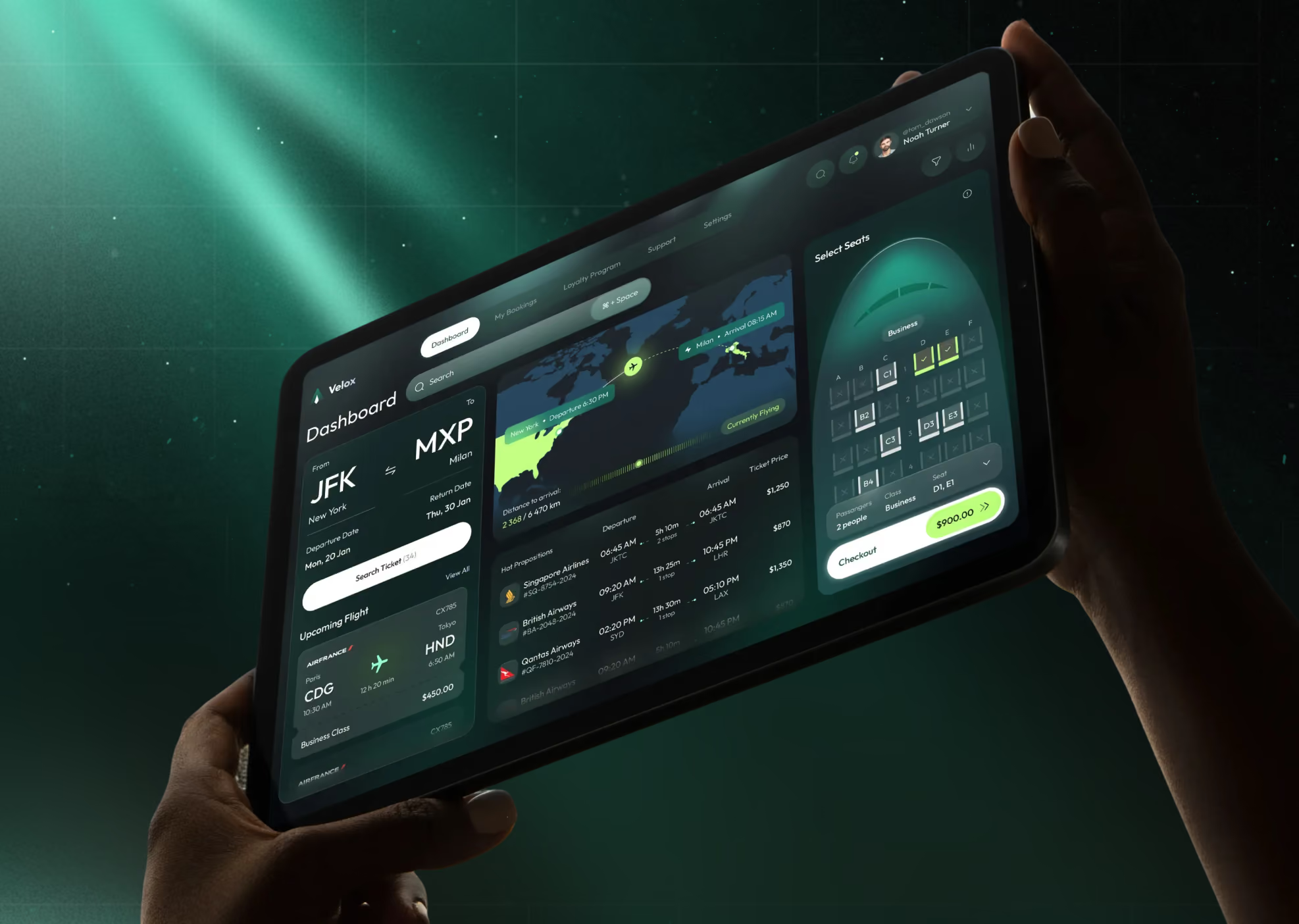
Flight Booking Web App Design for Faster Travel Planning

Results We've Delivered Across Products
For 10+ years, our product designers have seen how basic UX issues quietly damage adoption, conversion, and retention. We fix broken workflows, remove decision blockers, and make key product actions easier to complete.

20%
Reduced Bounce Rate
Stronger visual hierarchy, better landing pages, and clear product messaging encouraged WordPress users to stay interested and keep browsing the site.

41%
Feature Adoption
Organized navigation and clearly grouped AI tools helped Altflow users discover advanced features and incorporate them into everyday writing workflows.

35%
Shorter Onboarding Time
Simplified navigation and a more intuitive conversion flow allowed AdvisorWorld prospects to complete onboarding faster with fewer steps and less support involvement.



While the growth of our clients is what matters most, it`s nice to get awards




89+ Reviews
on Clutch

Top Rated Plus Agency
on Upwork

Top 50 Trending team
on Dribbble

Projects are Featured on Behance platform

How We Approach Every Project in Boston
We run every project on our proven framework with clear stages, defined deliverables, and decisions tied to your business goals and strategy.

What Strong UI/UX Design Does for Your Product

Helps Users Reach Value Faster
Users stay when they quickly understand what a product does and how it helps them. We design flows that shorten the distance between the first interaction and the moment the product becomes useful.

Creates Experiences Worth Returning To
It is simpler to trust and suggest products that feel intuitive. With well-designed UI and intuitive interactions, users are more likely to return, remain interested, and form long-term habits.

Creates Room for Product Expansion
Messy UX can make things take longer as new features are added. Our early product structure allows teams to easily add, test, and improve features without affecting the usability of the product.

Clients recognize many reasons to trust our services





“I was impressed with the high levels of detail and polish for all the features.”

Jimmy Hosang
Founder & CEO

“Their professionalism, dedication, responsiveness, and determination are commendable.”

Emil Ljesnjanin
Founder & CEO

“Their expertise and guidance were instrumental. They demonstrated their commitment to creating a product that resonated with our target audience, which led to improved user satisfaction.”

Aetienne Sardon
Founder, MYSO Finance


“Working with Arounda is really smooth in terms of communication and workflow”

Stephane Heip
CMO, Enzyme

Our partners who chose structured execution



We get things done With Quality

HIPAA compliance and WCAG accessibility

End-to-end product delivery

Enterprise-grade design systems

Retention-focused user flows
Our location
89+ Reviews
on Clutch
Top Rated Plus Agency
on Upwork
Top 50 Trending team
on Dribbble
Projects are Featured on Behance platform
FAQ on UI/UX design services in Boston
What does a UI/UX design company in Boston do?
Arounda works as a UI/UX design agency Boston product teams can bring in when a digital product needs a clearer structure, stronger usability, or a better path to business outcomes. We work with SME and enterprise teams on SaaS, healthcare, fintech, AI, Web3, logistics, and other complex products.
Our team covers the main areas needed to design, improve, and scale digital products:
- UX research and product discovery. We study user behavior, business goals, product logic, and existing workflows to understand where people struggle and which design decisions matter most.
- UI/UX design (web and mobile). Arounda creates information architecture, user flows, wireframes, interactive prototypes, and production-ready screens for web platforms, mobile apps, dashboards, and enterprise software.
- Website design and redesign. We design websites and landing pages for companies whose current experience no longer explains the product clearly, supports conversion, or reflects the brand properly.
- UX/UI audit. Our designers review existing products, identify screens or flows that cause confusion, and prepare a prioritized action plan for improvement.
- Design systems. Arounda builds component libraries, UI rules, and reusable patterns that help product and engineering teams keep the experience consistent as the product grows.
- Mobile app design. We design iOS, Android, and cross-platform apps with clear onboarding, repeat-use flows, and core actions that users can complete without friction.
- Branding and visual identity. Our team supports logo design, brand identity, pitch decks, graphic design, and rebranding when a company needs one visual language across product, marketing, and sales materials.
- Web and MVP development. Arounda can support web development, MVP development, Webflow development, landing pages, and mobile development when clients need design and development in one process.
How do you measure the success of a design project?
Arounda measures design success through business outcomes, user behavior, and product performance. Every UX design agency Boston businesses consider should be able to connect design decisions with measurable product improvements rather than visual changes alone.
Some of the indicators we commonly track include:
- Conversion rates. We measure whether users complete important actions such as signing up, booking a demo, submitting a form, or purchasing a product.
- Feature adoption. New functionality only creates value when people use it. We analyze whether users discover and regularly return to important product features.
- Retention and engagement. Products with clear user journeys often encourage repeat usage and longer customer relationships.
- Task completion. We evaluate how easily users can finish important actions and identify where unnecessary friction appears.
- Drop-off points. User flows often reveal specific screens where people leave the product. Improving these moments can affect overall performance.
- Support requests. Better UX frequently reduces confusion and decreases the number of support tickets.
After launch, we look at how users behave inside the product, where they still hesitate, and which flows need more work. This helps the team understand whether the design solved the right problems and where the next improvement should happen.
What is your approach to product redesign for established companies?
Arounda approaches product redesign as a business and UX problem first. Many companies begin searching for a UX design agency in Boston after product metrics stop improving despite multiple visual updates.
Our redesign process usually includes:
- UX/UI audit. We review the existing product to understand where users struggle, leave important flows, abandon tasks, or rely on support to complete simple actions. This helps us identify the problems that redesign should solve.
- Redesign scope definition. Our team separates high-impact improvements from areas that existing users already understand well. This approach reduces risk and prevents unnecessary changes.
- User flow restructuring. Before moving into visual design, we rebuild the journeys that affect product performance. This may include onboarding, dashboards, checkout flows, account setup, or other important user paths.
- Wireframes and validation. New ideas are tested early to confirm that the updated structure works better before investing time into final UI design.
- UI design and design systems. Arounda redesigns the interface, removes visual inconsistencies, and updates design systems to support future product growth and easier feature releases.
- Performance review after launch. Once the redesigned product is released, we compare the results against the original baseline. Teams usually track conversion, retention, task completion, support volume, onboarding speed, or other business metrics.
How do you handle design decisions when stakeholders disagree?
Different teams protect different outcomes. Product wants adoption. Marketing wants stronger positioning. Sales wants a clearer path to conversion. Engineering needs a realistic release scope. As a UX design company Boston teams involve in complex product work. Arounda brings the discussion back to the product goal.
We start with the decision that needs to be made. Then we define what “better” means for this exact case. For onboarding, that may be a faster task completion. For conversion, it may be a clearer first screen. For scaling, it may be a cleaner design system structure.
When opinions still conflict, we compare the strongest options through prototypes, UX audits, analytics, or user feedback. Each direction gets a reason, not just a visual preference. The final choice comes from evidence and the business outcome behind the project.
What does the onboarding process look like when starting a new project in Boston?
A project with Arounda does not start with design files. It starts with alignment. For companies searching for a UX design firm Boston, this stage matters because it sets the scope, timing, team structure, and decision process before the first design task begins.
The process starts with a scoping call. We discuss the current product state, the main blockers, the type of design support needed, and the expected timeline. After that, Arounda prepares a proposal with deliverables, team setup, project stages, timeline, and price. The goal is to make the collaboration clear before the first design task begins.
Once the agreement is approved, we hold a kickoff session with the client’s product, business, and technical stakeholders. Our team reviews existing research, analytics, user feedback, product documentation, and brand materials. We also define how communication will happen, who gives feedback, and who makes final decisions.
Discovery or audit follows kickoff. When it comes to current products, we take a look at the flows, interface issues, and user-impacting weak spots. We outline the product's structure, primary journeys, and user demands when we develop new products. The customer typically sees the initial output, such as audit findings, wireframes, concepts, or early UX direction, within the first or second week.
How do you ensure design consistency across platforms and touchpoints?
Consistency becomes difficult when products grow. New features appear, several teams work on the interface, and different platforms begin to follow different rules. Companies looking for a UX UI design agency Boston often face these problems after years of product development.
Arounda solves this through design systems, shared components, and documented interaction patterns. We establish rules for layouts, typography, spacing, states, and user interactions, so web applications, mobile apps, dashboards, and marketing experiences feel connected.
This approach comes from 10+ years of product design work and 500+ completed projects. Our team knows where inconsistency usually appears first, from repeated components to platform-specific flows. We document the system clearly, so product and engineering teams can add new features without creating a fragmented user experience.
What engagement model works best for long-term product teams?
For long-term product work, Arounda usually recommends one of two models: a dedicated design team or team extension. The right option depends on whether the company already has an internal design function.
A dedicated design team works best when a company needs continuous UI/UX support but does not have enough in-house design capacity. Arounda covers product design across the roadmap, from UX research and user flows to interface design, design systems, and new feature releases. In this model, we act as the client’s external design department.
Team extension fits companies that already have product and design teams but need extra senior expertise. Arounda designers join the client’s tools, sprint rhythm, and feedback process. This gives the team more capacity without hiring, onboarding, or switching between short-term vendors.Both models help long-term teams avoid repeated onboarding, fragmented design decisions, and inconsistent product experiences.
How do you collaborate with in-house design or development teams?
Arounda joins in-house teams without breaking their process. We start by learning how your team already works: who owns decisions, how feedback moves, where design files live, and how engineering releases happen. Then we identify where our support can add the most value.
With design teams, we follow the existing design system, Figma libraries, component logic, and product standards. Our designers can support active product work, UX research, new feature design, audits, or design system updates. Every decision is documented, so the knowledge stays inside your team.
We get files ready for handoff by collaborating with development teams. In order to avoid guesswork, engineers will find all the necessary interaction data on each screen. During the implementation phase, our designers are available to examine builds and address any questions that may arise. The team gains additional design capacity without process noise because communication takes place in the client's customary tools.