UI/UX Design Agency in Chicago
Our UI/UX design company in Chicago helps SMEs and enterprises simplify complex product journeys, improve key interactions, and increase conversion, adoption, and long-term retention.
on Clutch
completed in various niches
rating on Clutch


Design Services We Offer in Chicago
Our UI/UX design services in Chicago bring research, product design, design systems, and redesign work into one coordinated workflow. One team leads the process from early planning to final delivery, keeping every decision connected to product performance.
Selected Work for Chicago Enterprises
As a UI/UX design agency Chicago companies bring in for complex product challenges, Arounda has contributed to 500+ digital products. The cases below demonstrate how our team identified the main business challenge and made design decisions that improved product performance.

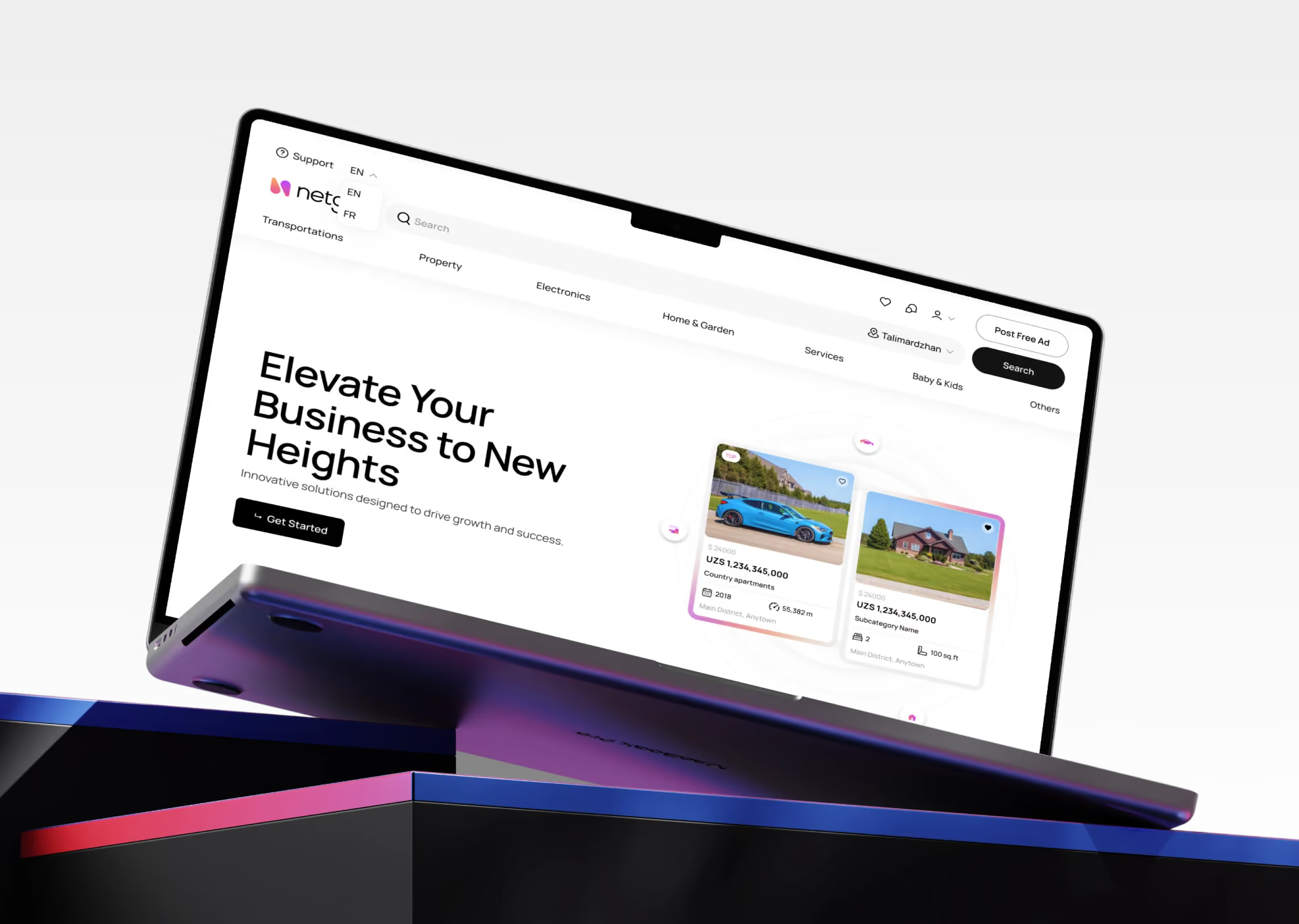
Marketplace Redesign that shortened the path to relevant listings
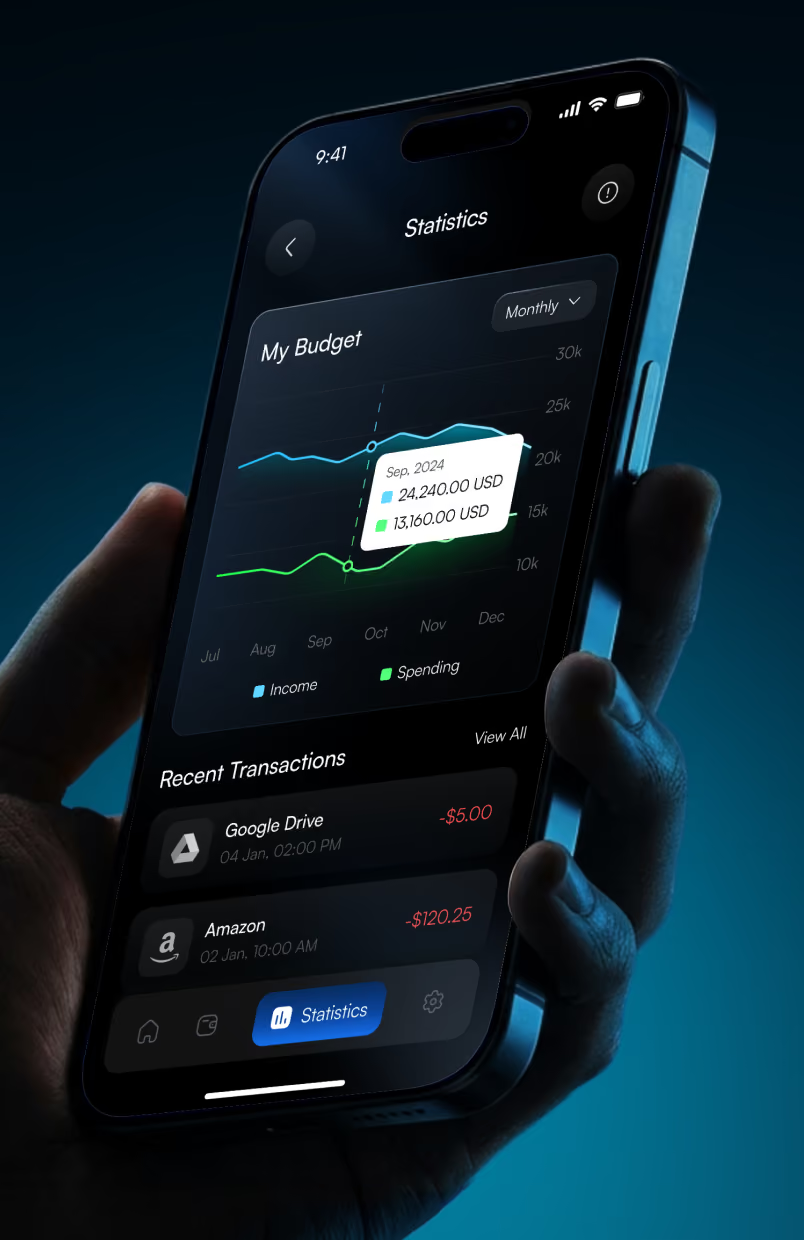
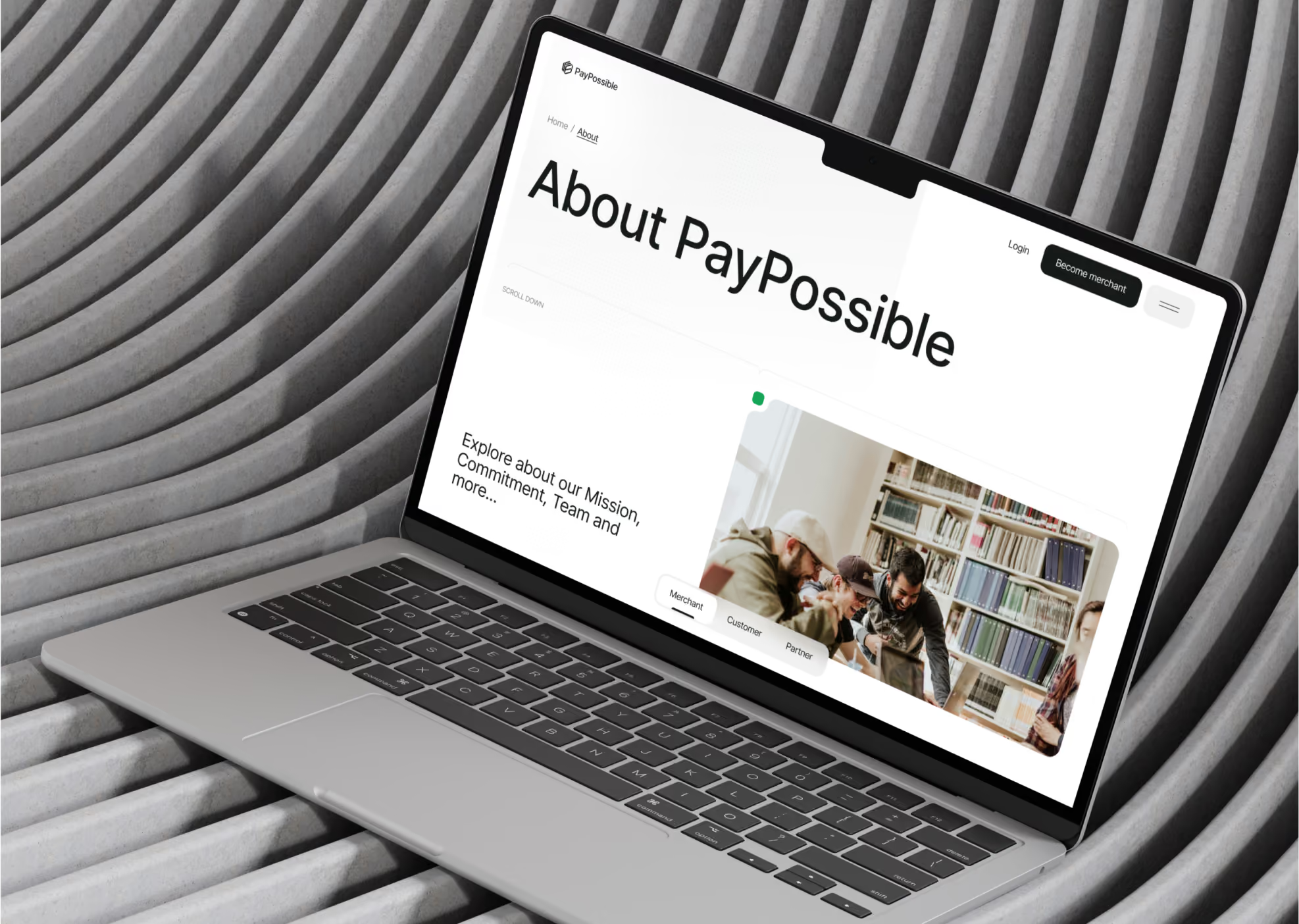
Fintech Website Redesign that Simplified Merchant Financing

Results We've Delivered Across Products
10+ years of product work has taught our team where usability problems start affecting business performance. We focus on the flows and product decisions that influence whether users complete key actions, return to the product, and continue using it over time.

55%
Faster Navigation
Users don't have to spend as much time understanding offers and deciding what to do next thanks to a revamped hierarchy and scannable listing cards.

96%
Transfer Task Completion
Each transfer decision received its own screen, which reduced input mistakes and kept users oriented through confirmation.

30%
Higher User Satisfaction
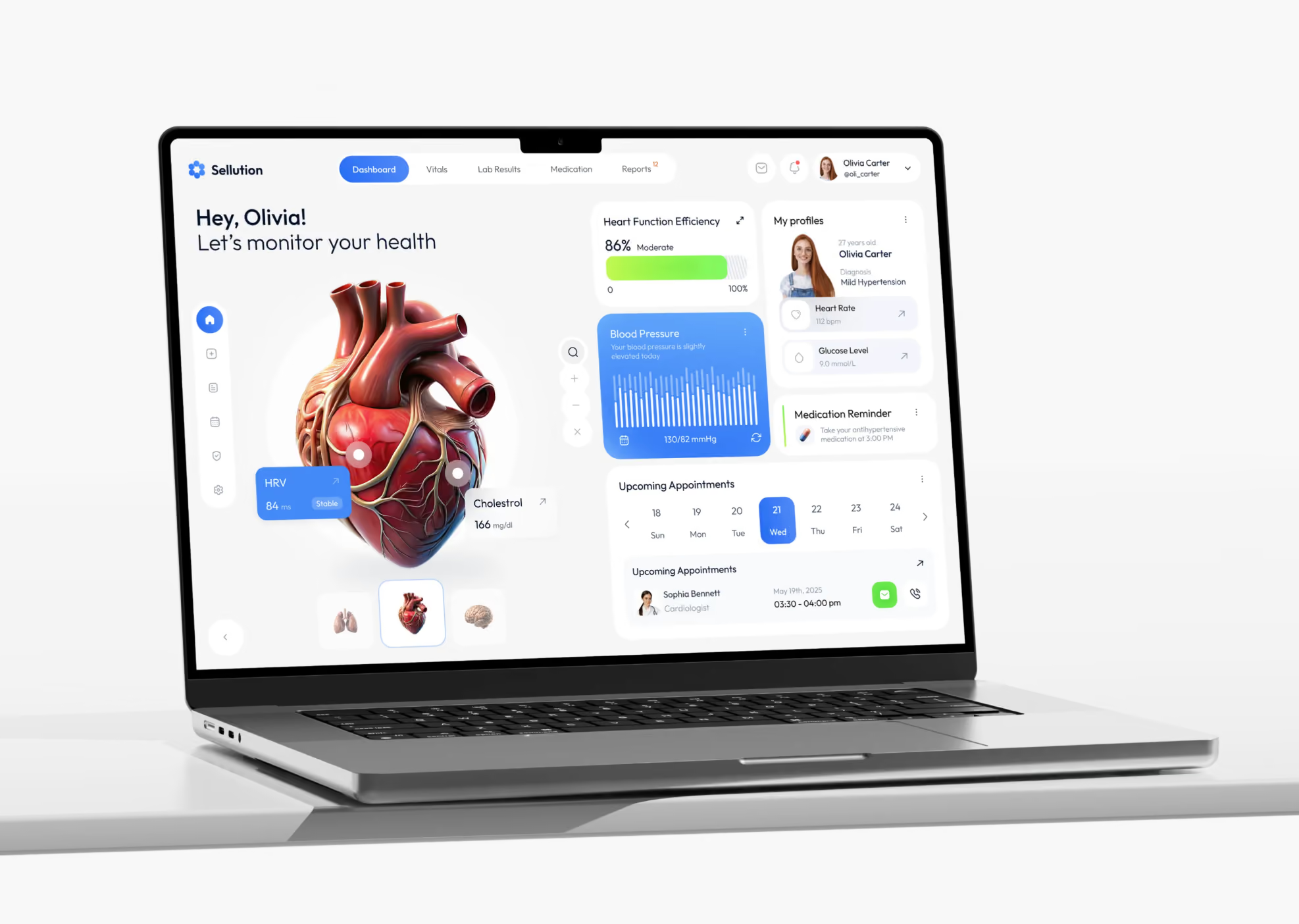
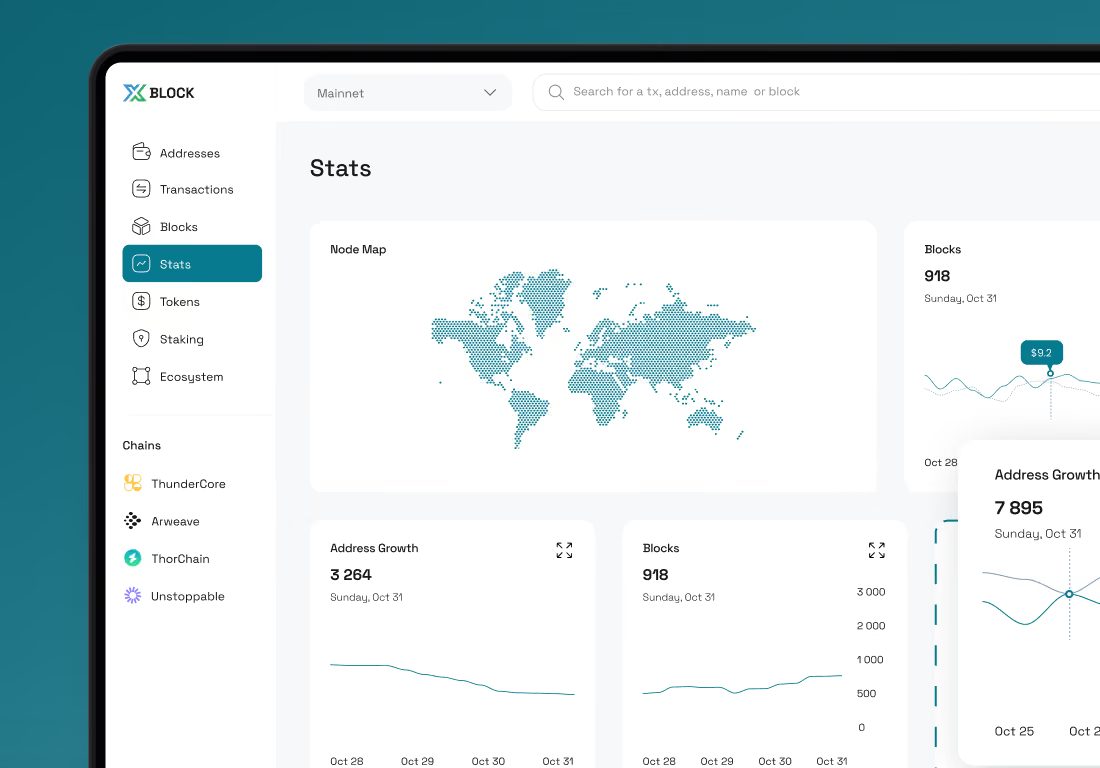
We made it easier for users to read the status of transactions and important blockchain KPIs by reducing the number of competing data points on each screen.



While the growth of our clients is what matters most, it`s nice to get awards



89+ Reviews
on Clutch

Top Rated Plus Agency
on Upwork

Top 50 Trending team
on Dribbble

Projects are Featured on Behance platform

How We Approach Every Project in Chicago
Each stage removes a different source of product risk before it reaches development. We validate the logic first, then shape the interface and stay involved through implementation.

What Strong UI/UX Design Does for Your Product

Improves Conversion at Critical Steps
A single choice in the UI might undermine the whole funnel. In order to improve completion rates, we identify points where users pause, lose context, or give up on the process altogether.

Strengthens Retention Through Repeat Use
Retention drops when routine actions still require effort. Our designers simplify the flows users return to most, helping the product become easier to adopt as part of their regular behavior.

Reduces the Cost of Product Growth
Every additional feature is more expensive to develop, build, and maintain when the structure is poor. You can cut down on rework, speed up release cycles, and avoid adding to your design debt by using shared components and stable interaction rules.

Clients recognize many reasons to trust our services





“I was impressed with the high levels of detail and polish for all the features.”

Jimmy Hosang
Founder & CEO

“Their professionalism, dedication, responsiveness, and determination are commendable.”

Emil Ljesnjanin
Founder & CEO

“Their expertise and guidance were instrumental. They demonstrated their commitment to creating a product that resonated with our target audience, which led to improved user satisfaction.”

Aetienne Sardon
Founder, MYSO Finance


“Working with Arounda is really smooth in terms of communication and workflow”

Stephane Heip
CMO, Enzyme

Our partners who chose structured execution



We get things done With Quality

HIPAA compliance and WCAG accessibility

End-to-end product delivery

Enterprise-grade design systems

Retention-focused user flows
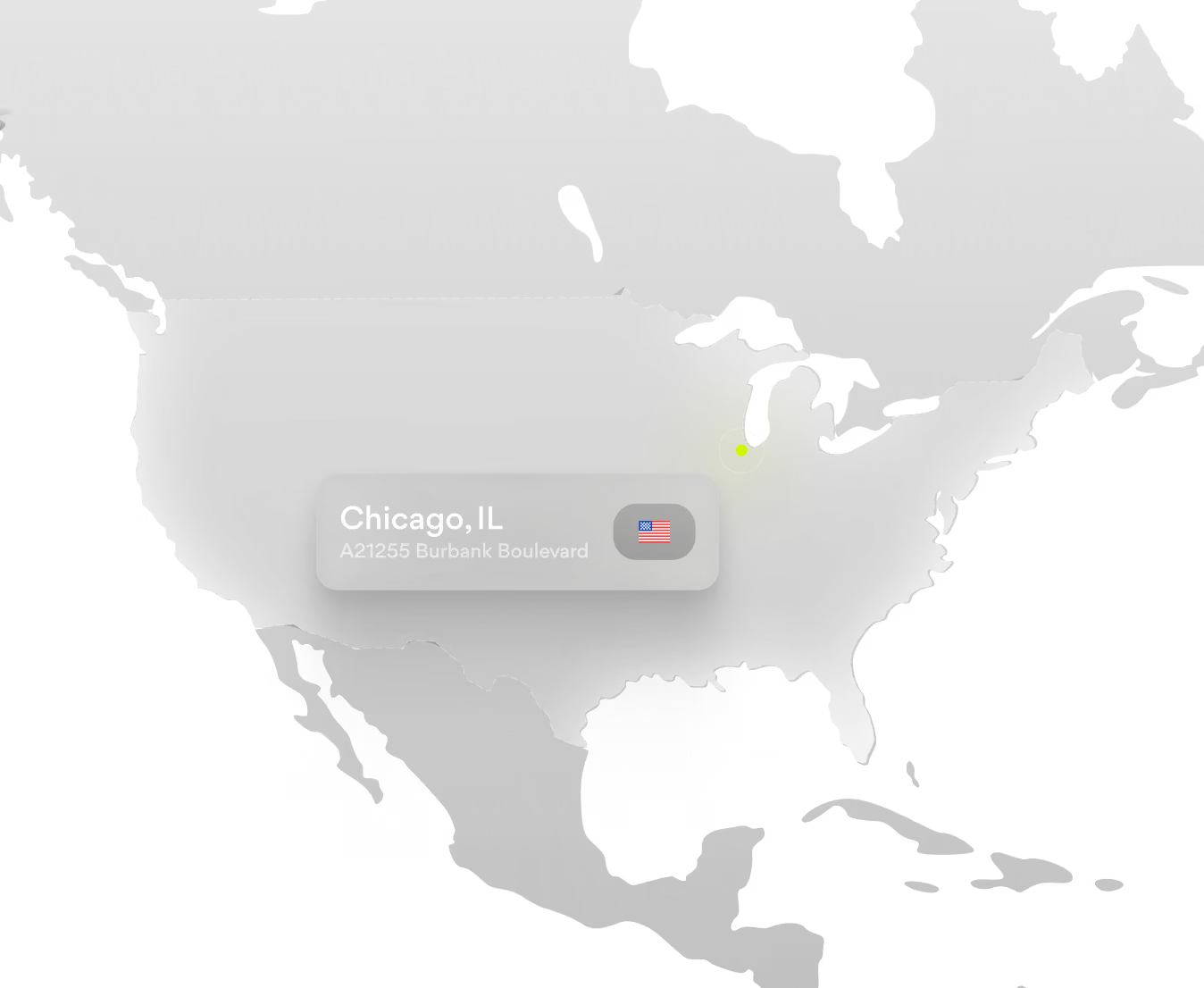
Our location
89+ Reviews
on Clutch
Top Rated Plus Agency
on Upwork
Top 50 Trending team
on Dribbble
Projects are Featured on Behance platform
FAQ on UI/UX design services in Chicago
What does a UI/UX design company in Chicago do?
Arounda helps companies understand why users struggle with a product and what needs to change. As a UX design agency Chicago companies work with, we improve product structure, key user flows, visual design, and development quality.
Our services cover the full product experience:
- UX research and product discovery: We study user behavior, business priorities, and the current product logic. This helps the team define the real problem before spending time on design.
- UI/UX design for web and mobile. Our designers plan screens, navigation, and interactions for the tasks users need to complete. Each decision reflects how people actually use the product.
- Website design and redesign: We improve the structure of websites that no longer support conversion or product growth. The work may include page hierarchy, navigation, content flow, and visual direction.
- UX/UI audit: We review the paths users take through the product and find where they hesitate, make mistakes, or leave. Your team receives a prioritized list of issues and practical recommendations.
- Design systems: We create reusable components and shared rules for product teams. Designers and developers can release new features without making the interface inconsistent or rebuilding common elements.
- Mobile app design: Mobile interfaces need shorter paths and stricter priorities. We keep primary actions within reach and adapt content, navigation, and interactions to smaller screens.
- Branding and visual identity. We create typefaces, color palettes, icons, illustrations, and brand standards as part of our branding and visual identity work. All of the product's marketing materials and UIs share the same identity thanks to these components.
- Web and MVP development. We can take approved designs into development with the same product context. This keeps the final build close to the agreed interface logic and interaction behavior.
Our team has worked on 500+ digital products. This experience helps us find the difference between a small usability issue and a structural problem that affects conversion, adoption, or retention.
How do you measure the success of a design project?
Arounda measures design through the product results it changes. As a UX design agency in Chicago, we set the target before work begins and agree on which metrics will show whether the new solution performs better.
The exact metrics depend on the project, but we usually look at four areas:
Business performance
- Signups and qualified leads
- Conversion rate
- Revenue-related metrics
- Operational costs
Product usage
- Feature adoption
- Task completion
- Navigation speed
- Time spent on key actions
User experience
- Satisfaction scores
- Product comprehension
- Content readability
- Error rates
Long-term value
- Retention
- Repeat use
- Churn
- Customer lifetime value
Our case results show how this works in practice.
- PayPossible needed to improve the path between merchant interest and a completed financing application. After the redesign, merchant signups doubled, financing applications increased by 40%, and user satisfaction reached 88%.
- Product discovery was NetGet's primary concern. Customers could now navigate the marketplace 55% quicker thanks to a reorganized hierarchy, improved listing cards, and more robust navigation logic. Improvements in readability and recognition of the brand accompanied the 45 percent rise in platform usefulness.
- Sellution needed a dashboard that simplified the display of health data for everyday usage. With our design, users located primary vitals in only 0.8 seconds and comprehend critical information three times quicker.
After launch, we compare the new results with the original baseline. We also check where users still hesitate, whether the team can add features without weakening the experience, and which parts of the product need another iteration.
What is your approach to product redesign for established companies?
A redesign should solve the problems already affecting product performance without disrupting the flows users rely on. Our UX design company Chicago team starts by finding where people drop off, lose time, or make repeated mistakes.
During a redesign, we focus on four areas:
- Current UX problems: Analytics and support data show where the product starts losing users. We pair them with feedback and journey reviews to find the cause.
- Product structure: Our goal is to ensure that the product's existing logic is suitable for the intended use. Then we can go on to the aesthetic adjustments.
- Interface quality: We identify what slows each task down and fix that specific issue. It may be weak hierarchy, poor spacing, or an unclear interaction state.
- Future product growth: The redesign should work for the next round of releases. With the use of responsive rules and updated components, teams should be able to add functionality without disrupting existing flows.
How do you handle design decisions when stakeholders disagree?
Stakeholders often disagree because each person is protecting a different product outcome. Arounda brings those concerns into one decision process.
As a UX design firm Chicago companies work with, we do not resolve disagreements through preference. We return to the feature goal, user evidence, product data, and technical impact.
When two directions compete, we check:
- Which option helps users complete the task with fewer errors?
- What business metric should this decision improve?
- Does the solution fit the current product logic?
- How much time and engineering effort will it require?
- Can the team support the solution after launch?
When both choices are still good, we work on alternatives in the real product setting. Each direction describes how it will change usability, the scope of development, and upcoming releases. After that, we'll suggest the choice that strikes the best balance between the option's value to users and its effect on businesses.
What does the onboarding process look like when starting a new project in Chicago?
The first session turns the initial request into a workable project plan. Arounda designers clarify the product issue, confirm who approves decisions, and define the result the team expects from the work.
Our UX UI design agency Chicago team can join an existing remote setup without changing how the client already works. The project manager confirms access, communication, and review timing before the designers begin.
The setup usually covers:
- A dedicated team led by one project manager
- Access to Figma and the current product files
- Slack, Notion, Jira, or the client's preferred tools
- Existing analytics and research materials
- Feedback deadlines and final decision owners
The product context determines what happens next. An existing platform may need a UX audit before any redesign work starts; a new product may begin with discovery or user flows.
Within a week or two, clients will typically notice the first results. Depending on where we start, we can finish up with audit results, updated processes, wireframes, a new sitemap, or even some early design direction.
Teams can begin with a free three-day trial. One Arounda designer works on a real product task, giving the client a direct view of our thinking, communication, and delivery before a full project starts.
How do you ensure design consistency across platforms and touchpoints?
Arounda makes one design system that all of the products' surfaces follow. It ensures that all marketing, mobile, and online pages have consistent font, space, color usage, components, and interaction states.
The system addresses the most common patterns that teams use:
- Forms: One set of rules controls validation, errors, and field states.
- Navigation: Mobile and desktop versions follow the same hierarchy.
- Dashboards: Filters, tables, and data states come from shared components.
- Marketing pages: Product visuals carry into landing pages and lead forms.
Upon receiving the component library, developers will see implementation notes and response states. By reusing existing logic, new displays can save development time and avoid duplicating elements.
What engagement model works best for long-term product teams?
We usually recommend one of two models:
- Dedicated product design team. Optimal for businesses that have a clear path forward. You can use Arounda to back up feature requests, redesigns, user experience enhancements, experimentation, and design system changes. Designers function more like an internal team, participating in planning, evaluations, and handoffs.
- Design team extension. Best for teams that already have design leadership but need extra capacity or specialist skills. A senior designer or UX expert joins the existing workflow and takes ownership of a defined area, such as onboarding, mobile, an audit, or a new feature.
Long-term collaboration gives designers the context needed to make better decisions and move faster during future release cycles.
How do you collaborate with in-house design or development teams?
Our designers join the client's existing process and take responsibility for a defined part of the product. We agree on ownership early, then work inside the same files, tools, and sprint rhythm as the internal team.
- With in-house designers: Our team can cover extra workload, lead a separate product area, improve complex flows, or support the design system. The internal team keeps visibility into every decision and can continue the work after handoff.
- With developers: Designers prepare implementation-ready Figma files with responsive rules and documented states. Questions go directly to the designer during the build, which reduces interpretation errors and unnecessary revisions.
Sprint planning, backlog reviews, design critiques, and async feedback are all areas where we can dive in. With all relevant documents in one place, the product, design, and engineering teams always have access to the most up-to-date information.