UI/UX Design Agency in Dallas
Our UI UX design company in Dallas works with SME and enterprise teams that want to improve retention, increase conversion, and make digital products easier to adopt and use.
on Clutch
completed in various niches
rating on Clutch



Design Services We Offer in Dallas
Companies choose our UI UX design services in Dallas when they need one team to lead product discovery, UX, UI, modernization, or full redesign. Arounda keeps the process organized, connects design decisions with business priorities, and gives internal teams a reliable partner from early planning to final delivery.
Selected Work for Dallas Enterprises
Arounda has delivered 500+ products for companies in Dallas and worldwide. As a UI/UX design agency Dallas teams rely on for complex product work, we turn business challenges into practical design decisions. The case studies below show the original challenge, the decisions our team made, and the business results each project achieved.

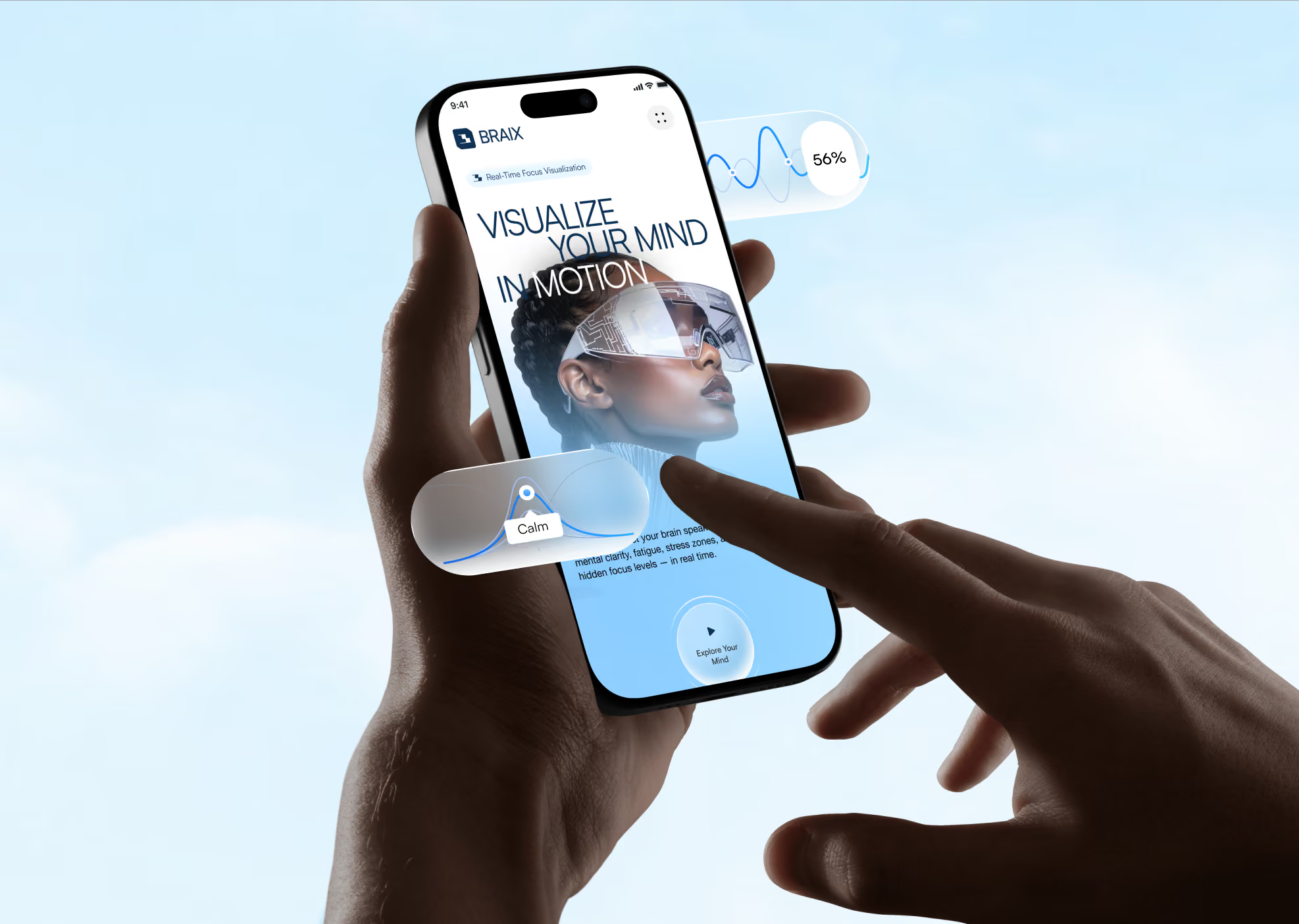
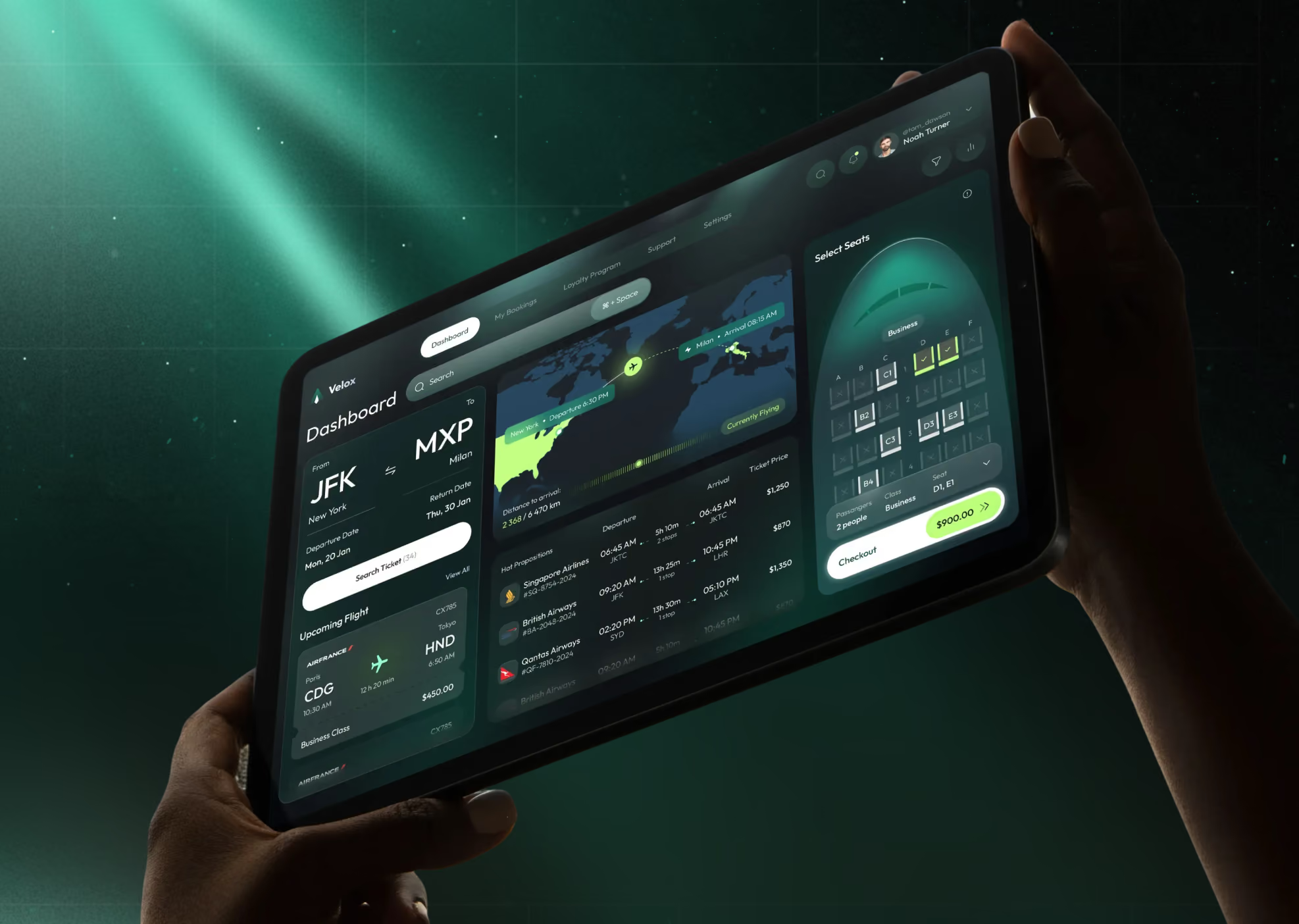
Website Design for a Neurotechnology Product
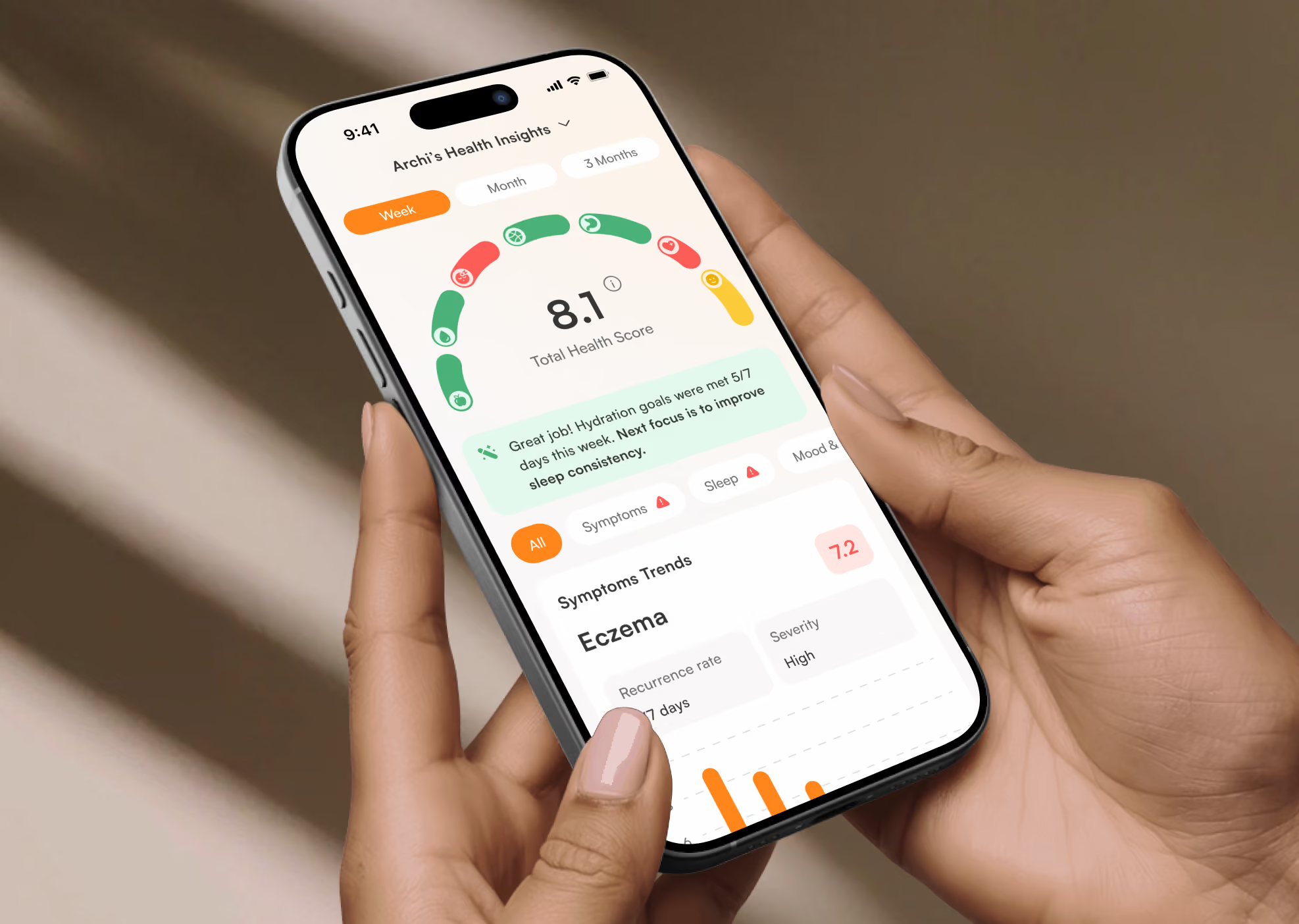
Mobile App Redesign for a Children's Health Tracking Application

Results We've Delivered Across Products
After working on digital products for more than 10 years, our team knows which issues start weakening conversion, adoption, and retention before the metrics make them obvious. We redesign areas where users hesitate, lose context, or abandon a task to improve product performance.
-42%
Fewer User Errors
PIIFUND was able to decrease the occurrence of mistakes during transfers, payments, and other high-stakes actions by implementing single-action screens, explicit confirmations, and a simplified KYC flow.
+45%
Higher Platform Usability
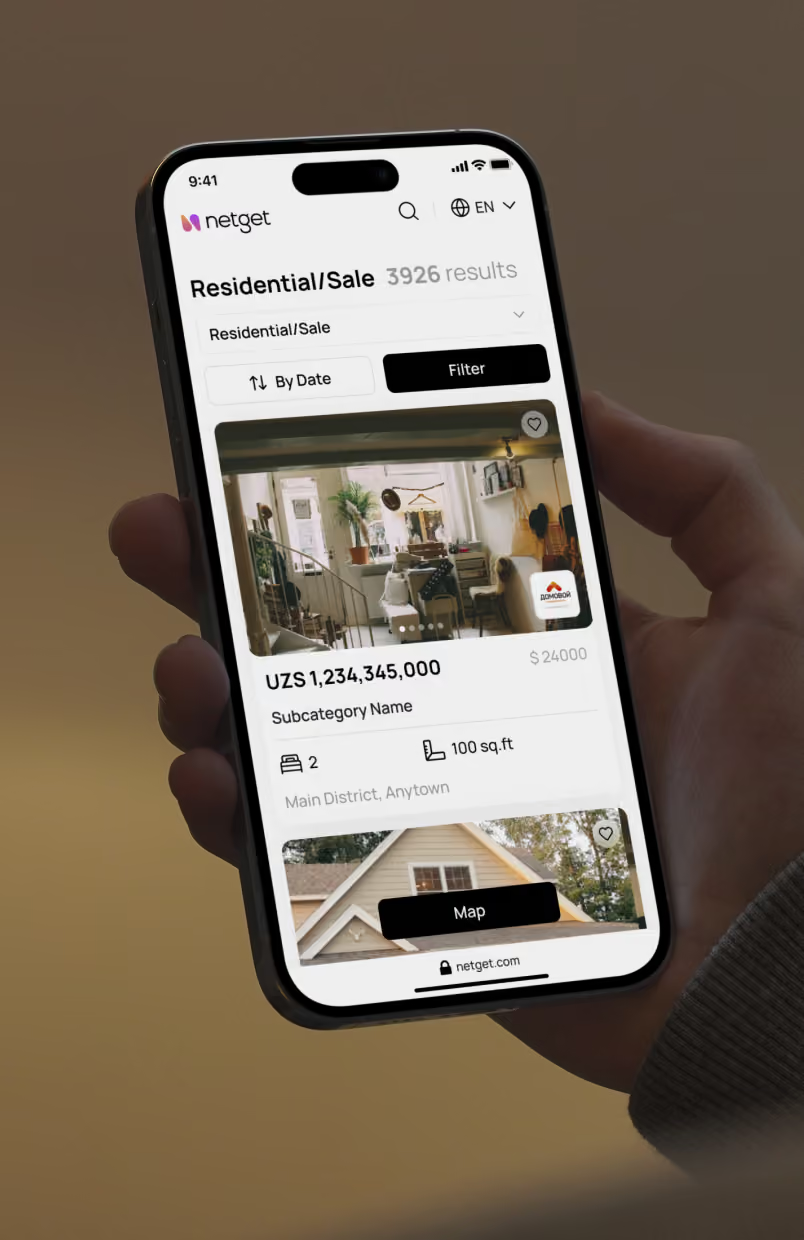
Users were able to identify products and complete important marketplace tasks more quickly thanks to a redesigned hierarchy, easier-to-scan listings, and consistent interaction patterns on NetGet.

+91%
Higher Parent Confidence
Parents had a better understanding of their child's data and made confident decisions about their daily health with the support of per-child cards, organized health insights, and simplified tracking flows.



While the growth of our clients is what matters most, it`s nice to get awards



89+ Reviews
on Clutch

Top Rated Plus Agency
on Upwork

Top 50 Trending team
on Dribbble

Projects are Featured on Behance platform

How We Approach Every Project in Dallas
We organize each engagement into focused stages with a defined purpose, clear responsibilities, and expected deliverables. Every design decision must support a product priority, solve a user problem, or contribute to a business goal.

What Strong UI/UX Design Does for Your Product

Shortens the Path to Product Value
We remove unnecessary steps from onboarding and key actions, helping users understand the product and reach meaningful outcomes sooner.

Gives Users a Reason to Return
Consistent interactions simplify repetitive tasks and build trust, encouraging users to use the product.

Supports Growth Without UX Rework
To avoid adding to design debt, we build scalable product frameworks and design systems that can accommodate additional features and teams.


Clients recognize many reasons to trust our services





“I was impressed with the high levels of detail and polish for all the features.”

Jimmy Hosang
Founder & CEO

“Their professionalism, dedication, responsiveness, and determination are commendable.”

Emil Ljesnjanin
Founder & CEO

“Their expertise and guidance were instrumental. They demonstrated their commitment to creating a product that resonated with our target audience, which led to improved user satisfaction.”

Aetienne Sardon
Founder, MYSO Finance


“Working with Arounda is really smooth in terms of communication and workflow”

Stephane Heip
CMO, Enzyme

Our partners who chose structured execution



We get things done With Quality

HIPAA compliance and WCAG accessibility

End-to-end product delivery

Enterprise-grade design systems

Retention-focused user flows
Our location
89+ Reviews
on Clutch
Top Rated Plus Agency
on Upwork
Top 50 Trending team
on Dribbble
Projects are Featured on Behance platform
FAQ on UI/UX design services in Dallas
What does a UI/UX design company in Dallas do?
Arounda is a UX design agency Dallas growth-stage companies and enterprise teams work with for product design, branding, and development. Since 2016, our team has delivered 500+ products in multiple industries, covering everything from early UX research to production-ready development.
- UX research and product discovery. We study user needs, define the product structure, and identify the decisions that influence adoption and retention before moving into interface design.
- UI/UX design for web and mobile. Our designers create information architecture, user flows, wireframes, interactive prototypes, and high-fidelity screens prepared for development.
- Website design and redesign. When businesses are struggling with low conversion rates, out-of-date positioning, or trying to reach a new demographic, they turn to Arounda to build their websites and landing pages. Every design choice has to help reach a clear business goal.
- UX/UI audit. By comparing current products to usability standards and business objectives, we can identify which screens and flows are leading to user confusion or abandonment, and then we can create a prioritized plan of action with suggested enhancements and predicted benefits for the company.
- Design systems. Our team creates shared component libraries and design systems for enterprise organizations and growing SaaS products. They help product and engineering teams maintain consistency, simplify handoffs, and release new features with less duplicated work.
- Mobile app design. We design iOS, Android, and cross-platform applications for products with complex workflows, where screen space, information density, and task logic need careful control.
- Branding and rebranding. Our brand designers develop visual identities, logos, and rebranding systems that keep the product, marketing materials, and investor communications visually consistent.
- Web and MVP development. Arounda provides web development, MVP development, Webflow development, landing page development, and mobile development. Keeping design and development within one team reduces coordination gaps and prevents delays between project phases.
Arounda was named a Clutch Top Design Company in 2025 and 2026. Over 10 years, we have worked with WordPress, Automattic, Greif, Chalhoub Group, and Players Health.
How do you measure the success of a design project?
Arounda is a UX design agency in Dallas that measures design success against agreed product and business metrics, not visual preferences alone. We make sure to record the current baseline, discuss and agree upon client-side target results, and settle on analytics, testing techniques, and reporting periods before any work starts.
We usually track five groups of indicators:
- Conversion. Trial registrations, demo requests, onboarding completion, checkout completion, and trial-to-paid conversion.
- Retention and adoption. Day 1, Day 7, and Day 30 return rates, time-to-value, core feature use, monthly churn, and net promoter score (NPS).
- Usability. Task completion, user errors, time spent on key actions, abandonment points, and support requests linked to product confusion.
- Delivery performance. Finishing each step on time, the number of revision rounds, the time it takes to go from design to development, and the fixes that need to be made after the release.
- Business impact. Revenue per user, upsell and renewal rates, customer acquisition cost, average contract value, and operational effort required to support users.
Certain key performance indicators are project-specific. When redesigning a website, the focus may be on qualified leads and conversions. On the other hand, a SaaS platform may focus on activation, feature uptake, retention, and support volume.
Several months after launch, our project manager reconnects with the client to compare the new results with the original baseline. The findings show which design decisions worked, where further improvement is needed, and what the next product priorities should be. This post-launch review is included in every Arounda engagement.
What is your approach to product redesign for established companies?
Arounda is a UX design company Dallas enterprises choose when an established product needs a careful redesign. We first determine where the experience is holding the product back. Stable areas remain untouched, which keeps the scope focused and reduces unnecessary disruption.
- UX audit. We examine the main user flows and individual screens. The audit reveals where people leave, hesitate, or overlook important features.
- Scope definition. Each issue receives a priority based on its effect on the business. This gives the client a practical redesign plan and shows which product areas should stay as they are.
- UX restructuring and validation. Our team maps the revised experience through wireframes. User testing then shows whether the new structure improves task completion before visual production begins.
- UI design and system updates. We redesign the affected interface and bring the design system up to date. Shared rules reduce inconsistencies between product areas and make future releases easier to manage.
- Post-launch analysis. Following the rollout, we compare the new metrics to the old ones in terms of conversion and retention. Furthermore, we evaluate the adoption of features and the completion of tasks. You can see which parts of the product were successful with the redesign and which ones need more attention.
How do you handle design decisions when stakeholders disagree?
Stakeholder disagreement is part of product work, so our UX design firm Dallas team gives each discussion a defined way forward.
We first identify what sits behind the conflict. Some disagreements come from personal taste or different ideas about the product direction. Others concern expected outcomes, such as conversion, adoption, or task completion. Mixing these two types usually makes the discussion harder to resolve.
When the issue comes down to preference, we refer back to user research, usability findings, and the agreed product principles. When the disagreement concerns performance, we test the assumption through a prototype session, an A/B test, or a staged release with one success metric agreed in advance.
Arounda records the reasoning behind major design decisions. This gives stakeholders a shared reference point and keeps later discussions tied to evidence instead of individual opinion.
What does the onboarding process look like when starting a new project in Dallas?
The onboarding process moves from the first scoping call to an initial deliverable within one to two weeks. As a UX UI design agency Dallas companies work with, Arounda uses five defined stages to establish the scope, team responsibilities, and project direction before production begins.
- Scoping. We discuss the product challenge, business priorities, target users, and the metrics that will define success.
- Proposal. Deliverables, phases, specialists, timeframe, and cost are all detailed in a written plan that the client receives. Both parties must agree on the scope before work starts.
- Kickoff. Our team coordinates with the client's business, engineering, and product stakeholders. First, we look at the study and documentation that has already been done. Next, we define communication rhythm, feedback cycles, and decision ownership.
- Discovery. For redesigns, we audit the current product before changing the interface. For new products, we study user needs and the market, then define the product structure. High-fidelity design starts after the team agrees on the direction.
- First deliverable. Initial wireframes, concepts, or audit findings arrive within one to two weeks, depending on the project scope.
How do you ensure design consistency across platforms and touchpoints?
Our team uses one design system for every product touchpoint. It defines how each component should look and behave on web and mobile, including responsive layouts and interaction states.
At each project stage, designers compare the screens across platforms and fix any inconsistencies before handoff. Developers receive documented rules for edge cases and platform-specific behavior, and our team checks the implementation during development to keep the final product aligned with the approved design.
What engagement model works best for long-term product teams?
Product teams can choose between two long-term collaboration models based on the structure of their internal design function.
- Dedicated design team. This model fits companies that need an external team to take full responsibility for product design. A stable group works through the roadmap on a fixed monthly rate and stays involved across releases.
- Team extension. This option supports in-house teams that need extra capacity or a specific skill set. Our designers join the client’s workflow, participate in sprint planning, and work inside the same tools as the internal team.
The choice depends on how much design ownership the company wants to keep internally.
How do you collaborate with in-house design or development teams?
Our team joins the client’s existing workflow and agrees on the working setup at kickoff. This includes the tools, communication channels, review schedule, and who has final decision authority.
- With in-house design teams, we work in shared Figma files and follow the current design system. We join sprint planning, cover missing capacity, and take on specialist work when needed. Each deliverable comes with documentation, so the internal team can continue using and extending the work later.
- We collaborate with development teams to create handoff files that include everything from annotated components and responsive behavior to interaction states and documented edge cases. In order to cut down on unnecessary revision rounds and answer questions directly, our designers remain involved during implementation.