UI/UX Design Agency in London
Our UI/UX design company in London helps SME and enterprise teams improve product clarity, strengthen user flows, and connect design decisions with growth goals.
on Clutch
completed in various niches
rating on Clutch



Design Services We Offer in London
Companies use our UI/UX design services in London when they need sharper product logic, organized design work, and delivery without scattered ownership. We bring the patterns, questions, and decisions learned from years of complex product work.
Selected Work for London Enterprises
500+ companies have trusted Arounda with product design challenges. The case studies below show how our design decisions supported product goals, user needs, and business outcomes.

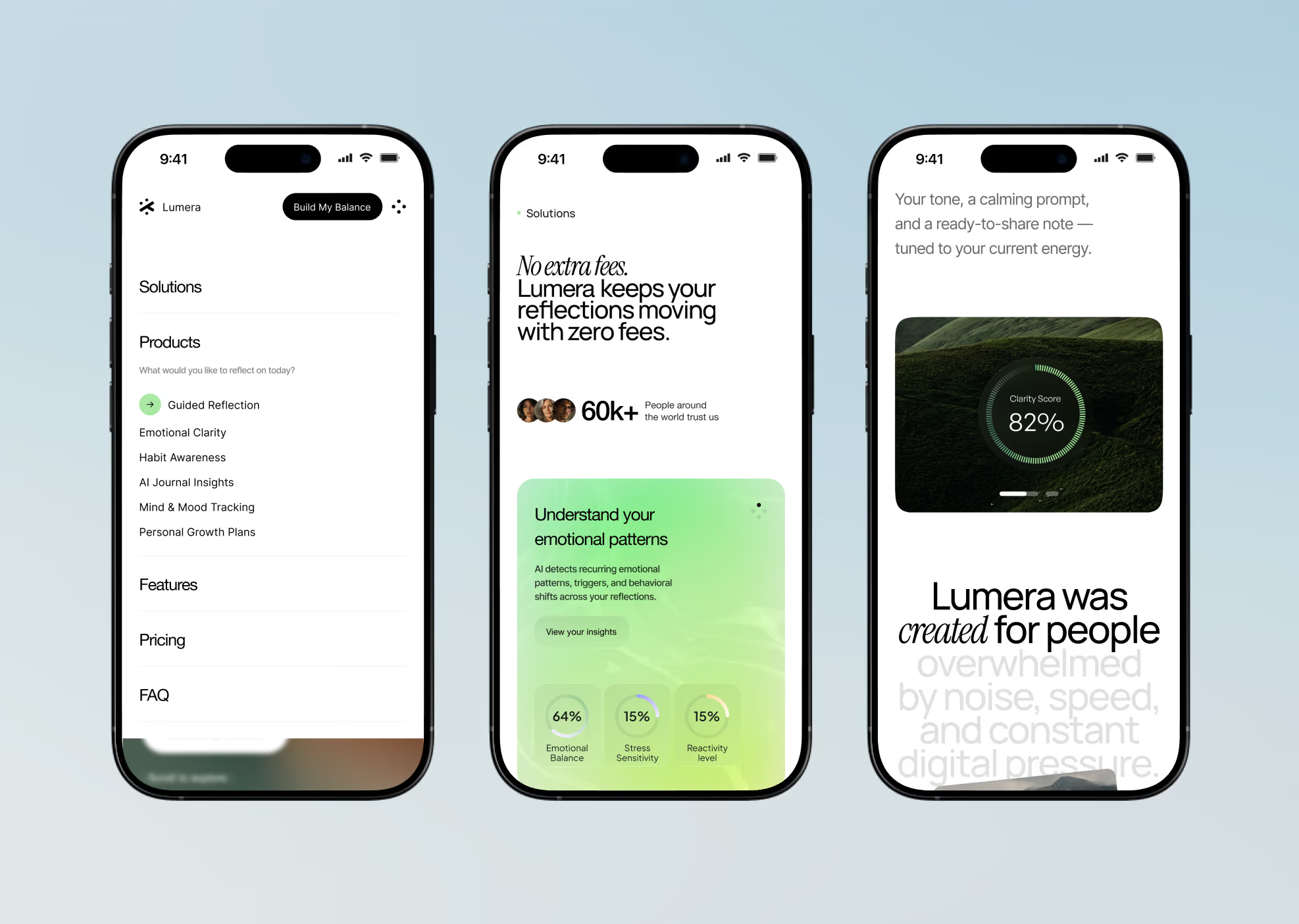
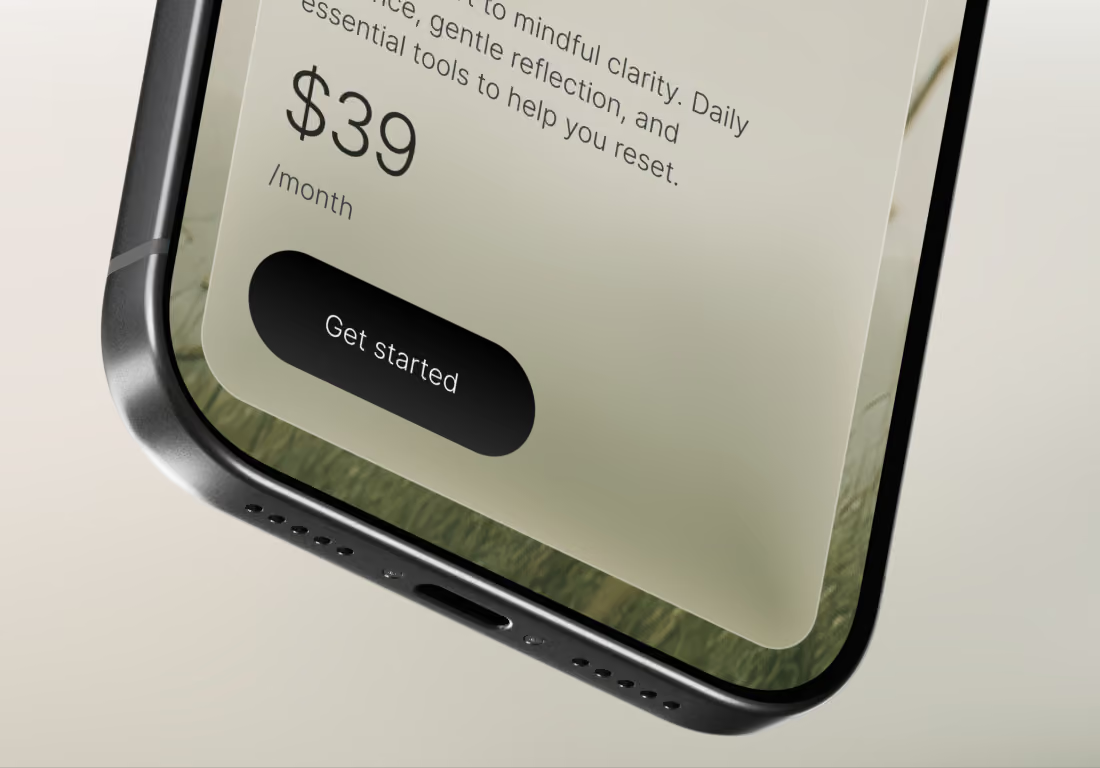
UI/UX Design for a Mental Wellness Platform

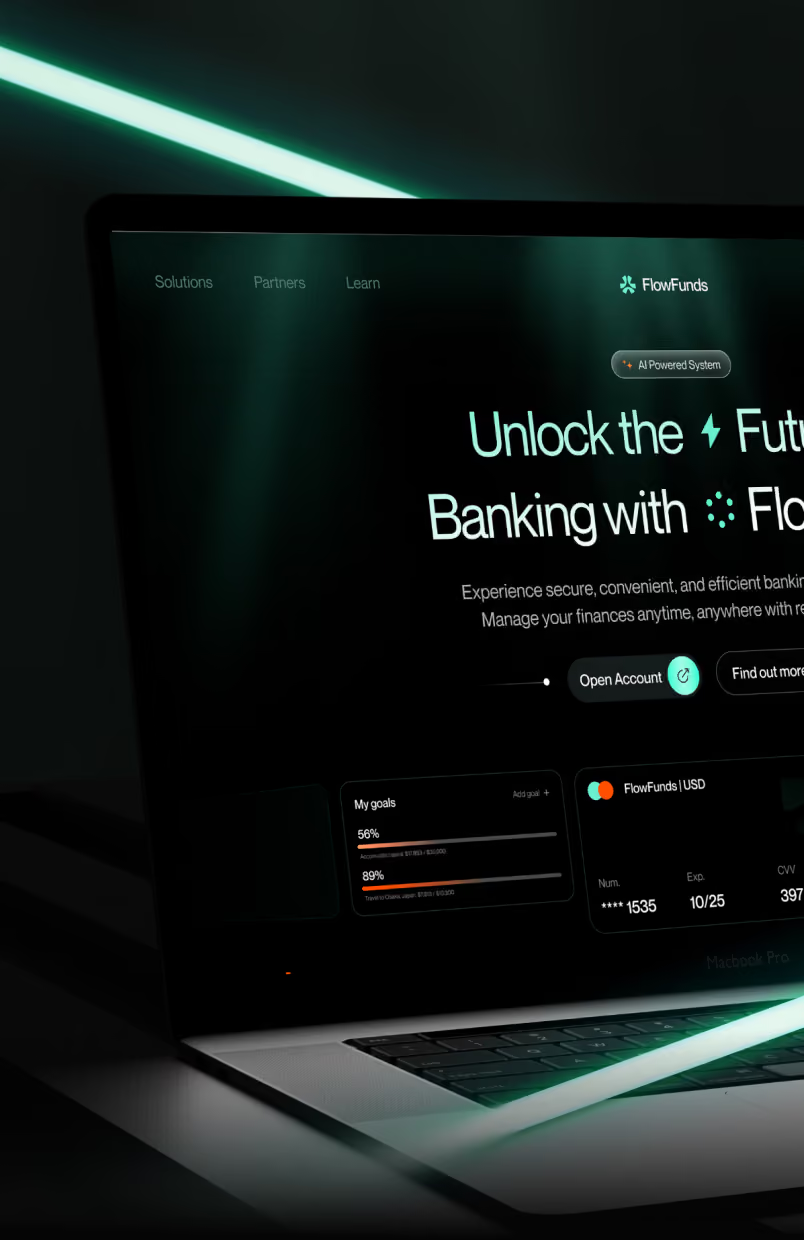
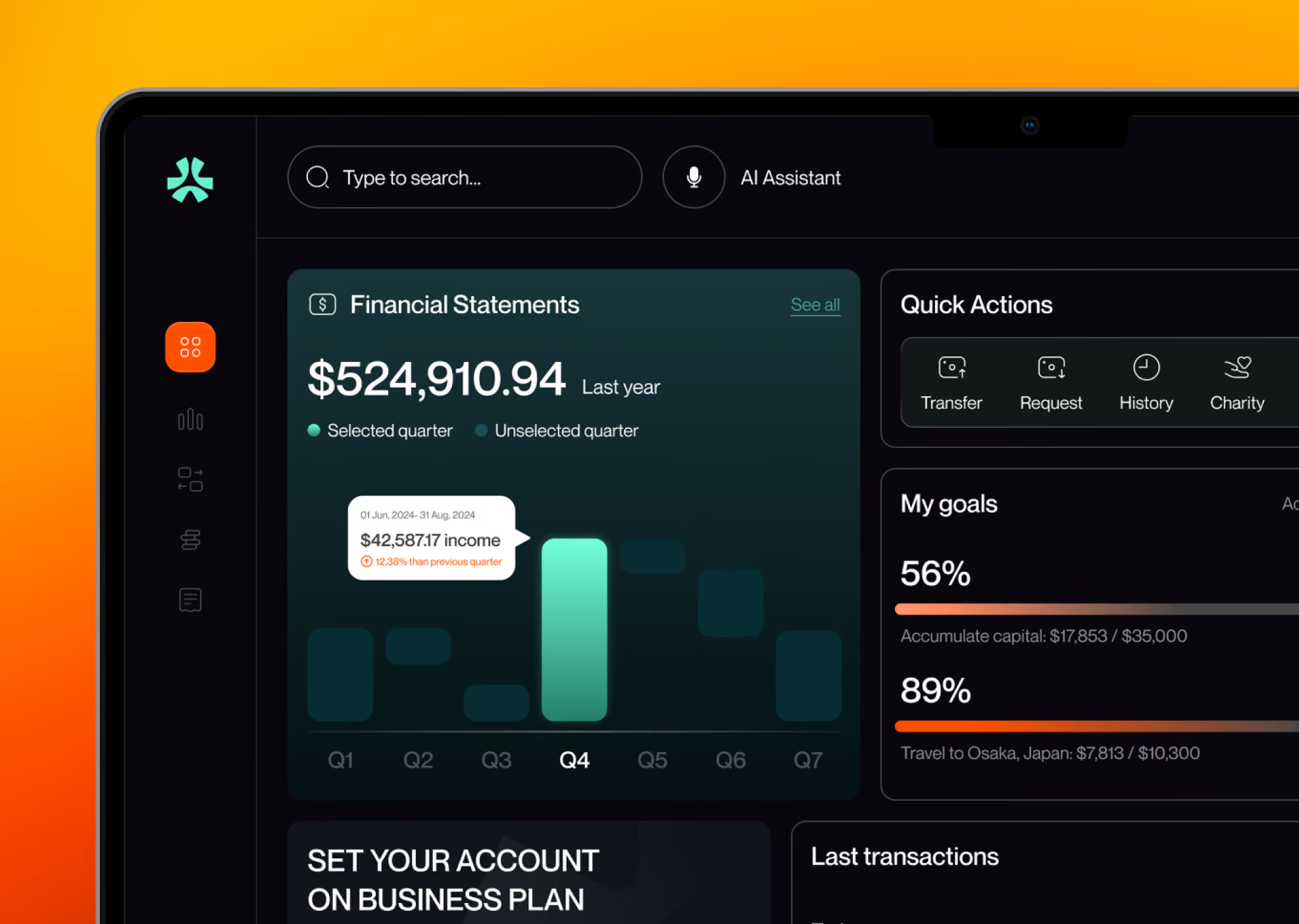
Product Design for a Digital Banking Platform
Results We've Delivered Across Products
For more than 10 years, we have worked with products at different stages of growth and complexity. This helps our team spot structural issues early and improve the product. We focus on the areas that help clients increase conversions, reduce drop-offs, improve retention, and manage product growth with less friction.

32%
Expanded Customer Reach
Clear navigation and consistent workflows made the platform easier for new customers to adopt.

+35%
User Engagement Increase
Simplified charts and cleaner layouts encouraged traders to explore more tools and spend more time on the platform.
52%
Higher Feature Engagement
Better navigation and interactive sections helped users discover and use more platform capabilities.



While the growth of our clients is what matters most, it`s nice to get awards




89+ Reviews
on Clutch

Top Rated Plus Agency
on Upwork

Top 50 Trending team
on Dribbble

Projects are Featured on Behance platform

How We Approach Every Project in London
Every phase moves the project toward a specific outcome. Each decision supports your product priorities, business objectives, and the direction of future growth.

What Strong UI/UX Design Does for Your Product

Builds habits around core features
When users reach value quickly, they have a stronger reason to come back. We design flows that make key actions easier to find, repeat, and complete.

Turns product complexity into faster decisions
Good UX makes even the most complicated products easy to grasp. This facilitates better conversion paths, shortens evaluation, and decreases hesitation.

Reduces design debt as products grow
With a scalable design system, groups can agree on standards for layouts, components, and user interactions. As a result, the product remains stable even when you add new features.

Clients recognize many reasons to trust our services





“I was impressed with the high levels of detail and polish for all the features.”

Jimmy Hosang
Founder & CEO

“Their professionalism, dedication, responsiveness, and determination are commendable.”

Emil Ljesnjanin
Founder & CEO

“Their expertise and guidance were instrumental. They demonstrated their commitment to creating a product that resonated with our target audience, which led to improved user satisfaction.”

Aetienne Sardon
Founder, MYSO Finance


“Working with Arounda is really smooth in terms of communication and workflow”

Stephane Heip
CMO, Enzyme

Our partners who chose structured execution



We get things done With Quality

HIPAA compliance and WCAG accessibility

End-to-end product delivery

Enterprise-grade design systems

Retention-focused user flows
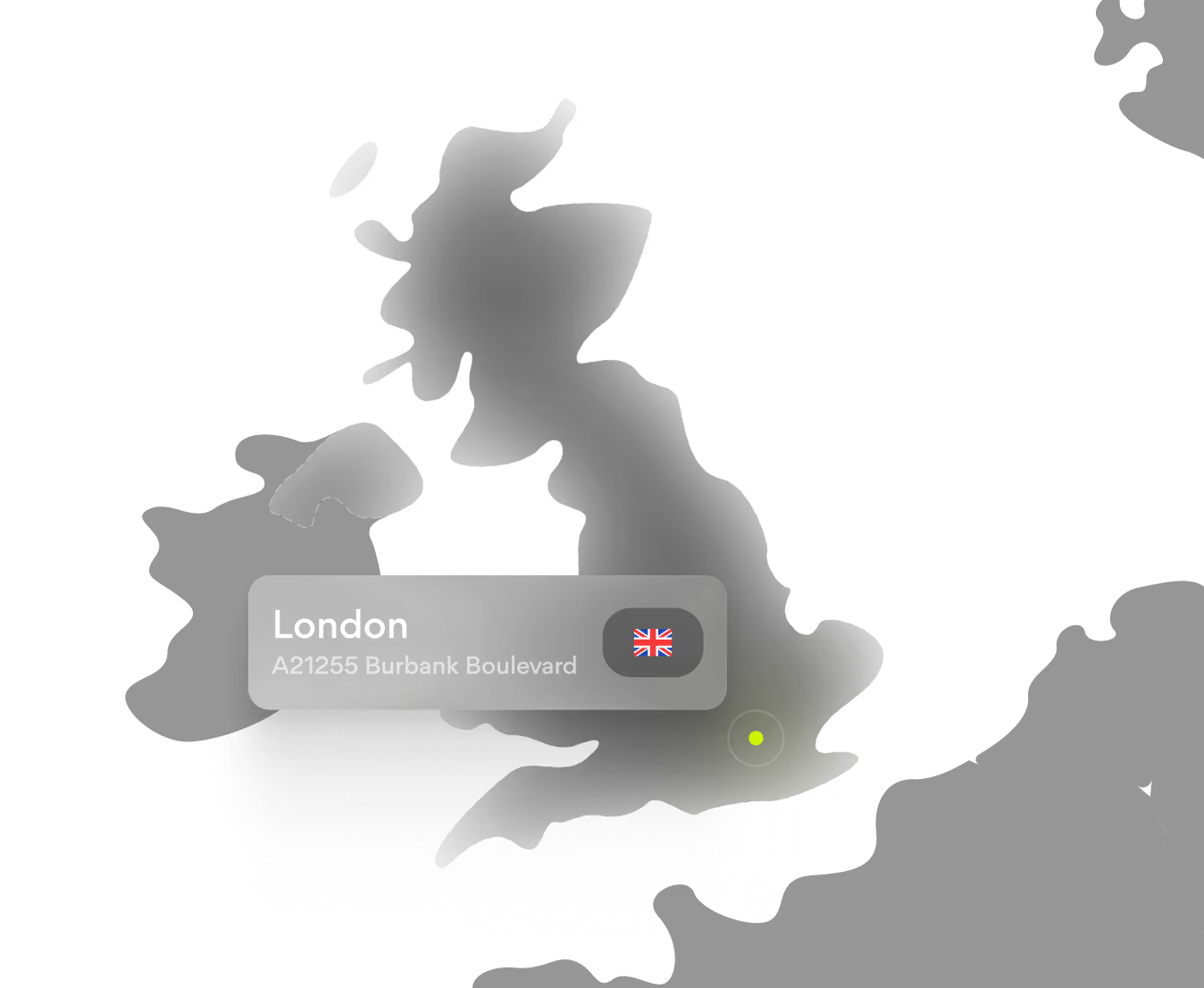
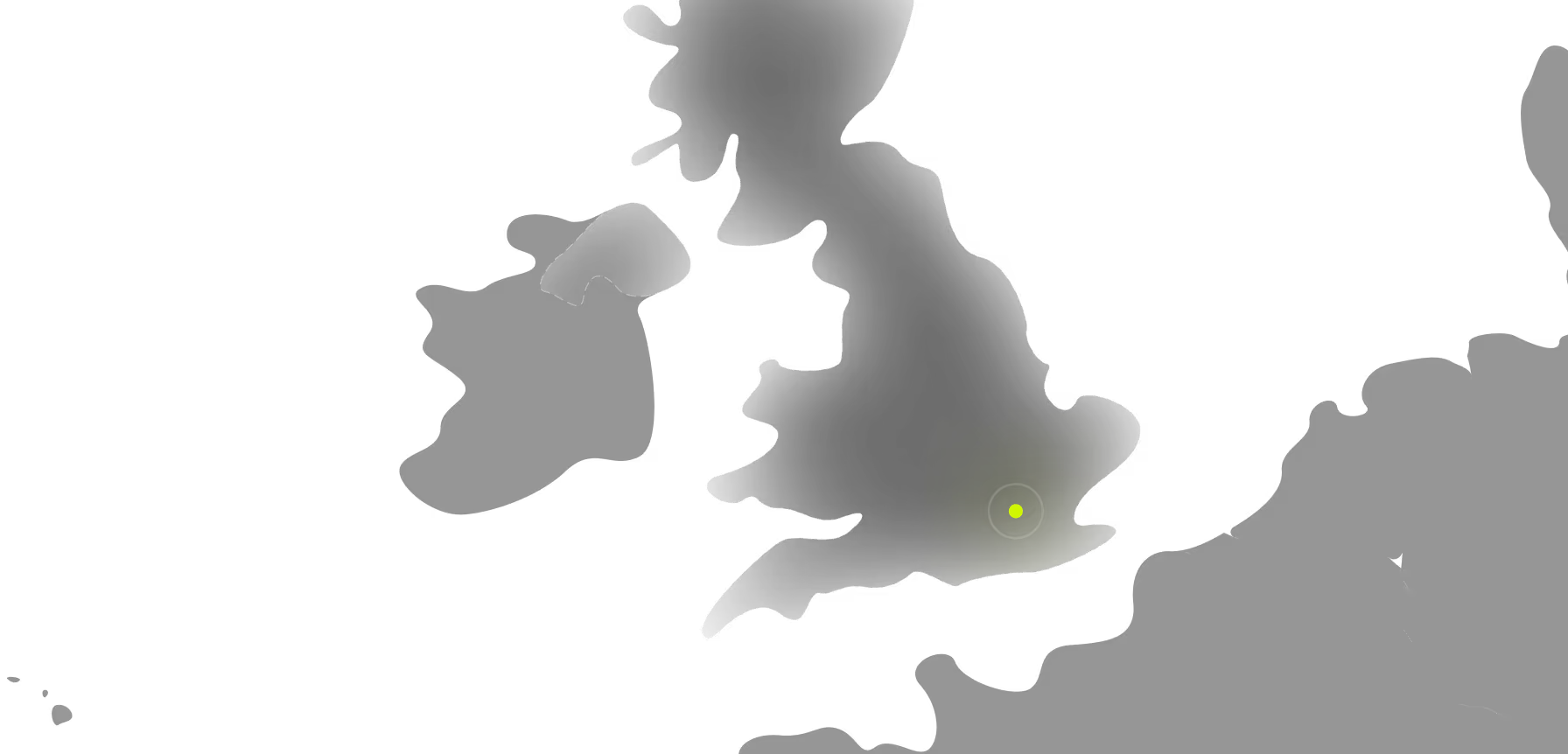
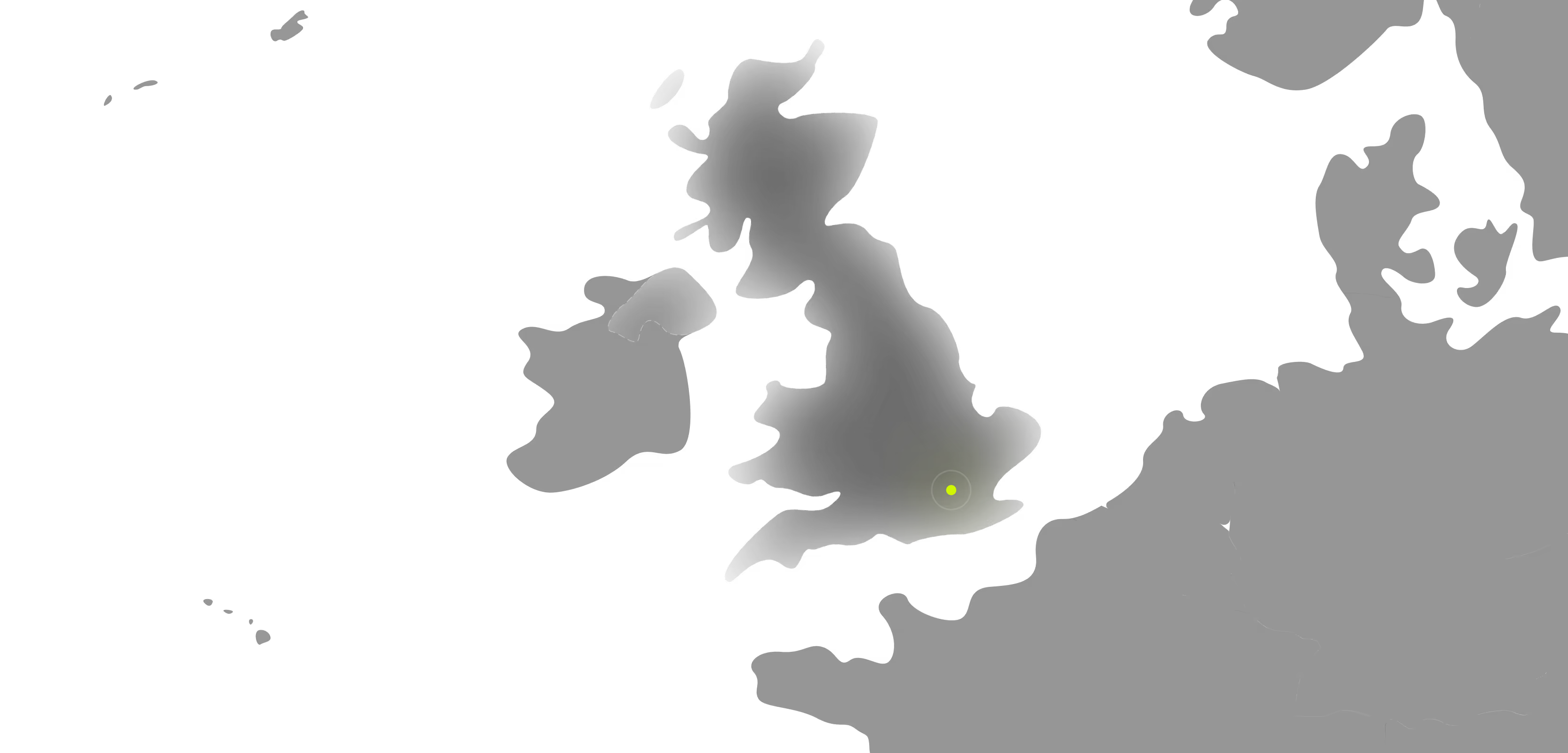
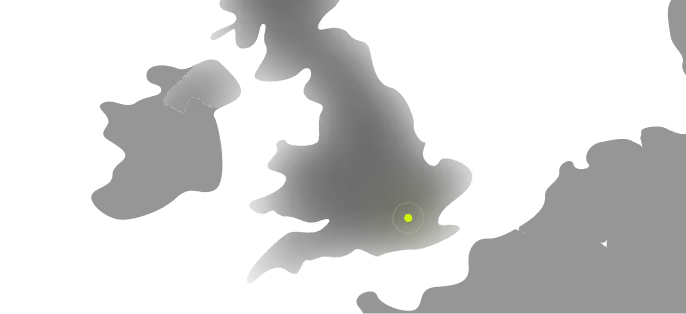
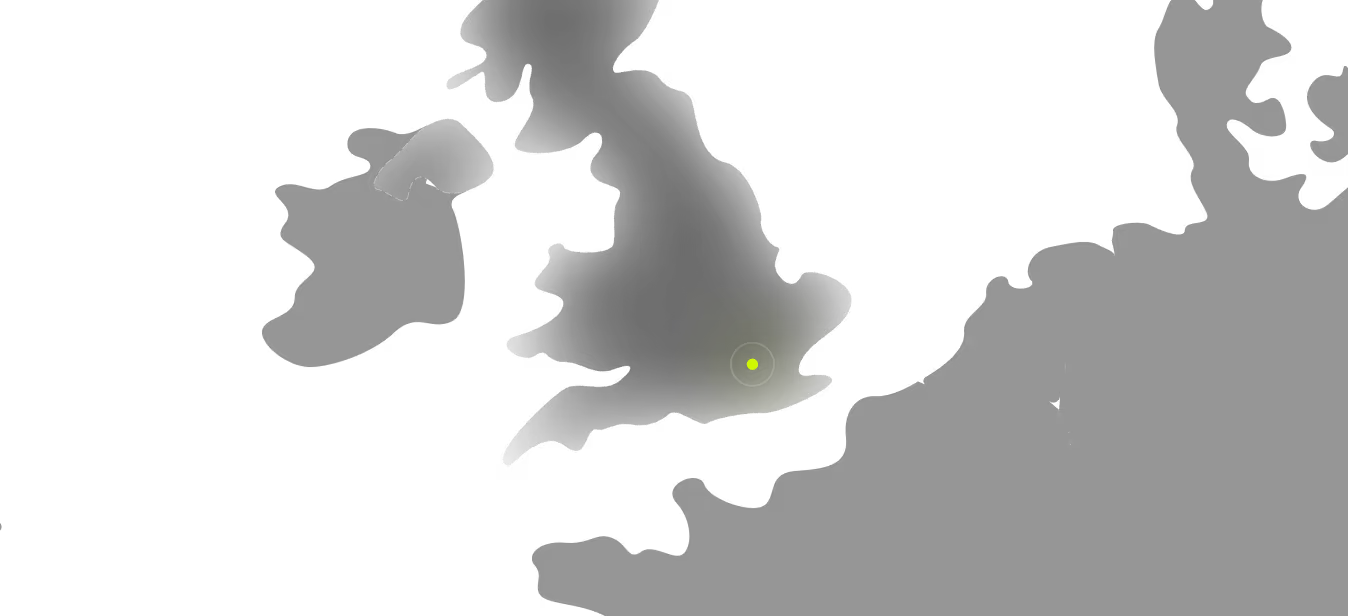
Our location
89+ Reviews
on Clutch
Top Rated Plus Agency
on Upwork
Top 50 Trending team
on Dribbble
Projects are Featured on Behance platform
FAQ on UI/UX design services in London
What does a UI/UX design company in London do?
Companies usually hire our UX design agency in London when product decisions start affecting growth. Arounda analyzes critical flows, finds bottlenecks, and creates user experiences that boost adoption, retention, and conversion.
Our team works with SaaS, healthcare, fintech, AI, Web3, and other industries where product decisions influence adoption, retention, and growth. We study how people interact with products, identify areas that create friction, and redesign experiences that help users complete important tasks more easily.
Our design services include:
- User flows and information architecture.
- UI/UX design for web and mobile products.
- Website design and redesign.
- UX audits and product evaluations.
- Design systems and component libraries.
- Branding and visual identity.
How do you measure the success of a design project?
Companies hire a UX design agency London teams can rely on when product metrics stop moving, adoption slows down, or key flows lose users. At Arounda, success means measurable changes in how people use the product and how the product supports business goals.
1. Product adoption
The first signal is how quickly users reach value.
We look at:
- Onboarding completion
- Feature adoption
- Activation rates
- Time to first meaningful action
2. User behavior inside key flows
A design project should reduce friction in the journeys that affect revenue, retention, and product usage.
Our team tracks:
- Drop-off points
- Task completion rates
- Navigation behavior
- Interaction patterns
- Repeated user actions
3. Conversion performance
For websites and marketing products, design affects how many users take the next commercial step.
Success can be measured through:
- Demo requests
- Trial sign-ups
- Qualified leads
- CTA interactions
- Conversion rates
4. Retention and engagement
A successful product gives people a reason to return.
Common indicators include:
- Retention rates
- Active users
- Session frequency
- Feature usage
- Customer churn
5. Business impact
The final measure is product performance from the client’s side.
Product teams evaluate:
- Revenue growth
- Customer acquisition costs
- Support requests
- Onboarding costs
- Operational efficiency
Before work starts, Arounda defines what success means for the product, identifies the numbers that matter, and measures design against those results after launch.
What is your approach to product redesign for established companies?
There is a wealth of user behavior, commercial decisions, and operational restrictions that come with established products. Recognizing what works, pinpointing user pain points, and identifying product components that impact business performance are the first steps in a successful redesign.
As a UX design company London businesses work with on existing products, Arounda focuses on the areas that affect adoption, conversion, retention, and product clarity. Large redesigns rarely require rebuilding every screen. Existing products already contain valuable information through analytics, customer feedback, support requests, and internal stakeholder insights.
Our redesign work usually focuses on:
- Navigation and information architecture
- Onboarding and activation flows
- High-traffic or conversion-critical screens
- Areas with usability issues or drop-offs
- Design systems that support future growth
- Product consistency across teams and features
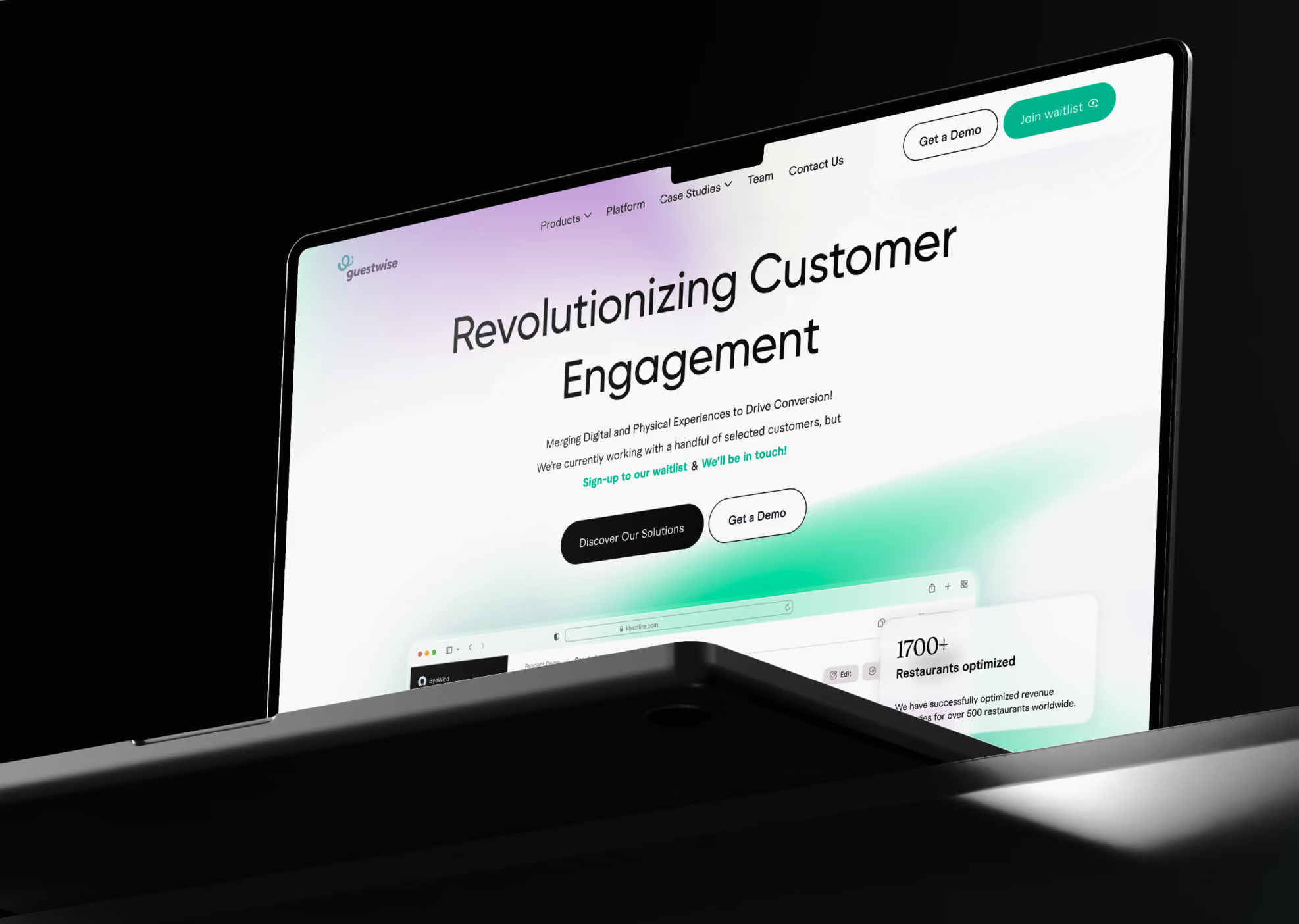
Guestwise demonstrates this approach. The platform offered powerful marketing capabilities for hospitality businesses, but the website no longer reflected the product's value. Heavy content blocks, unclear messaging, and complex navigation created friction during evaluation.
Our team reorganized the information structure, simplified user journeys, and redesigned the experience around the product's strongest capabilities. The updated experience increased feature engagement by 52%, improved conversion rates by 27%, reduced bounce rate by 33%, and helped visitors discover important information 41% faster.
Teams may successfully redesign products by identifying the screens, flows, and decisions that impact business outcomes. Visual updates help with that work, but the long-term value comes from organization, clarity, and product logic.
How do you handle design decisions when stakeholders disagree?
Disagreements between stakeholders appear in almost every product team. Marketing wants stronger conversion, product teams focus on usability, leadership looks at business goals, and engineering considers technical limitations. A good UI/UX design agency London companies work with must help teams make decisions, not add more opinions.
Arounda approaches these situations through evidence, product goals, and user behavior.
1. We return to the original business objective
Every project starts with clear goals. When opinions differ, we compare each option against the problem the product needs to solve.
Questions we ask include:
- Which option supports the business goal?
- Which decision improves the user journey?
- Which solution creates fewer risks?
2. We use research and product data
Analytics, customer feedback, support requests, heatmaps, and user interviews provide context for design decisions. Discussions become easier when teams review the same information.
3. We show multiple solutions
Some problems have several valid answers. Our designers present different approaches, explain the trade-offs, and discuss the impact of each direction.
4. We prioritize user behavior
Decisions about products are usually not based on personal preferences. We zero in on the user journey, identifying points of friction and the interactions that drive adoption or conversion.
5. We document decisions
Major design decisions receive a written rationale. This creates alignment between product, marketing, engineering, and leadership teams and reduces repeated discussions later in the project.
Disagreement does not slow projects when the team shares the same goals, data, and evaluation criteria. The role of the design team is to create that shared understanding and help stakeholders move toward a decision with confidence.
What does the onboarding process look like when starting a new project in London?
The onboarding process is one of the reasons companies choose Arounda as a UX design firm London teams can work with long-term. Clear expectations, defined responsibilities, and early deliverables help projects move forward without unnecessary delays.
1. Initial conversation
A review of the product, company goals, current problems, and anticipated results is the first step in the process. Before beginning, we go over the team's objectives, timeframe, and priorities.
2. Scope and proposal
Our team prepares a proposal that includes:
- Project scope
- Deliverables
- Timeline
- Team composition
- Budget estimate
This stage creates a shared understanding of the work ahead.
3. Kickoff session
Stakeholders from the product, business, and technical sides get together for the first working session of the project.
We review:
- Existing documentation
- Analytics and performance data
- Previous research
- Technical constraints
- Communication processes
4. Discovery and evaluation
For redesign projects, we analyze the existing experience and identify areas affecting adoption, conversion, and usability. New products require research into users, competitors, and product requirements.
5. First deliverables
During the first week or two, you should expect to see some early deliverables, which include:
- User flows
- Wireframes
- UX audits
- Product recommendations
- Interface concepts.
How do you ensure design consistency across platforms and touchpoints?
Teams lose consistency when new features, pages, and channels grow from separate decisions. As a UX UI design agency London companies work with on complex products, Arounda creates shared rules for components, typography, spacing, colors, interaction states, and responsive behavior.
The product, marketing, and engineering teams now have a single point of reference for making design decisions. As an example, FlowFunds ensured that the offering felt cohesive across all touchpoints by utilizing the same visual logic across their website, web platform, mobile app, social assets, and printed materials.
What engagement model works best for long-term product teams?
Product teams rarely need the same level of design support throughout the entire lifecycle. Launch periods, new markets, redesigns, and feature expansion create different demands on the team.
Arounda usually supports long-term partnerships through two engagement models.
Dedicated Design Team
Designers become part of the product environment and participate in planning, product discussions, sprint activities, and delivery. This model works well for companies that need continuous design support across multiple initiatives.
Team Extension
As more designers join current product teams, they can cover specific areas of expertise, boost delivery capacity, or help with big projects like research, product optimization, design systems, etc.
Long-term collaborations benefit from several practical advantages:
- Direct communication with designers
- Stable product knowledge
- Faster design decisions
- Consistent user experience
- Flexible team scaling
How do you collaborate with in-house design or development teams?
Internal teams already have their own rituals, files, tools, and delivery habits. Arounda joins that environment without forcing a new process around the agency.
With design teams, our designers work inside shared Figma spaces, follow existing libraries, join reviews, and document decisions that affect future releases. When the team lacks a specific skill, such as UX research, mobile design, or design systems, we cover that gap.
Component notes, response rules, interaction states, and edge cases are all part of the handoff files that we build with development teams. Before even minor errors reach users, designers are actively involved in the implementation process, answering issues directly and reviewing builds.