UI/UX Design Agency in Abu Dhabi
Our UI/UX design company in Abu Dhabi works with SME and enterprise teams to improve usability, simplify complex user journeys, and increase adoption, conversion, and retention.
on Clutch
completed in various niches
rating on Clutch



Design Services We Offer in Abu Dhabi
Our UI/UX design services in Abu Dhabi cover projects from early research and UX structure through interface design and redesign. Arounda keeps the work connected to business priorities, user behavior, and technical requirements from the first decisions through delivery.

Selected Work for Abu Dhabi Enterprises
Arounda has delivered 500+ digital products for companies facing complex product and business challenges. The selected cases show how our team approached each core issue, shaped the design around project priorities, and contributed to measurable results.

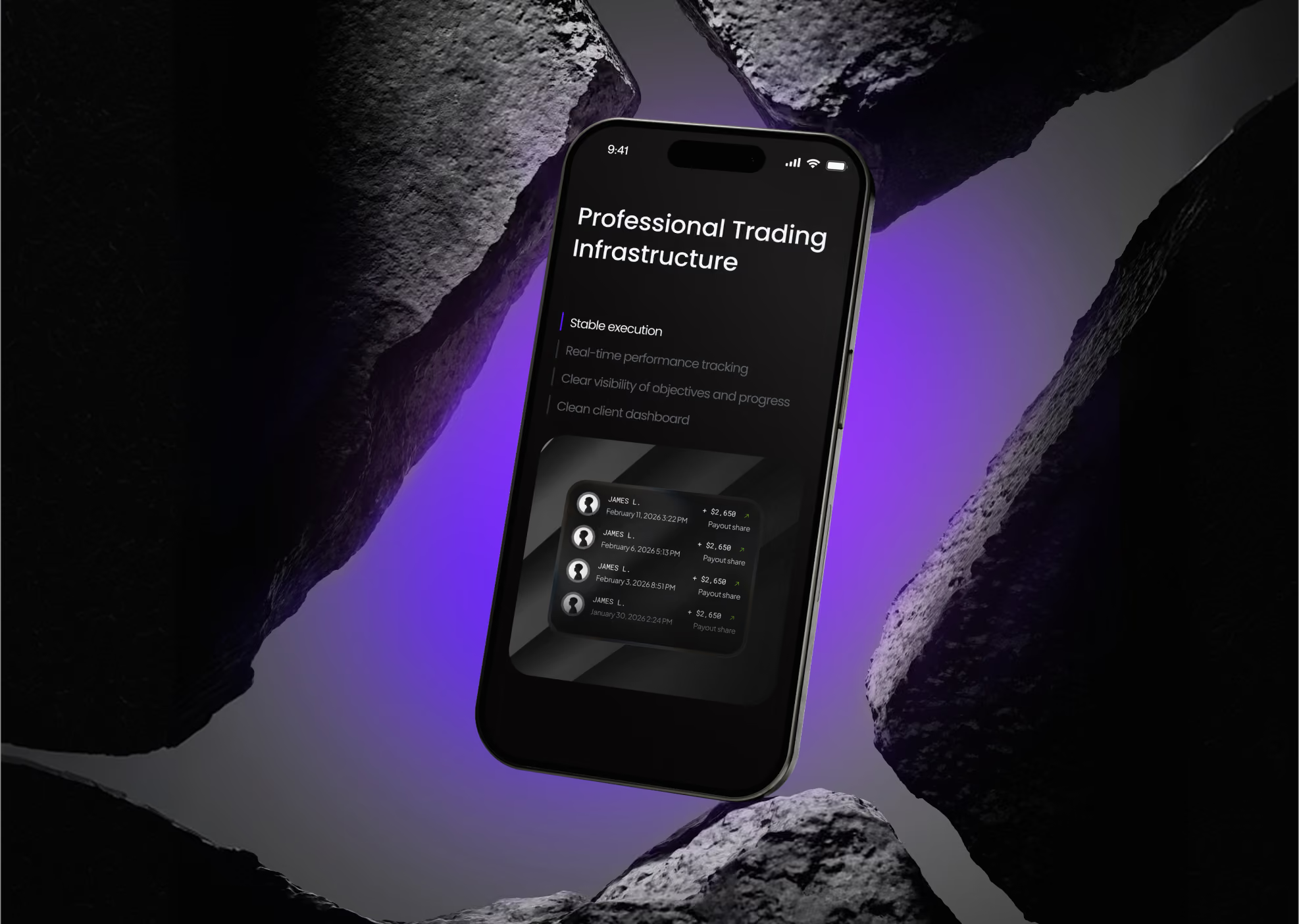
Brand Identity and UI/UX Design for a Prop Trading Platform
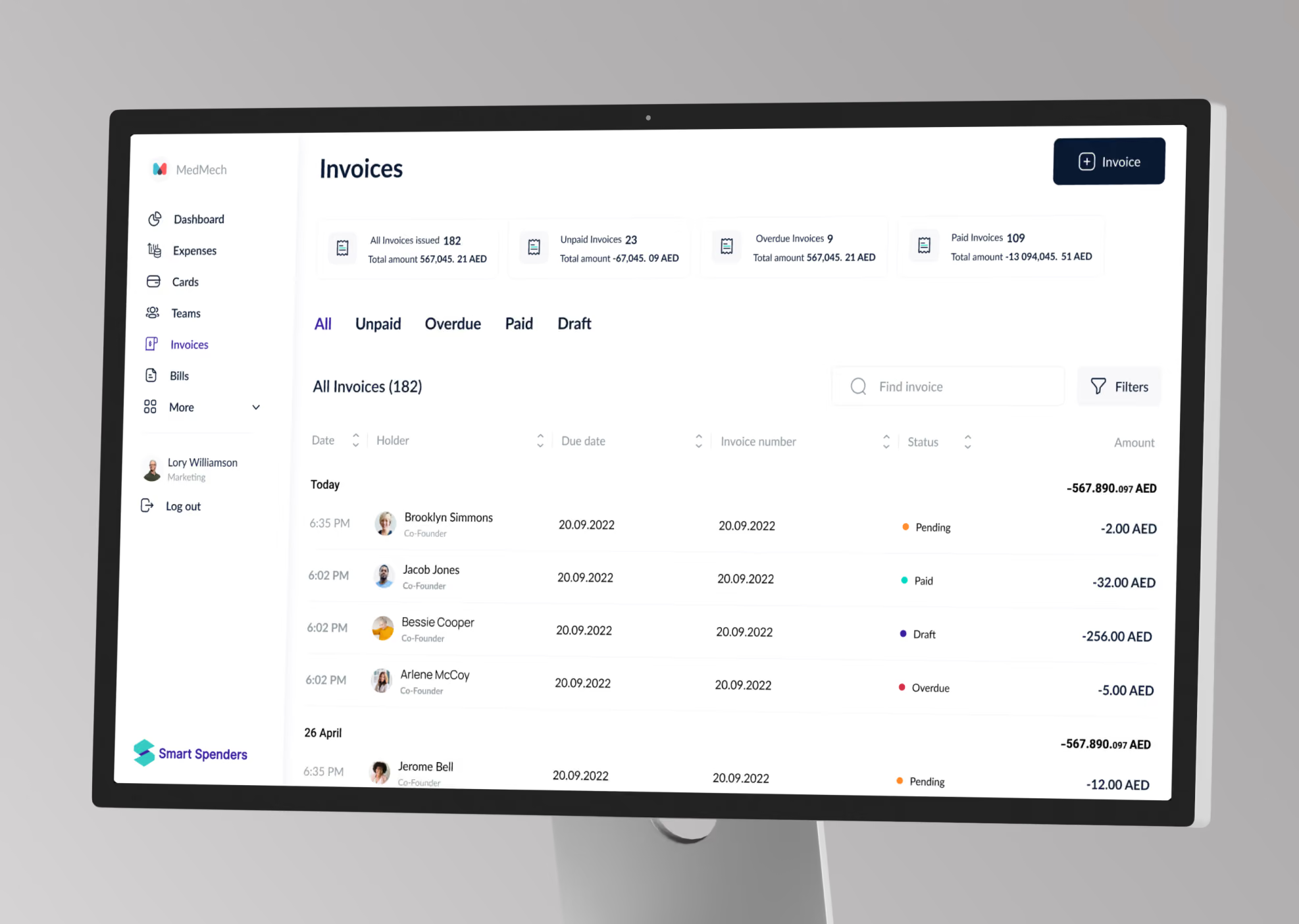
UI/UX Design for an Expense Management Platform

Results We've Delivered Across Products
10+ years of design work have shown our team where product structure starts limiting performance. We improve the journeys where users hesitate, abandon key actions, or struggle to move forward, helping companies strengthen conversion, adoption, and retention.

$2.3M
Raised in funding
A redesigned onboarding and card management experience gave Xpence, a Dubai-based expense platform, the product credibility to secure investor funding after launch.

−37%
Drop in onboarding abandonment
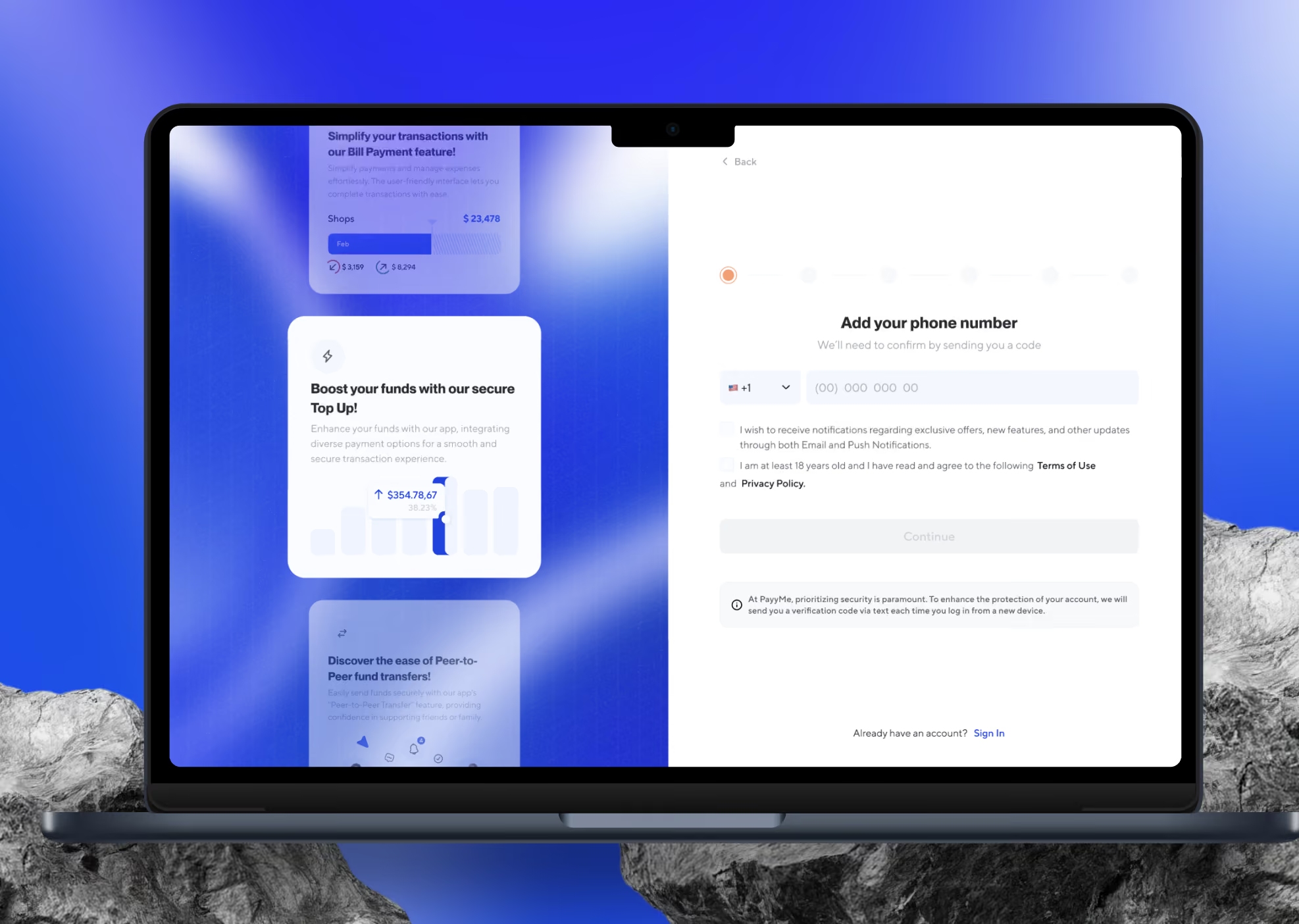
A simplified page structure and consistent visual hierarchy helped FundedIQ, a UAE prop trading platform, get new traders through registration without dropping off mid-flow.

70%
Retention Rate
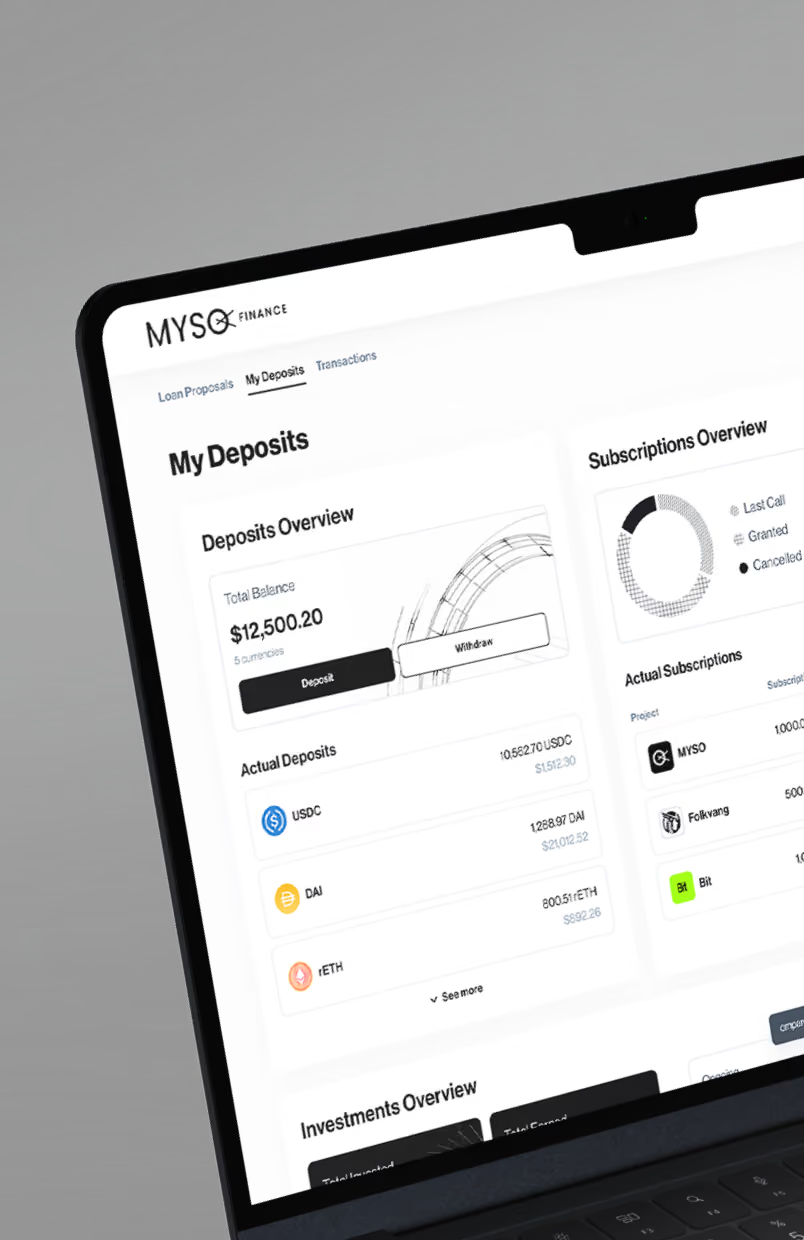
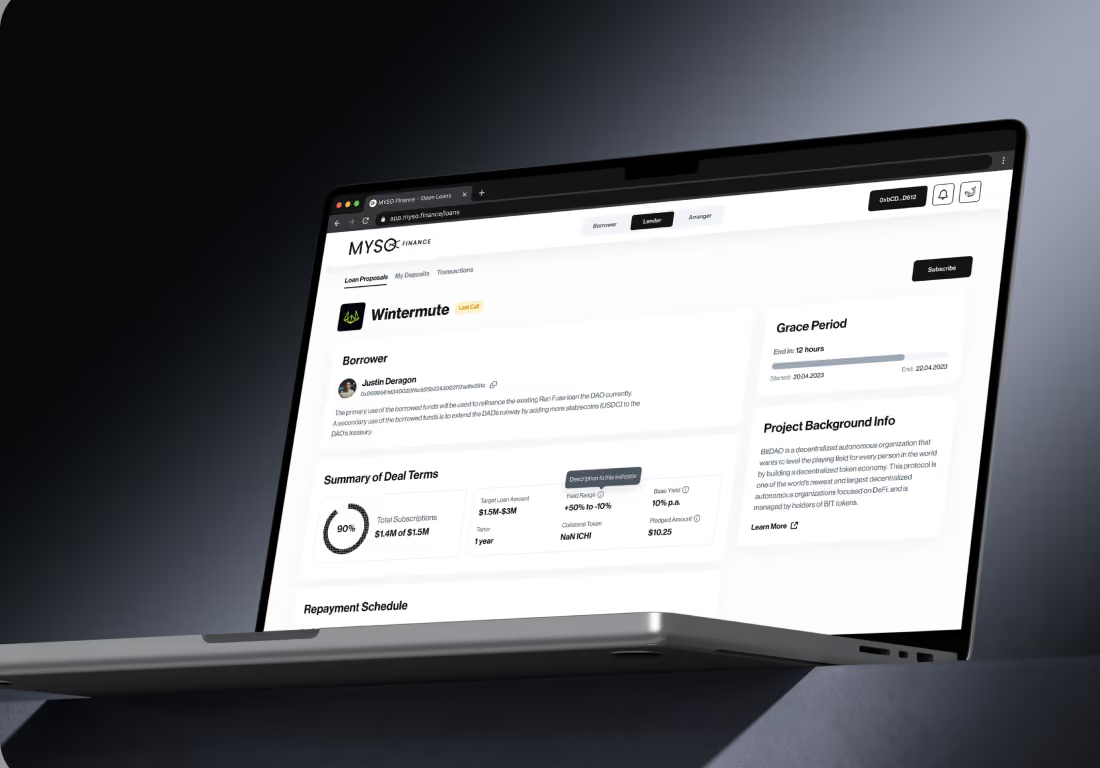
A full platform redesign gave MYSO's DeFi users a more consistent and clear experience, keeping existing users active well after their first session.



While the growth of our clients is what matters most, it`s nice to get awards




89+ Reviews
on Clutch

Top Rated Plus Agency
on Upwork

Top 50 Trending team
on Dribbble

Projects are Featured on Behance platform

How We Approach Every Project in Abu Dhabi
To ensure that the team is on the same page and that everything is progressing according to plan, we break the job down into several phases. This helps people stay focused on the project goals and connect the choices they make with those goals.

What Strong UI/UX Design Does for Your Product

Helps Users Complete Key Actions Sooner
Every extra decision in an important flow creates another chance for users to stop. Simplifying those moments keeps people moving and improves completion.

Makes Important Features Easier to Adopt
Useful functionality has little impact when users struggle to discover it or understand its value. We make core features easier to reach and use regularly.

Keeps UX Manageable as the Product Grows
Growth both improves the system's functionality and strains its current architecture. Teams can have room to expand without having to keep going back to old design work when they use shared interaction patterns.


Clients recognize many reasons to trust our services





“I was impressed with the high levels of detail and polish for all the features.”

Jimmy Hosang
Founder & CEO

“Their professionalism, dedication, responsiveness, and determination are commendable.”

Emil Ljesnjanin
Founder & CEO

“Their expertise and guidance were instrumental. They demonstrated their commitment to creating a product that resonated with our target audience, which led to improved user satisfaction.”

Aetienne Sardon
Founder, MYSO Finance


“Working with Arounda is really smooth in terms of communication and workflow”

Stephane Heip
CMO, Enzyme

Our partners who chose structured execution



We get things done With Quality

HIPAA compliance and WCAG accessibility

End-to-end product delivery

Enterprise-grade design systems

Retention-focused user flows
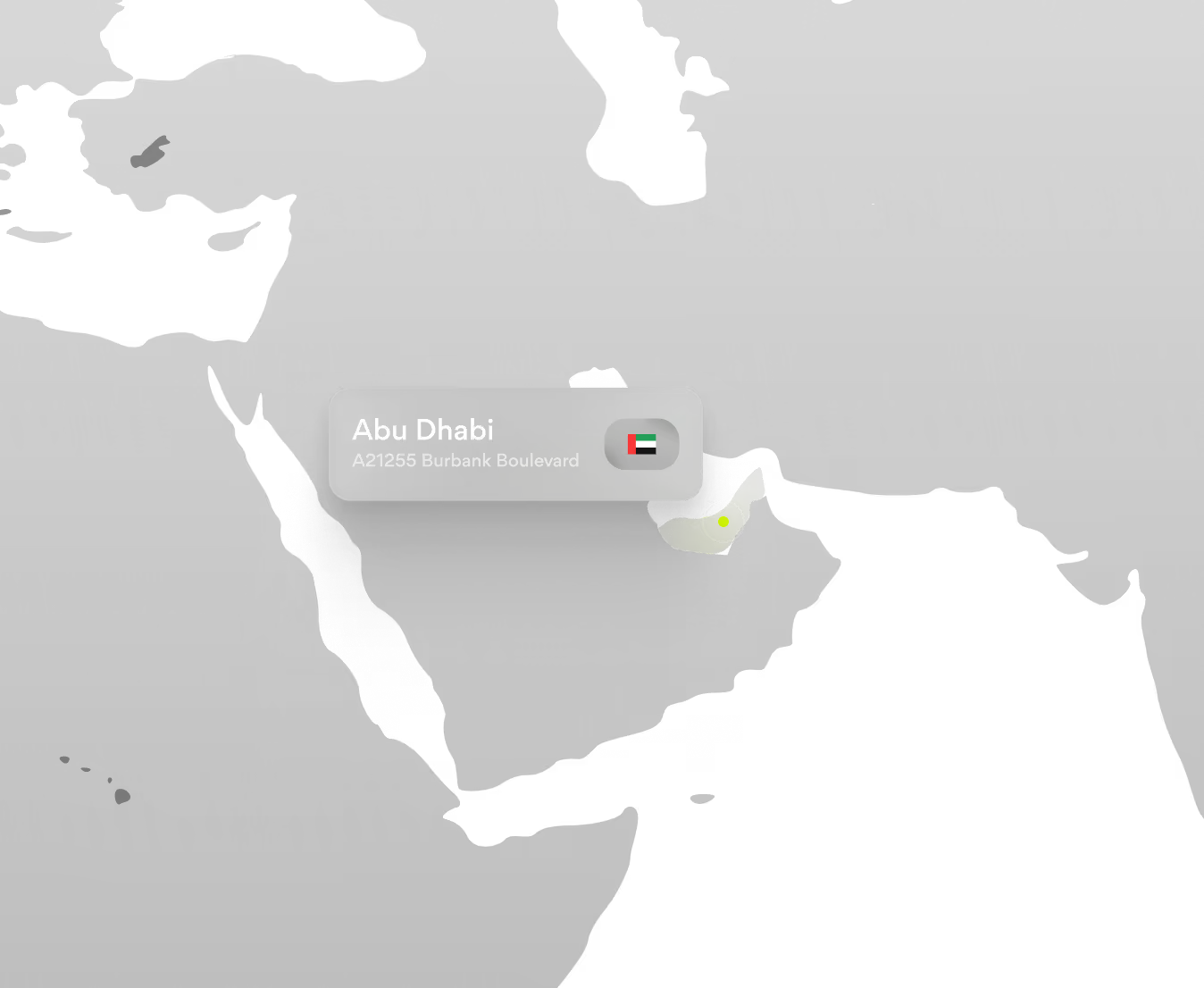
Our location



89+ Reviews
on Clutch
Top Rated Plus Agency
on Upwork
Top 50 Trending team
on Dribbble
Projects are Featured on Behance platform
FAQ on UI/UX design services in Abu Dhabi
What does a UI/UX design company in Abu Dhabi do?
Arounda is a UI/UX design agency Abu Dhabi companies can work with when an existing digital experience needs improvement or a new one needs to be shaped from the ground up. We work with SME and enterprise teams in SaaS, fintech, healthcare, AI, Web3, logistics, and other complex industries.
Our work can cover different parts of the design process depending on what the company needs:
- UX research and product discovery. We study how users behave and where difficulties appear in the current experience. The findings help define what should be addressed before design work moves further.
- UI/UX design for web and mobile. Our team structures user journeys, creates wireframes, develops prototypes, and designs interfaces for platforms, dashboards, apps, and websites.
- Website design and redesign. We create or rethink websites so visitors can understand the offer, navigate the content naturally, and reach key conversion points with less friction.
- UX/UI audits Existing interfaces are reviewed to uncover usability problems and weak points in the user journey. Clients receive prioritized recommendations showing what deserves attention first.
- Design systems. We define reusable components and interaction rules so teams can keep the experience consistent as functionality grows and new screens appear.
- Mobile app design Arounda designs mobile experiences for iOS, Android, and cross-platform products, with particular attention to onboarding and everyday use.
- Branding and visual identity. Our work can include logos, visual systems, pitch decks, rebranding, and graphic materials that keep the company presentation consistent across different touchpoints.
- Web and MVP development. Companies can keep design and implementation within one team when they need a website, landing page, MVP, Webflow build, or mobile development.
How do you measure the success of a design project?
As a UX design agency Abu Dhabi companies can work with, Arounda defines the starting metrics before design begins and compares them with post-launch performance. This gives the team a concrete baseline for judging whether the work changed how the product performs.
We usually look at five areas:
- Conversion. Indicators of user progress include signups and demo requests. If trial-to-paid or completed onboarding are product-related metrics, we measure them as well.
- Retention. Return behavior shows whether the experience keeps providing value after the first session. Depending on the product, we may review churn, feature adoption, NPS, or time to first value.
- Usability. Users' task completion and mistake rates provide insight on the experience's usability. It may be difficult to detect friction in the interface on its own, but factors like support volume and time per task can help.
- Delivery. We review whether each phase stayed on schedule and how much revision was required. Handoff speed and the number of fixes after launch also help evaluate the quality of execution.
- Business impact. Revenue per user can show whether design changes affected commercial performance. For some projects, the stronger indicators may be upsell rate, acquisition cost, or average contract value.
A few months after launch, our project manager reviews the results with the client against the original baseline. The remaining gaps then help define where the next design effort should go.
What is your approach to product redesign for established companies?
As a UX design agency in Abu Dhabi, Arounda approaches redesign by finding the parts of an existing experience that are actually hurting performance before changing the interface.
- An audit comes first to show where users lose context, hesitate, or drop out of important flows. Our team uses these findings to give the redesign a concrete starting point instead of relying on a vague sense that the product feels outdated.
- Business impact determines what gets attention first. Issues affecting conversion, retention, or task completion take priority over visual inconsistencies that do not meaningfully affect performance.
- We test new flows with users and wireframe them before we start full-on UI work. Prior to beginning construction, this helps verify that the suggested structure enhances the experience.
- Design system updates run alongside the new UI when needed. Shared components and interaction rules help remove inconsistencies that accumulated as the product expanded.
- Following the launch, we evaluate the new experience in relation to the initial baseline. We can tell if the redesign was successful by looking at conversion, retention, and task completion rates.
How do you handle design decisions when stakeholders disagree?
Arounda approaches stakeholder disagreements by first identifying what is causing them. For teams looking for a UX design company Abu Dhabi businesses can involve in complex decision-making, our process keeps discussions tied to user behavior and expected product outcomes.
- When the disagreement comes down to preference. Our team brings the discussion back to user behavior. Research findings and usability testing help show which direction works better for the people using the experience.
- When stakeholders expect different outcomes. In place of arguing over the assumption, we test it. This could be a prototype session, an A/B test, or a limited rollout with a clear measure of success.
We record the main design choices and the logic behind them. This sets the stage for further conversations and prevents the team from bringing up old issues without fresh data.
What does the onboarding process look like when starting a new project in Abu Dhabi?
Every project starts with a scoping call where we define the challenge, business goal, target users, and success criteria. Companies looking for a UX design firm Abu Dhabi teams can involve early get a clear view of the process before design work begins.
The next steps usually look like this:
- Proposal. We outline the deliverables, timeline, team setup, and project cost.
- Kickoff. Arounda reviews the available materials with your team and agrees on communication, feedback, and decision ownership.
- Discovery. For redesigns, we audit the current experience. For new work, we study user needs and define the structure before high-fidelity design begins.
- First deliverables. Initial concepts, wireframes, or audit findings usually arrive within one to two weeks.
How do you ensure design consistency across platforms and touchpoints?
A shared design system keeps web, mobile, and other touchpoints aligned from the start. For Arounda, working as a UX/UI design agency Abu Dhabi means defining reusable components and interaction rules that guide every screen without making each platform feel identical.
In order to identify layout, state, or behavior inconsistencies, our team performs side-by-side platform evaluations prior to handoff. Having a final system in place provides stakeholders, developers, and designers with a point of reference for any future improvements.
What engagement model works best for long-term product teams?
Arounda works with long-term teams in two ways, depending on how design is already handled inside the company.
- For companies without an internal design team, Arounda can act as a dedicated design team. The same designers stay involved over time, take responsibility for ongoing design work, and keep decisions connected as the product develops.
- When an internal team is already in place, team extension adds extra capacity or expertise where it is needed. Our designers join the existing workflow, work in the same tools, and collaborate directly with the client's team.
Both options let Arounda work closely with your team over time, either taking full responsibility for design or adding the expertise your internal team needs.
How do you collaborate with in-house design or development teams?
- With an in-house design team, our designers join the workflow already in place. They work in shared Figma files, follow the existing design system, and take on the areas where the team needs extra capacity or a specific skill. We document the work clearly so internal designers can continue from it without depending on Arounda long-term.
- Working with development teams continues right up until deployment. The files that developers need to build from include the states, responsive behavior, and edge cases. They are ready for production use. In order to prevent complications that could require unnecessary redos, our designers are accessible throughout development to address inquiries and examine the build.