UI/UX Design Agency in San Diego
Our UI/UX design company in San Diego helps SME and enterprise teams make complex products easier to use, increasing feature adoption, conversion, and long-term retention.
on Clutch
completed in various niches
rating on Clutch


Design Services We Offer in San Diego
Our UI/UX design services in San Diego cover the full path from discovery to redesign under one accountable partner. Each decision reflects product priorities, while a structured process keeps delivery reliable.
Selected Work for San Diego Enterprises
Arounda has designed more than 500 digital products for businesses in San Diego and worldwide. The selected cases below show how we approached high-stakes product work and helped clients improve the metrics tied to growth.

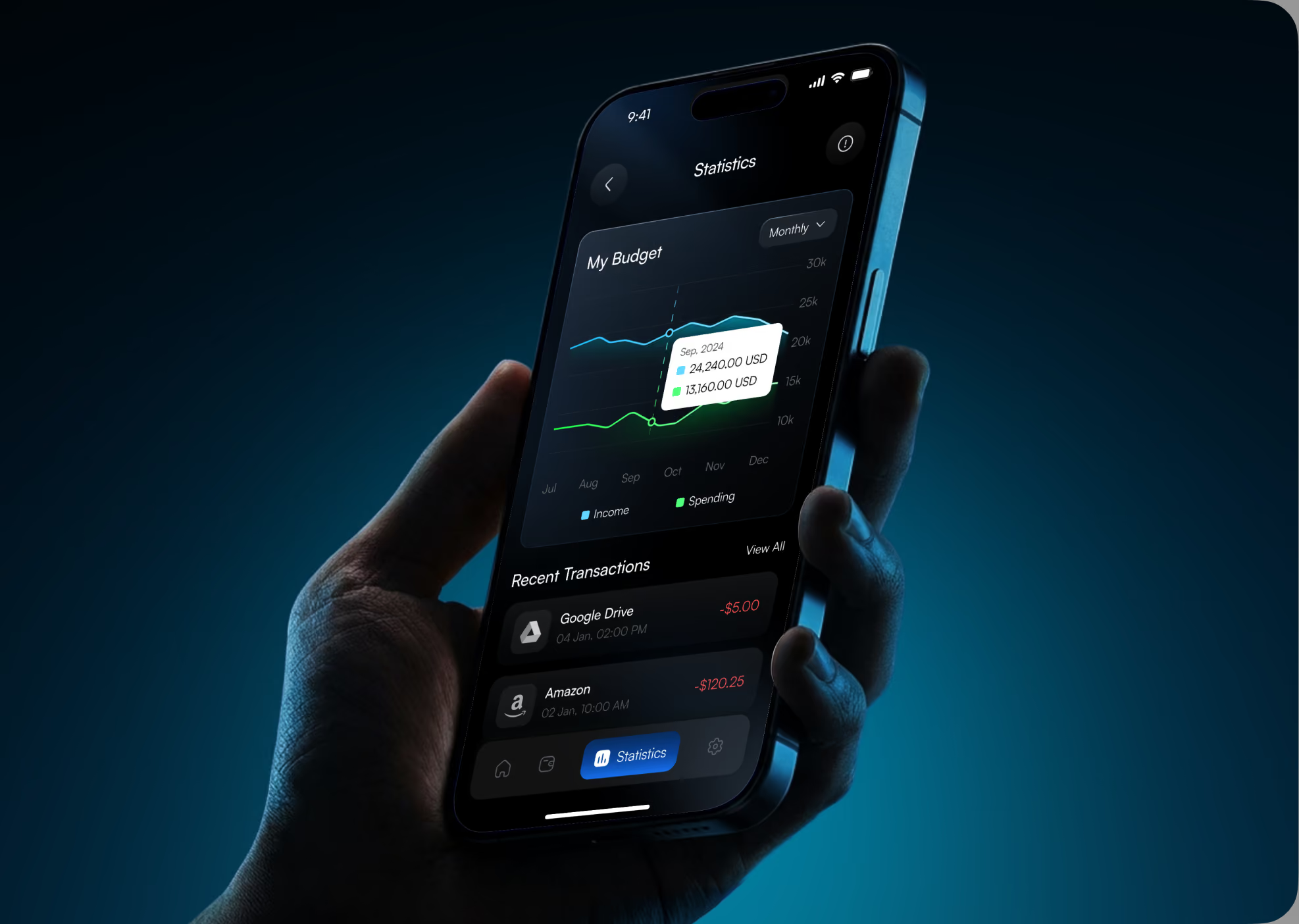
Mobile Banking Design for Faster Payments
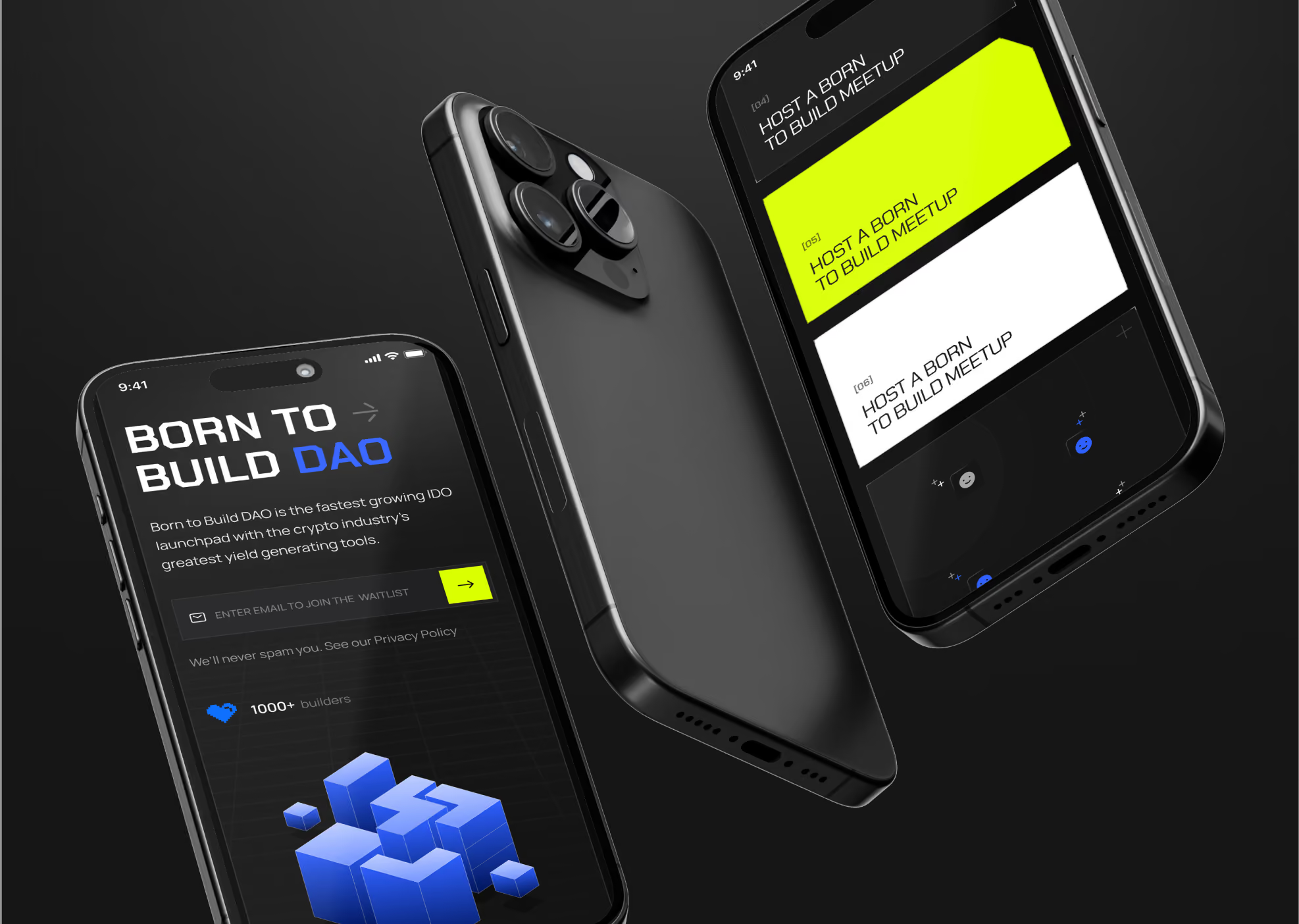
Web3 DAO Design for Higher Conversions

Results We've Delivered Across Products
10+ years of product work have shown us what helps a digital product meet its business goals from the start and where an existing interface begins holding it back. We shape or improve key user journeys to strengthen product performance and support growth.

47%
Higher User Engagement
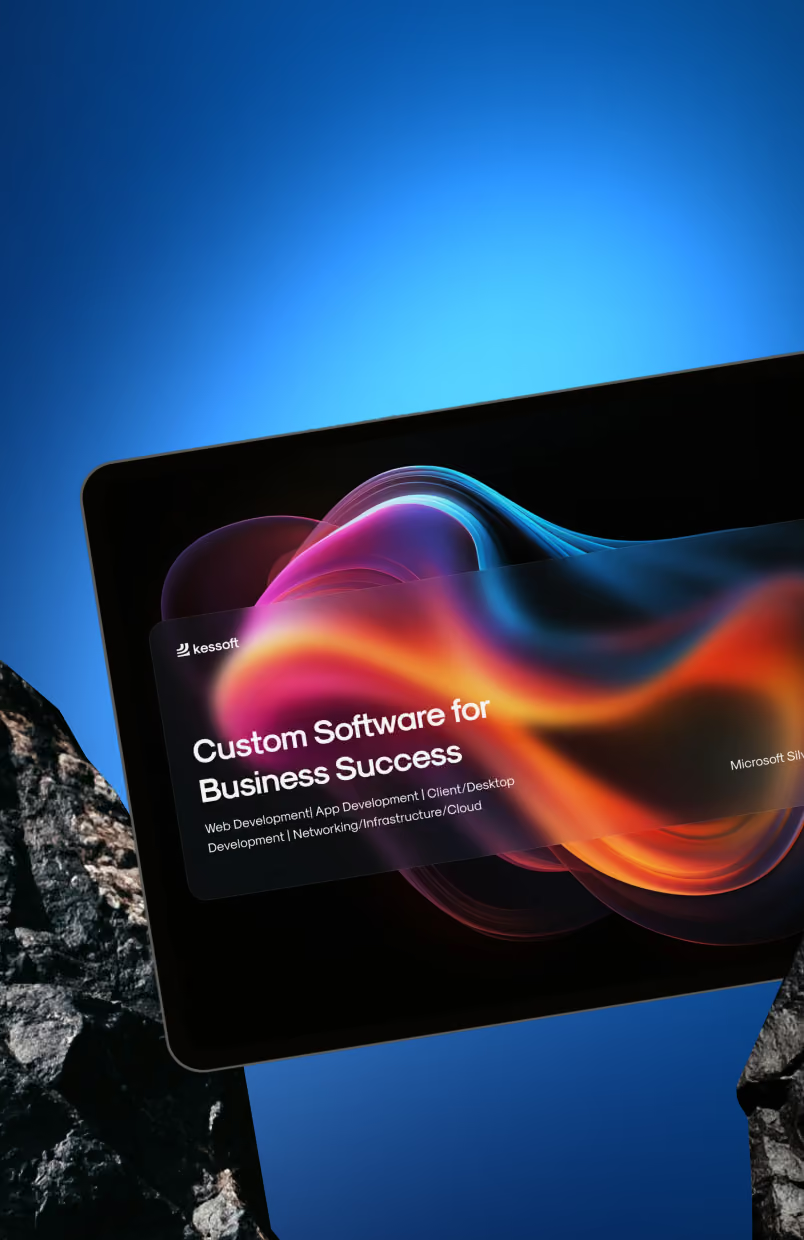
Kessoft saw an increase in visits, page views, and time spent on the site as a result of an improved service structure and better visual hierarchy.
91%
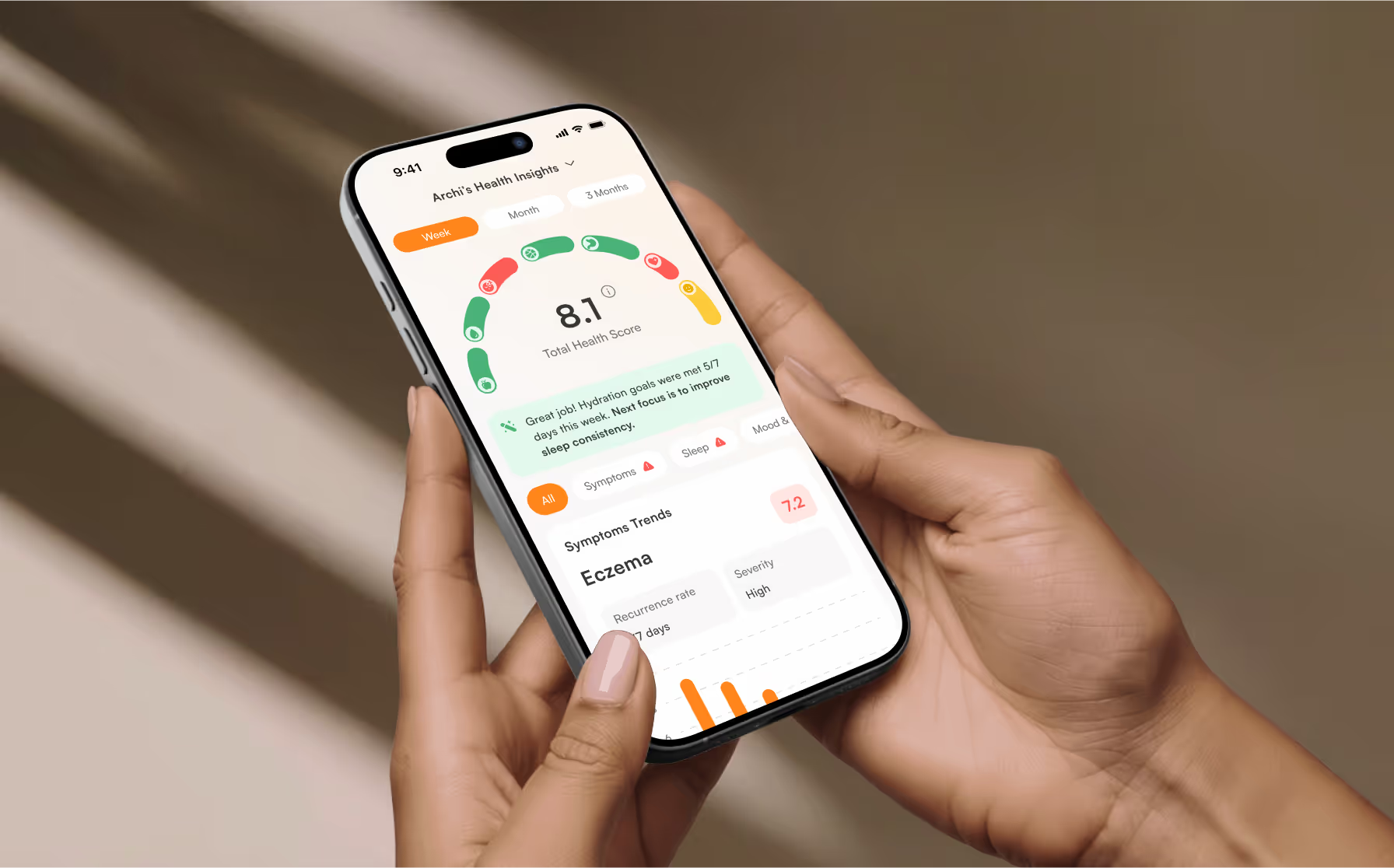
Higher Parent Confidence
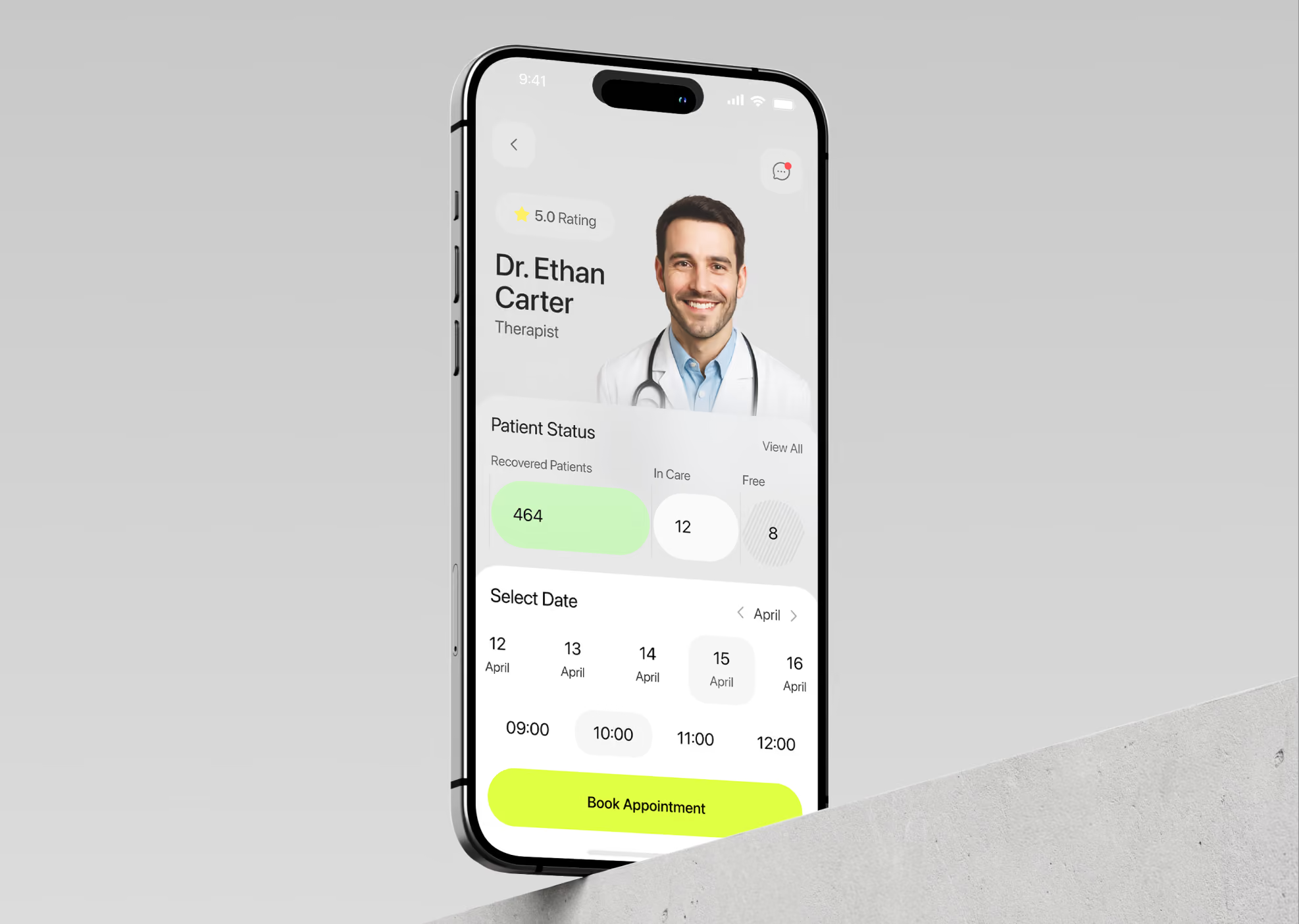
Health HQ made it easier for parents to stay up-to-date on their children's health and make educated decisions by simplifying confusing data.
55%
Faster Navigation
NetGet users reached listings and primary actions in less time after our team rebuilt the hierarchy and simplified how search, filters, and product cards work together.



While the growth of our clients is what matters most, it`s nice to get awards



89+ Reviews
on Clutch

Top Rated Plus Agency
on Upwork

Top 50 Trending team
on Dribbble

Projects are Featured on Behance platform

How We Approach Every Project in San Diego
We divide every project into stages with clear objectives, responsibilities, and checkpoints. This allows your team to monitor progress at every stage, keeps choices from being missed, and keeps scope under control.

What Strong UI/UX Design Does for Your Product

Helps Users Get Started Faster
When the first steps are obvious, users reach the main value sooner and are less likely to leave before completing a key action.

Keeps Growth from Breaking the Experience
A well-structured product makes new features easier to integrate. Teams can add features to the product without reworking the main flows or making navigation more complex.

Makes the Product Easier to Trust
When everyday tasks take little effort, users are more likely to return instead of looking for another product. Our team makes repeat actions easier to complete and helps strengthen retention.

Clients recognize many reasons to trust our services





“I was impressed with the high levels of detail and polish for all the features.”

Jimmy Hosang
Founder & CEO

“Their professionalism, dedication, responsiveness, and determination are commendable.”

Emil Ljesnjanin
Founder & CEO

“Their expertise and guidance were instrumental. They demonstrated their commitment to creating a product that resonated with our target audience, which led to improved user satisfaction.”

Aetienne Sardon
Founder, MYSO Finance


“Working with Arounda is really smooth in terms of communication and workflow”

Stephane Heip
CMO, Enzyme

Our partners who chose structured execution



We get things done With Quality

HIPAA compliance and WCAG accessibility

End-to-end product delivery

Enterprise-grade design systems

Retention-focused user flows
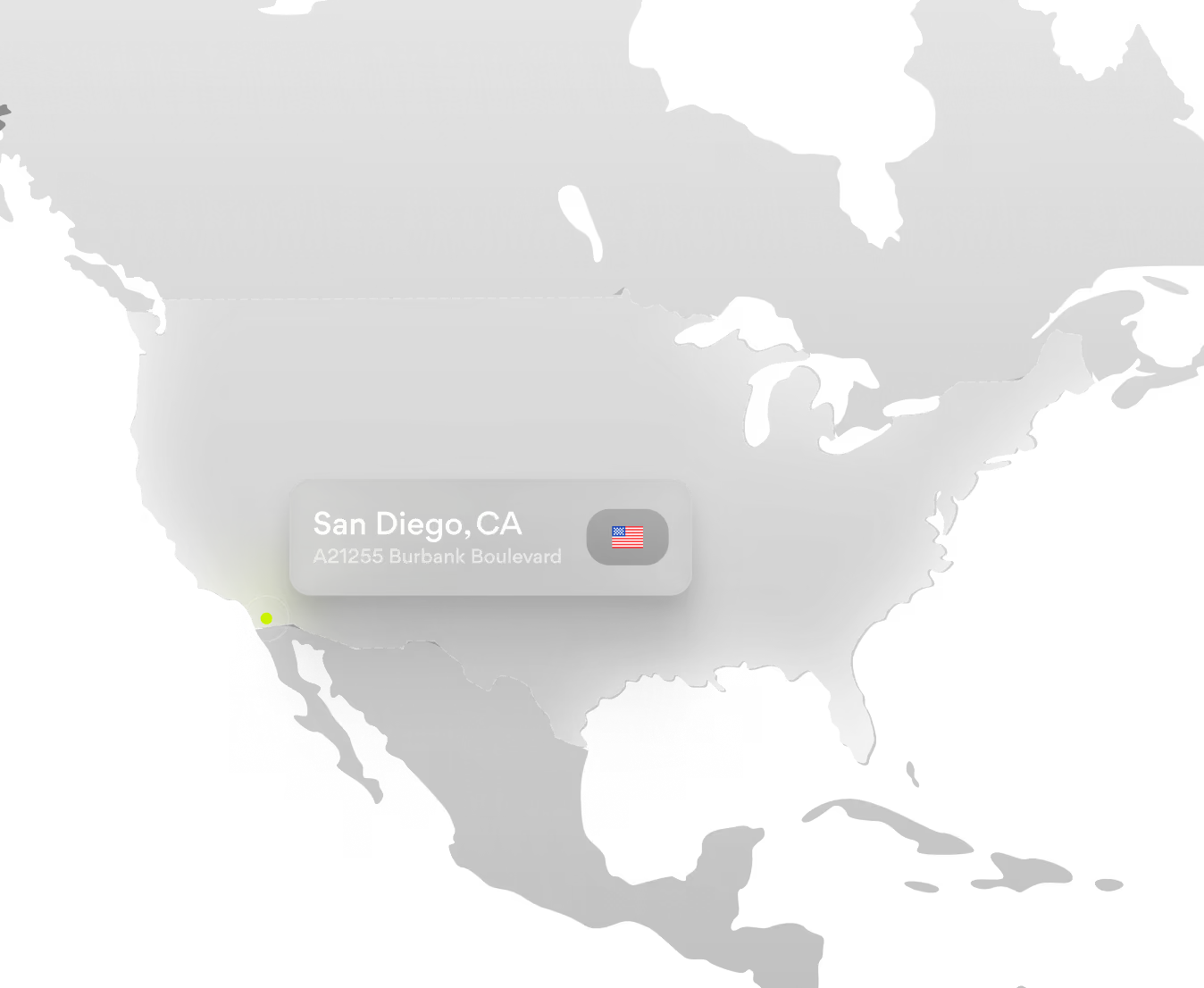
Our location
89+ Reviews
on Clutch
Top Rated Plus Agency
on Upwork
Top 50 Trending team
on Dribbble
Projects are Featured on Behance platform
FAQ on UI/UX design services in San Diego
What does a UI/UX design company in San Diego do?
Arounda is a UI/UX design agency San Diego companies can involve when a product needs stronger logic, better usability, or design decisions tied more closely to commercial goals. We work with SME and enterprise products in SaaS, fintech, healthcare, AI, Web3, and other complex industries.
Our team can take responsibility for the full design scope or support an existing product department in specific areas:
- UX research and product discovery. We examine user behavior, business requirements, current workflows, and product constraints before deciding what needs to change or be built.
- Web and mobile UI/UX design. Our designers create product architecture, user flows, wireframes, prototypes, and development-ready interfaces for apps, dashboards, platforms, and enterprise software.
- Website design and redesign. We design websites that explain complex offers more clearly, guide visitors toward conversion, and give the brand a stronger market presence.
- UX/UI audit. Arounda reviews existing interfaces, finds where users hesitate or abandon key tasks, and turns the findings into a prioritized improvement plan.
- Design systems. We create reusable components and practical design rules that help internal teams launch new features without losing consistency or increasing design debt.
- Mobile app design. Our team designs iOS, Android, and cross-platform products with focused onboarding, accessible core actions, and repeat-use journeys that support retention.
- Branding and visual identity. We develop logos, identity systems, pitch decks, marketing graphics, and rebranding materials when a company needs one coherent visual direction.
- Web and MVP development. As soon as the design is greenlit, Arounda begins developing the site, using Webflow, delivering the MVP, creating landing pages, and adding mobile functionality.
How do you measure the success of a design project?
Arounda evaluates design through changes in product behavior and business performance. A reliable UX design agency San Diego companies choose should show what improved after launch and explain which design decisions influenced the result.
The metrics depend on the product, but we usually assess:
- Conversion. We compare how many users complete actions tied to revenue, such as purchasing, requesting a demo, subscribing, or submitting an inquiry.
- Feature adoption. We check whether users find important functionality and continue using it after the first interaction.
- Retention. Repeat visits, active usage, and customer lifetime help show whether the product has become easier to use regularly.
- Task success. Usability testing reveals whether people can complete key actions without assistance, errors, or unnecessary steps.
- Flow abandonment. We identify the screens where users hesitate or leave, then compare drop-off rates after the design changes.
- Support load. A decrease in repeated questions and tickets can indicate that the interface now explains actions more effectively.
We review these indicators against the project goals set at the start. After release, product analytics and user feedback show where the design worked as intended and which areas still need attention.
What is your approach to product redesign for established companies?
Our team approaches redesign through product data, user behavior, and business priorities. Companies involve a UX design agency in San Diego when accumulated features begin weakening usability, release cycles become slower, or key metrics stop responding to small interface updates.
Our redesign process includes:
- UX/UI audit. We look over current processes, support inquiries, product analytics, and usability results. The audit reveals which screens lead to inactivity, mistakes, or wasted work.
- Baseline metrics. We keep track of the present conversion rate, task completion rate, onboarding time, retention rate, and support volume before we begin design. The team has hard data to work with when assessing the redesign post-release.
- Scope prioritization. Business impact, user frequency, technical effort, and implementation risk are the four factors that determine the priority of any issue. If altering existing patterns would increase costs without enhancing performance, then they will remain unchanged.
- Information architecture and user flows. We rearrange the pathways associated with income and consistent product usage. Onboarding, purchasing, account creation, dashboards, search, and subscription management are all part of the platform's user experience.
- Wireframes and usability testing. We test the product logic before we go into the detailed UI work. Teams can find navigational mistakes and ambiguous decisions in prototypes by having users accomplish actual tasks.
- UI design and design system. Approved flows move into production-ready screens. The technical teams will be able to consistently apply the redesign with the support of our updated documentation, components, states, and responsive behavior.
- Phased rollout. To safeguard existing processes and lessen the likelihood of migration, it is often necessary to distribute well-established products in stages. Based on how the products depend on each other, we help break the redesign down into useful stages.
- Post-launch measurement. In order to evaluate new performance, a team compares it to the initial baseline. Conversion rates, task completion times, assistance demand, adoption, and retention can all see improvements as a result.
How do you handle design decisions when stakeholders disagree?
As a UX design company San Diego teams involve in complex products, Arounda turns conflicting feedback into one decision with a clear business reason.
We evaluate the alternatives with the project's improvement metric, pinpoint the precise area of disagreement, and verify the pertinent product data. If analytics are unable to resolve a query, a usability test or prototype can. We assess the technical constraints and the implementation cost before we approve.
The chosen direction is documented with its rationale, owner, and success metric. During development, this ensures that the same discussion does not come up again.
What does the onboarding process look like when starting a new project in San Diego?
Projects with our UX design firm San Diego team start with a call where we discuss the product, the main challenge, and the result you expect. We then prepare a clear scope with the team setup, timeline, deliverables, and price.
Arounda designers go over your current documents, designate decision-makers, and settle on a feedback distribution plan once the project begins. Once that is complete, the team can go on to auditing, early product structuring, or discovery. Typically, the first results are visible within a week or two.
How do you ensure design consistency across platforms and touchpoints?
Arounda works as a UX UI design agency San Diego businesses can rely on when one product spans web, mobile, dashboards, and marketing channels. We create a shared design system, so every team works with the same components and interaction rules.
It addresses platform-specific patterns as well as font, space, screen states, and responsive behavior. New features can be easily added by designers and developers without causing any portions of the product to feel disconnected or duplicative.
What engagement model works best for long-term product teams?
Arounda offers two models for long-term work: a dedicated design team and team extension.
- A dedicated team fits companies that need ongoing product design but do not have enough in-house capacity. Arounda takes responsibility for the design roadmap, including UX work, interface design, design systems, and new feature releases.
- Team extension works better when an internal team is already in place. Our designers join the existing tools, sprint cycle, and review process to cover missing capacity or senior expertise.
Both approaches maintain consistency in product decisions and cut down on onboarding processes.
How do you collaborate with in-house design or development teams?
Arounda works inside the client's existing setup. We first learn who approves decisions, how sprints run, and where design and development handoff happens. Then we take on the work the internal team lacks time or expertise to cover.
- With design teams, we join shared Figma files, follow the current design system, and support active product tasks, audits, research, or new feature work.
- With developers, we prepare detailed states, responsive behavior, and edge cases, then stay available during implementation to review builds and answer questions.
The client keeps its usual tools and workflow, while gaining extra design capacity without adding another process to manage.