UI/UX Design Agency in Sydney
We are a UI/UX design company in Sydney helping SME and enterprise teams create intuitive digital products that improve adoption, strengthen customer loyalty, and support business growth.
on Clutch
completed in various niches
rating on Clutch



Design Services We Offer in Sydney
Our UI/UX design services in Sydney solve the usability issues that slow product growth, reduce conversions, and frustrate users. Every engagement begins with discovery, research, and validation before moving into UX and UI design.
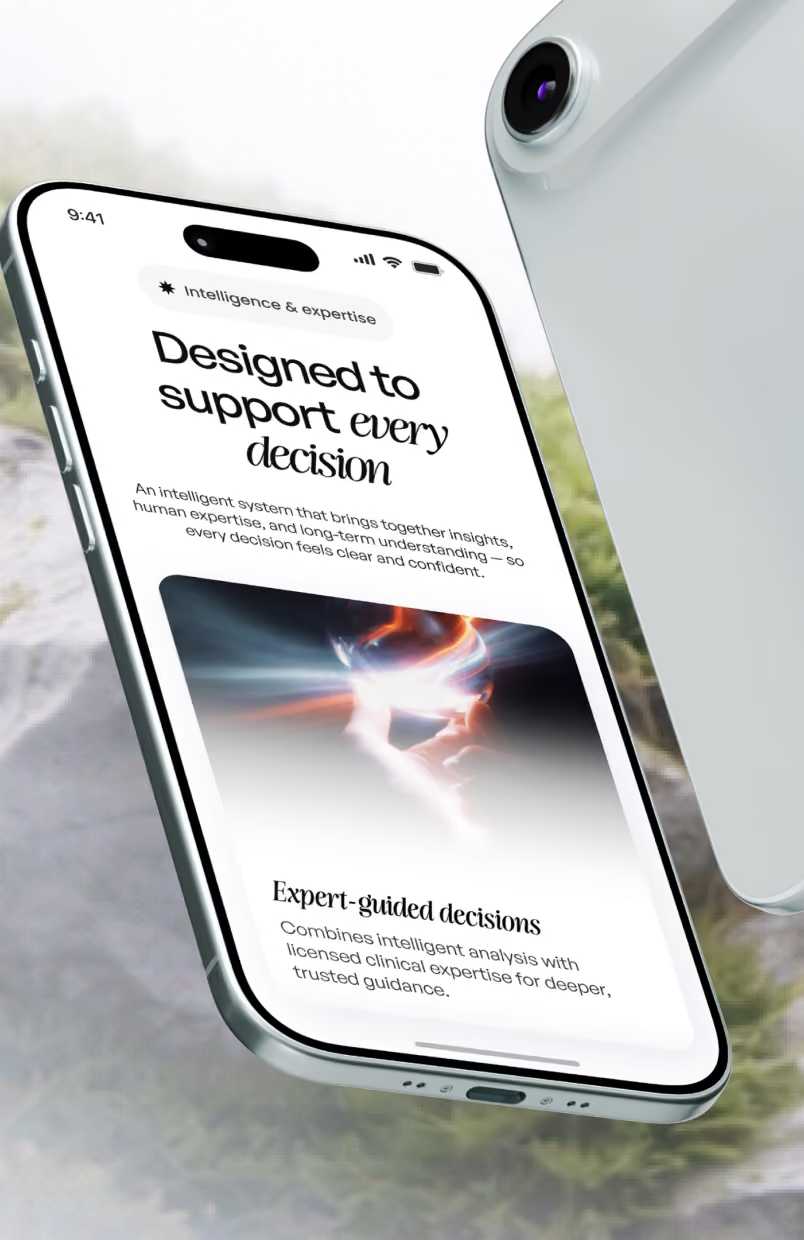
Selected Work for Sydney Enterprises
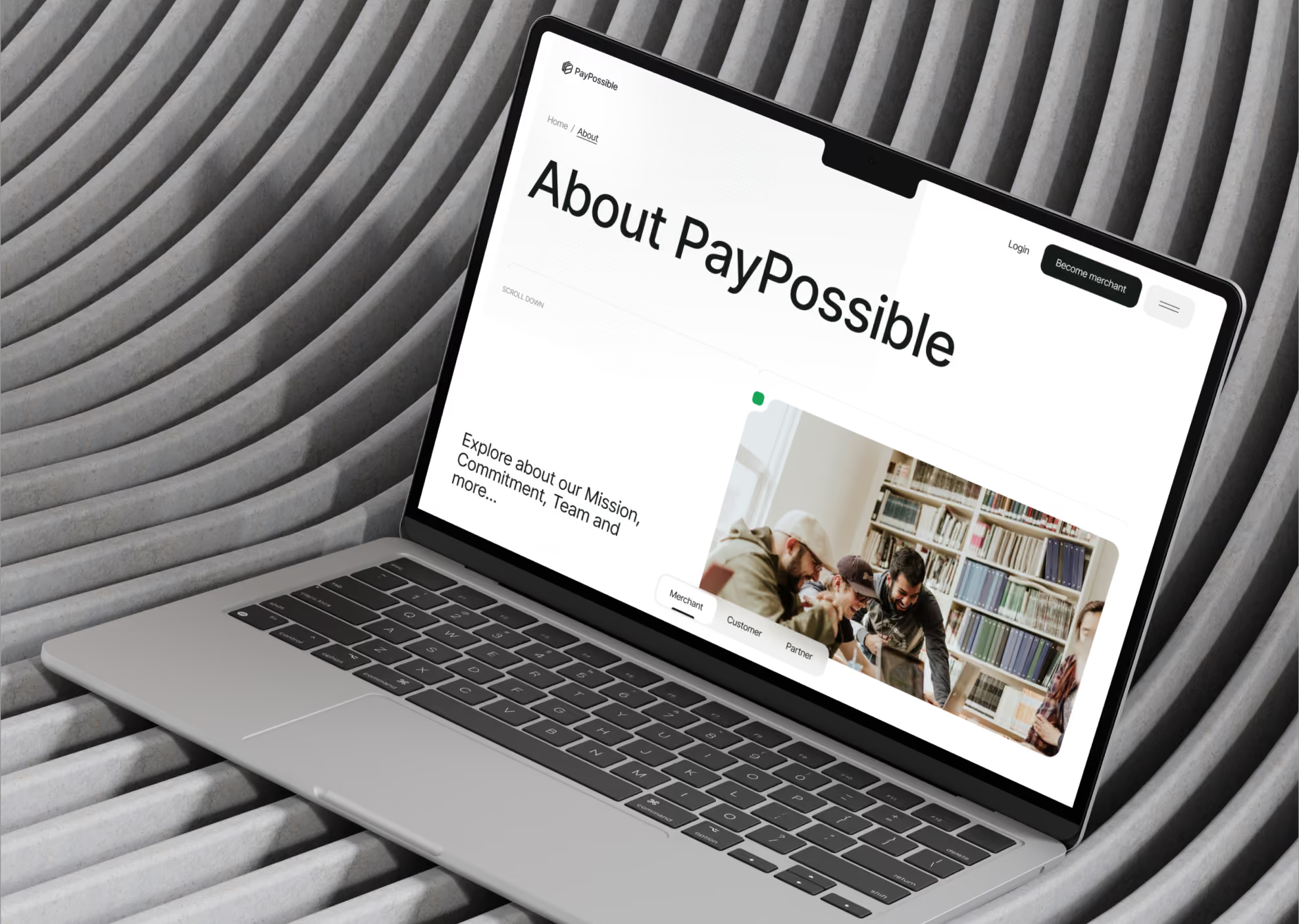
As a UX/UI design agency Sydney enterprises work with, Arounda brings 500+ projects of experience to every collaboration. The cases below show how our work connects product challenges with stronger business outcomes.

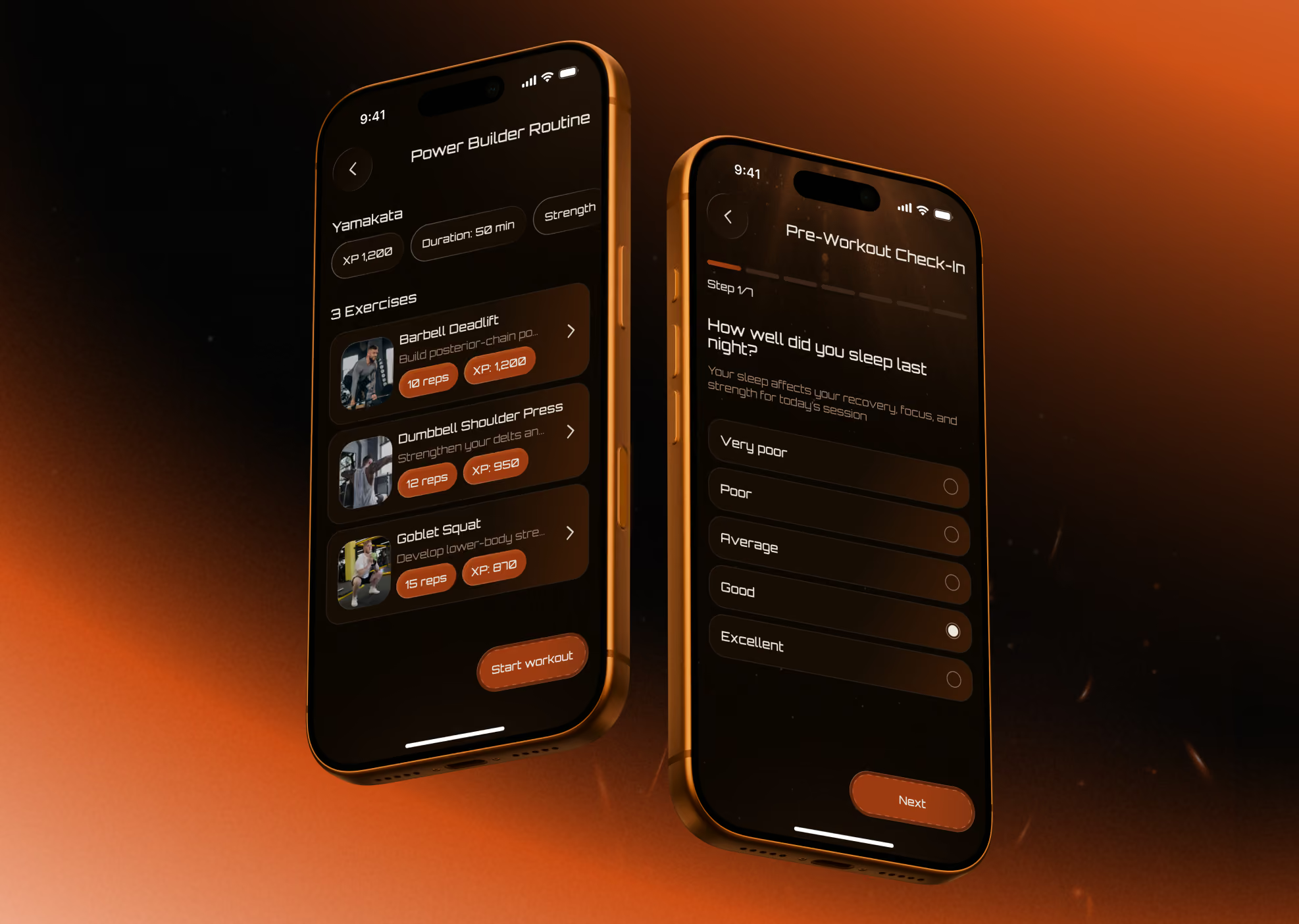
Mobile App Design for a Gamified Fitness Platform
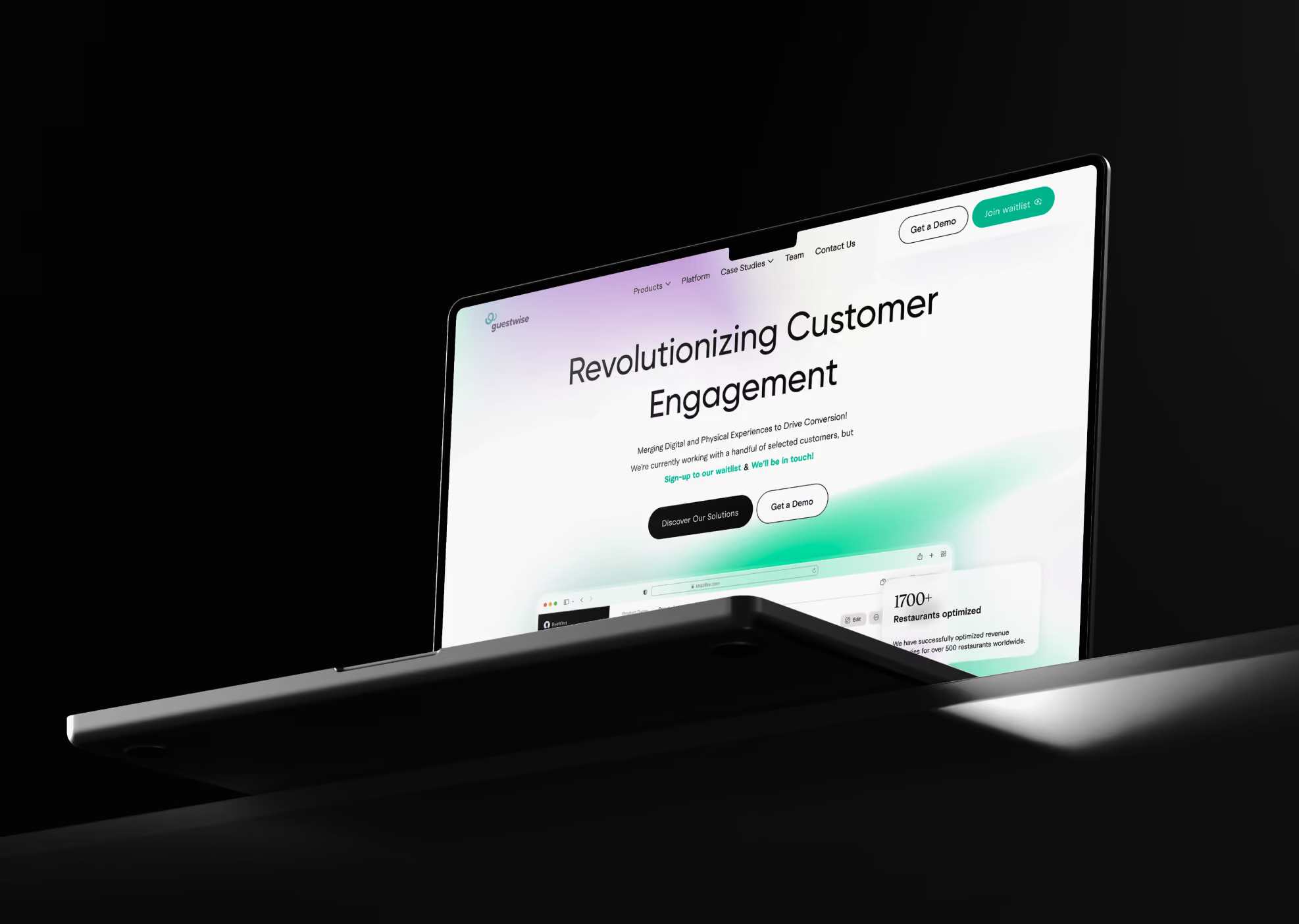
Website Redesign for a Hospitality Marketing Platform

Results We've Delivered Across Products
After 10+ years of design work, we know where digital products lose users, slow growth, and add complexity. We redesign user experiences in order to boost adoption, conversion, and the product's success in the long run.

87%
Task Completion Rate
Even users with limited finance knowledge were able to accomplish critical operations with less misunderstanding thanks to simplified banking flows and unambiguous confirmation stages.
+74%
Task Completion Rate
Every workout followed a clear progression from effort to reward. Users moved through the experience with confidence and completed key actions without losing track of their progress.

+28%
Demo-to-Active Conversion
A unified product experience and clearer user journeys reduced friction during evaluation, helping more teams become active platform users.



While the growth of our clients is what matters most, it`s nice to get awards




89+ Reviews
on Clutch

Top Rated Plus Agency
on Upwork

Top 50 Trending team
on Dribbble

Projects are Featured on Behance platform

How We Approach Every Project in Sydney
Our process breaks complex design work into focused stages, giving every decision a clear purpose before the project moves forward.

What Strong UI/UX Design Does for Your Product

Removes Friction From Key Actions
Every extra click or unclear decision slows users down. We simplify critical journeys so people complete important tasks with less effort and greater confidence.

Creates Experiences People Trust
The more consistent and routine an interaction is, the more likely people are to trust it. Users are more inclined to come back, suggest your product to others, and remain interested when the interface is consistent and the UX is well-thought-out.

Keeps Your Product Ready to Scale
As the company grows, it adds new tools, teams, and ways of working. We construct adaptable UX frameworks that enable products to grow while maintaining consistency and transparency.

Clients recognize many reasons to trust our services





“I was impressed with the high levels of detail and polish for all the features.”

Jimmy Hosang
Founder & CEO

“Their professionalism, dedication, responsiveness, and determination are commendable.”

Emil Ljesnjanin
Founder & CEO

“Their expertise and guidance were instrumental. They demonstrated their commitment to creating a product that resonated with our target audience, which led to improved user satisfaction.”

Aetienne Sardon
Founder, MYSO Finance


“Working with Arounda is really smooth in terms of communication and workflow”

Stephane Heip
CMO, Enzyme

Our partners who chose structured execution



We get things done With Quality

HIPAA compliance and WCAG accessibility

End-to-end product delivery

Enterprise-grade design systems

Retention-focused user flows
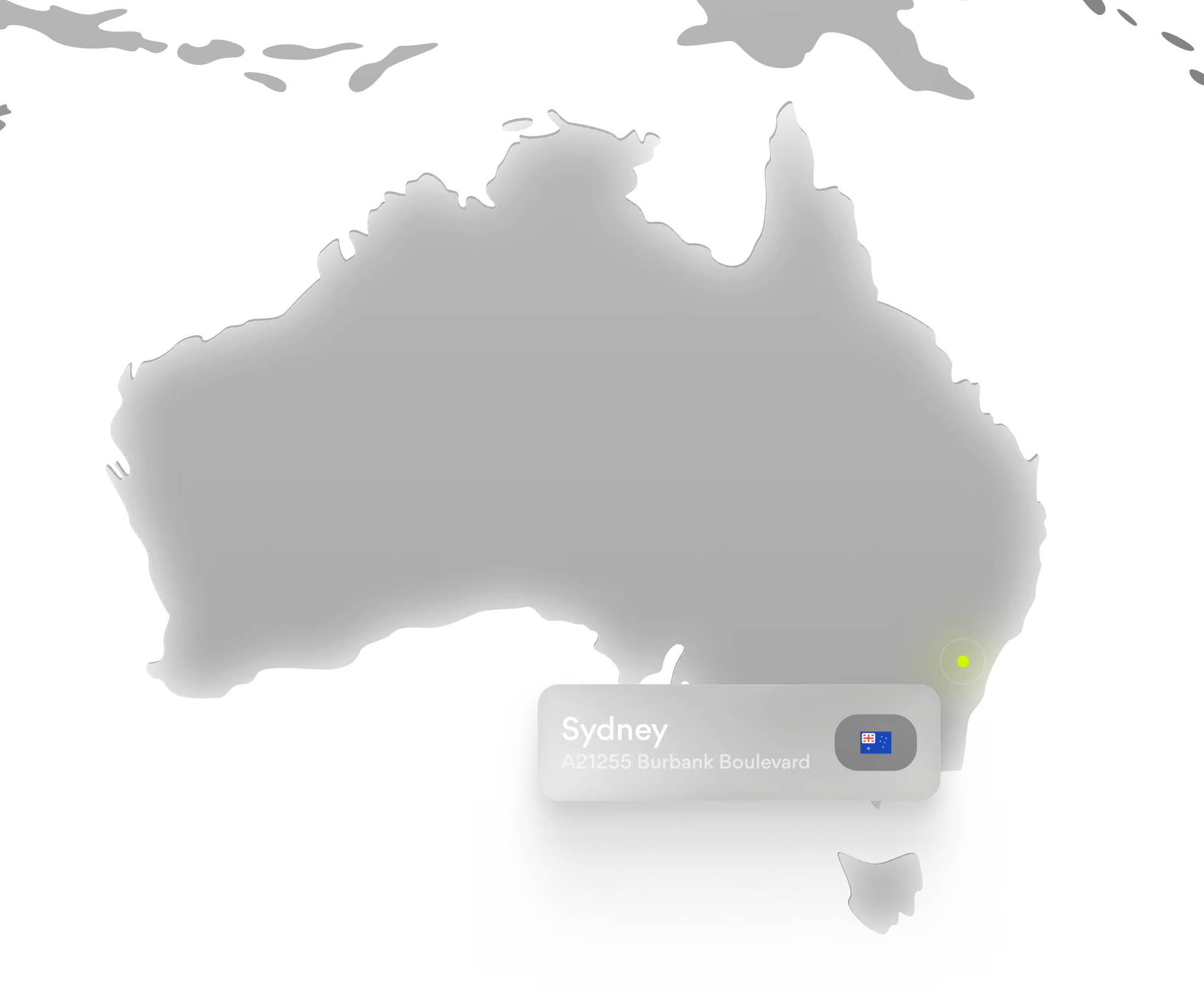
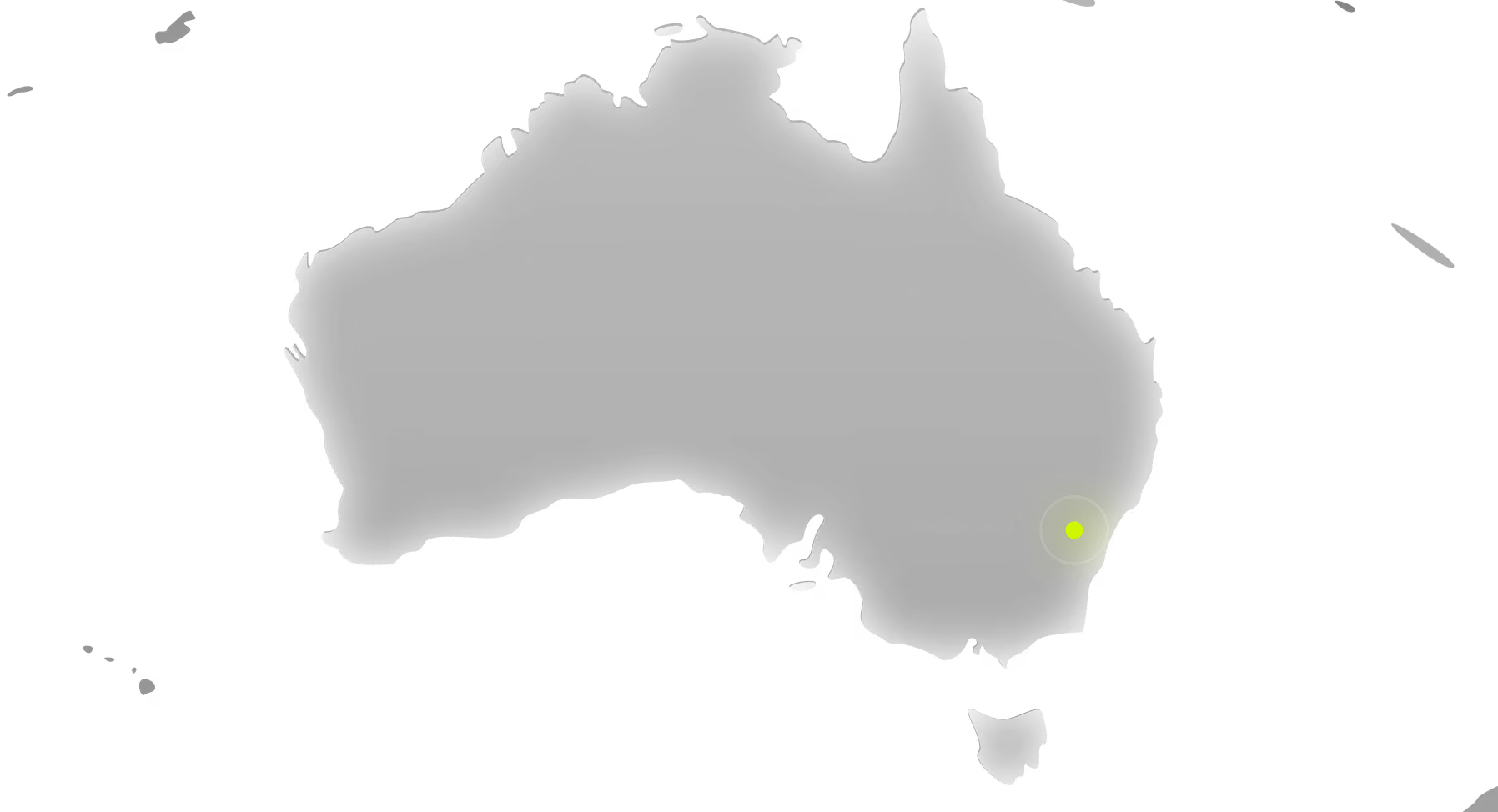
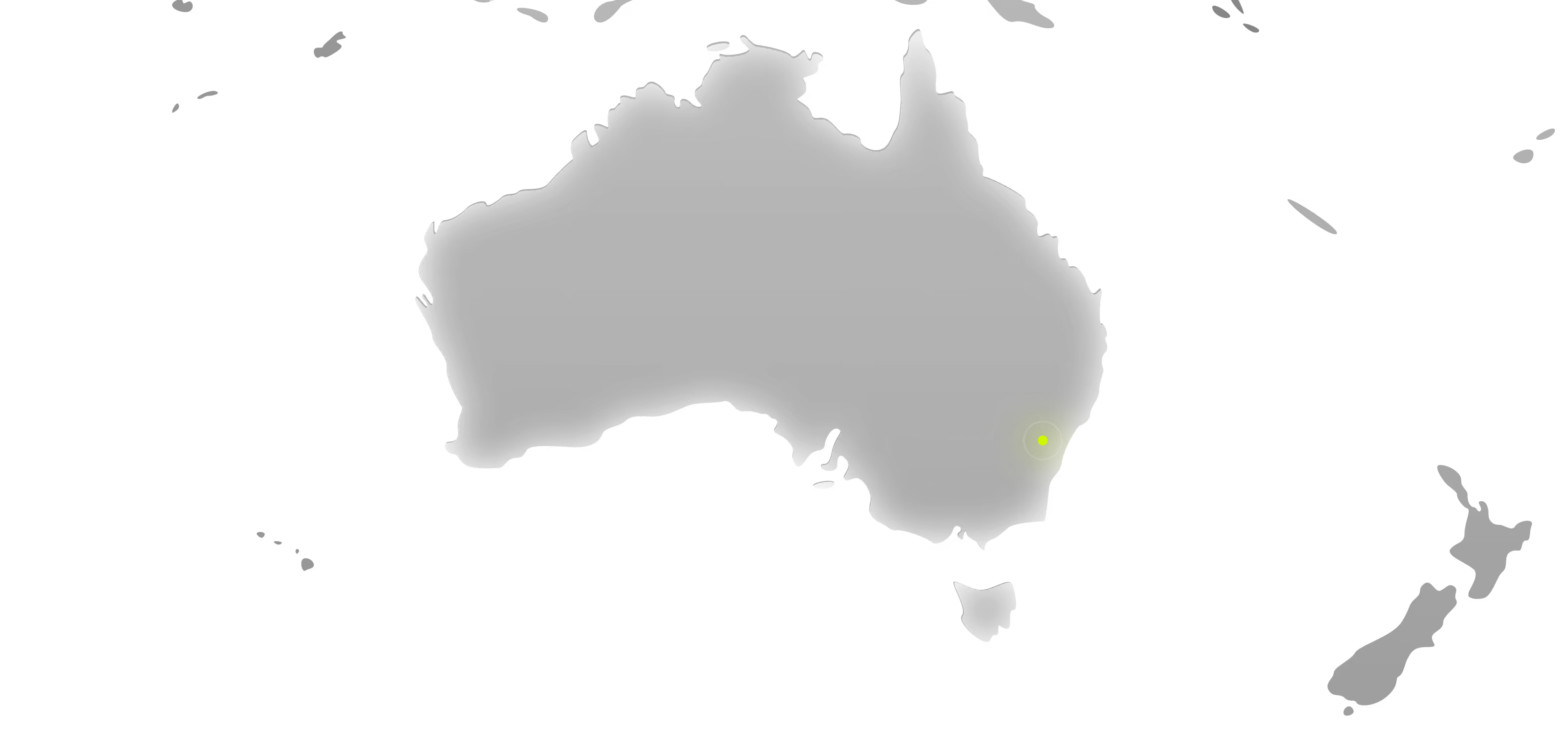
Our location

89+ Reviews
on Clutch
Top Rated Plus Agency
on Upwork
Top 50 Trending team
on Dribbble
Projects are Featured on Behance platform
FAQ on UI/UX design services in Sydney
What does a UI/UX design company in Sydney do?
A UI/UX design agency Sydney businesses hire helps teams make digital products easier to understand, navigate, and use. Arounda works on the full experience behind a website, app, or platform, from the first research steps to interface design, design systems, and development support.
Our work includes:
- Web and mobile UI/UX design
- Branding and visual identity
- Web and MVP development
The exact scope depends on what blocks progress: unclear flows, weak visual hierarchy, low conversion, poor adoption, inconsistent UI, or a product that has become harder to scale.
Arounda has delivered 500+ digital products across SaaS, fintech, healthcare, AI, Web3, and other complex industries. That experience helps our designers recognize common UX issues early and build solutions around your product’s logic, users, and business priorities.
How do you measure the success of a design project?
A UX design agency Sydney businesses trust should measure success through product outcomes, not design preferences. Before we start designing, we define what needs to improve and which metrics will show whether the work achieved its goal.
We usually evaluate results across four areas:
- Business growth – conversion rates, lead generation, revenue-related metrics, and demo-to-active adoption.
- Product performance – task completion, feature adoption, navigation efficiency, and time needed to complete key actions.
- User experience – satisfaction scores, product comprehension, readability, and overall ease of use.
- Long-term impact – customer retention, repeat engagement, and how well new features fit the existing experience.
Recent projects show how those improvements translate into measurable outcomes:
- Reforge increased task completion by 74% after we simplified workout flows and connected every action to visible progress.
- HRWorkCycles improved demo-to-active conversion by 28% through clearer user journeys and a unified product experience.
- PIIFUND reached an 87% task completion rate by simplifying banking flows and making critical financial actions easier to understand.
After launch, we continue reviewing product performance, identify areas where users still hesitate, and recommend improvements that help the product evolve without creating new UX issues.
What is your approach to product redesign for established companies?
Users of established products have set ways of doing things, so when a UX design agency in Sydney redesigns a product, they should look for ways to help the user keep their habits and workflow while also protecting the users' existing expectations.
At Arounda, we usually start with four areas:
- User behavior: we review journeys, analytics, feedback, and support insights to see where users hesitate, leave, or complete tasks with unnecessary effort.
- Product logic: we consider the navigation, information architecture, roles, dashboards, and relationships between features before changing the interface.
- Interface clarity: we work on layouts, hierarchy, typography, spacing, interaction states, and responsive behavior so that the product feels easier to use.
- Scalability: we update or create design systems, component libraries, and UI rules so future features can grow inside the same structure.
The goal is to make the product feel clearer and more useful without making loyal users feel lost. A strong redesign should feel like the product finally works the way users expected it to.
How do you handle design decisions when stakeholders disagree?
A UX design company Sydney businesses rely on should replace assumptions with evidence. Instead of asking whose opinion is right, we help teams compare design directions against user research, business priorities, and technical requirements.
Our team supports discussions with:
- Decision Records that explain why a specific direction was selected.
- Prototype Comparisons that showcase how different approaches can enhance or change the user experience.
- UX Evidence obtained from research, analytics, audits, and usability testing.
- Technical Reviews that confirm we can technically achieve the solution within the bounds of our product architecture and development roadmap.
This approach moves the conversation away from personal opinion. Everyone sees the reasoning behind the recommendation, so the final decision is easier to align, and easier for the team to implement.
What does the onboarding process look like when starting a new project in Sydney?
Every new project with our UX design firm Sydney team begins with an onboarding session. We make sure we know exactly what it is we’re supposed to design, who we’re designing for and who will be signing off decisions, what materials already exist, and what outcomes will guide our decisions.
The setup stage covers:
- Team structure: Designers, project manager, and key contacts from your side.
- Project workspace: Figma files, design libraries, documentation, and shared tools.
- Source materials: Product files, analytics, brand assets, research, and technical context.
- Communication rhythm: Review points, feedback format, reporting cadence, and decision rules.
- Delivery plan: Scope, timeline, first milestones, and expected deliverables.
Your product will dictate the next step. For some, the first step is to create wireframe/UI concepts. Others will call for a UX audit, interviews with stakeholders, competitor research, or discovery before design.
You can expect the first tangible outputs within 1–2 weeks, such as user flows, sitemap updates, audit findings, wireframe directions, early UI concepts, or a clearer design roadmap. If you want to just dip your toes in to see if collaboration will make sense, you can try a free 3-day trial on a real design task.
How do you ensure design consistency across platforms and touchpoints?
When switching from a website to an app, dashboard, control panel, or new feature, users shouldn't feel like they're meeting a new product every time. This is the first rule of design consistency.
Our team keeps the experience aligned through:
- Shared design principles that define how the product should look, behave, and guide users.
- Reusable components that help designers and developers avoid duplicate interface patterns.
- Clear UX rules for navigation, hierarchy, forms, states, and responsive behavior.
- Design system documentation that gives product teams one source of truth for future releases.
Consistent design makes the product easier to scale. Teams ship new features with less rework, and users keep moving through familiar patterns instead of learning the interface again.
What engagement model works best for long-term product teams?
Long-term product designers understand the product history, release rhythm, and reasoning behind past decisions. That context helps the team work faster, avoid repeated mistakes, and make stronger decisions with each new release.
We typically recommend two engagement models:
- Dedicated Product Design Team. Choose this model when design is part of your ongoing roadmap. Your designers stay involved throughout planning, design, testing, developer handoff, and future iterations. The team becomes an extension of your product organization and grows with every release.
- Team Extension. This model works well when your internal team needs additional expertise or extra capacity. Arounda designers join your existing workflow and take ownership of a defined area, whether that's a new feature, onboarding experience, design system, mobile application, or UX audit.
The longer we work with your team, the less time we spend on explanations and the more time we spend on meaningful design work. Our designers already know the product logic, technical limits, user feedback, and priorities behind each release, so future decisions become faster and more accurate.
How do you collaborate with in-house design or development teams?
Arounda joins internal teams without forcing them to rebuild their process around us. We first learn how your team makes decisions, shares feedback, prepares releases, and hands work to development. Then we plug into that rhythm with a clear area of responsibility.
Our role may include:
- Taking ownership of a separate product area, such as onboarding, mobile flows, dashboards, or a new feature.
- Strengthening your design system through cleaner components, usage rules, and documentation.
- Preparing development-ready design files with states, edge cases, responsive behavior, and interaction notes.
- Reviewing implementation so the final product keeps the agreed UX logic and visual quality.
With this resource, your team can handle more design work without sacrificing product control. Devs can go forward without continual explanation since we record decisions, make feedback easy to track, and provide clear handoff materials.