
Brand Implementation: Strategy, Process, Checklist, and Plan


Brand Implementation: Strategy, Process, Checklist, and Plan
Brand implementation turns strategy into every touchpoint a customer sees. In the McKinsey survey (2025) of 500 global marketing leaders across Europe, it was found that branding is now the top priority for CMOs. It is even ranked above generative AI (which landed in 17th place). A brand book alone is not a brand implementation strategy that works. The thing is that someone still has to audit the assets, work on the company guidelines, sequence the rollout, and, what's more, keep teams accountable after launch day.
This guide created by the Arounda team covers the six-stage process, a 45-point checklist, and rollout scenarios for new launches, rebrands, and M&A. Marketing managers, brand strategists, and founders will find a plan they can put to work.
Article Key Takeaways
This article explains how to turn a signed-off brand strategy into a rollout that reaches every touchpoint:
- McKinsey's 2025 survey of 500 European marketing leaders ranked branding as the top CMO priority for 2026 (ahead of generative AI)
- Guidelines alone don't get a brand live. Someone still has to sequence the rollout and own it after launch
- Arounda used the same six-stage process to help MoveOn produce assets twice as fast and Loca Travel three times as fast after their brand launches.
- A 45-point checklist across seven categories catches what most rollouts miss
- New launches, rebrands, and M&A each carry different risks, from coordinating every channel at once to aligning two companies on one timeline.
- Asset coverage, brand recall, and template compliance show whether a rollout held well past launch day.
What Is Brand Implementation (and What It Isn't)
Brand implementation is the process of applying an approved brand identity across every asset, channel, and interaction a business owns (logo placement, messaging, tone of voice, packaging, digital products, and how employees represent the brand day to day). If that identity doesn't exist yet, that's where branding services come in first.
Brand strategy defines the positioning, the audience, and the promise, but implementation is what happens after that work is signed off. It is the process after the guidelines get built, assets get produced, and every touchpoint gets updated on a schedule. See the table below explaining both terms.
One inconsistent touchpoint is enough to undercut the whole brand. For instance, an outdated PDF, an email signature nobody updated, or a clinic still showing the old signage, and customers will notice this. As a result, it chips away at the trust the strategy work was supposed to build. Trust is doing more work than ever: Edelman's 2025 Trust Barometer proves that 80% of customers trust the brands they use every day more than they trust institutions like government or media.
"Nobody notices a brand that's consistent everywhere. But they will surely notice when it's not, and that little moment of doubt costs you something. In healthcare, that matters even more. I'd rather have something simpler that holds up on every page than something flashy that only looks good on the homepage."
Alyona Deieieva, Lead Brand and Marketing Designer at Arounda
When Brand Implementation Is Required
Here are four scenarios that come up most often:
- New brand launch. A product or service hits the market for the first time and needs a coordinated rollout.
- Rebrand or brand refresh. An organization updates its identity or visual system and has to replace outdated assets before old and new versions start conflicting.
- Merger or acquisition. Two brands combine, and every touchpoint from both organizations needs to reflect one identity.
- Market or product line expansion. A brand enters a new region, or even a new country, and the identity needs to be applied to all materials.
Here is an example: Spotify entered the Indian market following the same pattern. The company decided to keep the interface, logo, and the main visual language the same as in its other markets. However, they changed the pricing policy, payment options, and playlist curation; they were adapted to local traditions. This approach allowed them to remain the brand recognizable.
The Cost of Getting Brand Implementation Wrong
A weak brand implementation process can be expensive. Customers can't find the product they trust, sales teams pitch two versions of the same story, and confused customers quickly choose your competitors.
Here’s an example: Tropicana's 2009 packaging redesign is the clearest case on record. PepsiCo replaced the familiar orange-and-straw image with a plain glass of juice (the cost of the ad campaign was $35 million). Within two months, unit sales fell 20%, and this cost the company an estimated $30 million. By February 23, 2009, Tropicana had reverted to the original design. Minute Maid and Florida's Natural had already picked up the customers who couldn't find their usual carton.
The reasons rebrands fail during implementation don’t always trace back to the strategy. Here are some of them:
- No shelf or user testing before rollout. Tropicana's design tested well in the boardroom, never against a cluttered shelf.
- No sequencing roadmap. An all-at-once launch leaves no room to catch a problem before it hits every store.
- No owner for consistency after launch. Guidelines get written, then nobody checks whether stores or sales decks follow them.
- Underestimating brand recognition. A logo or package shape works as a shortcut for repeat customers. And when it is changed without warning, this breaks that shortcut.
8 months ago, a fintech client came to us for a rebrand refresh. Nobody on their team could find the original logo files. The brand guidelines lived in a PDF that only their previous creative director had, and she'd left the company last year. My team spent the first week reconstructing work that already existed, before we touched anything new. Nobody had planned for what happens six months or years after launch, and that's what decided whether good design work still meant anything.
Vlad Gavriluk, Founder and CEO at Arounda
The Arounda team suggests: don’t consider implementation as an afterthought. Test the design before the full rollout, plan the launch order, and put one person in charge of keeping things consistent.
The Brand Implementation Process: Six Stages
Here's what a step-by-step brand implementation process for a mid-size B2B company is. You can scale it up or down depending on how many touchpoints the brand wants to cover.
Stage 1: Brand Audit and Asset Inventory
First, you need to list every asset currently in use: website pages, product screens, sales decks, signage, email signatures, social templates, and any co-branded materials with partners. Mark each one as on-brand, outdated, or missing entirely. If the audit turns up a website that's structurally outdated (not off-brand), that's a case for website redesign, not just new colors and a logo swap. Тhe same goes for the product: sometimes the fix is a product redesign, and if the gap is in how the brand shows up on social posts or printed materials, that's usually graphic design work.
A competitor scan belongs in this stage too. For instance, Arounda's audit for StockGate, a crypto investment platform, found that most competitors relied on cold, technical interfaces. That's why the team built a warmer, human-first visual system instead, one designed to stand out at first sight.
Stage 2: Brand Guidelines Finalization
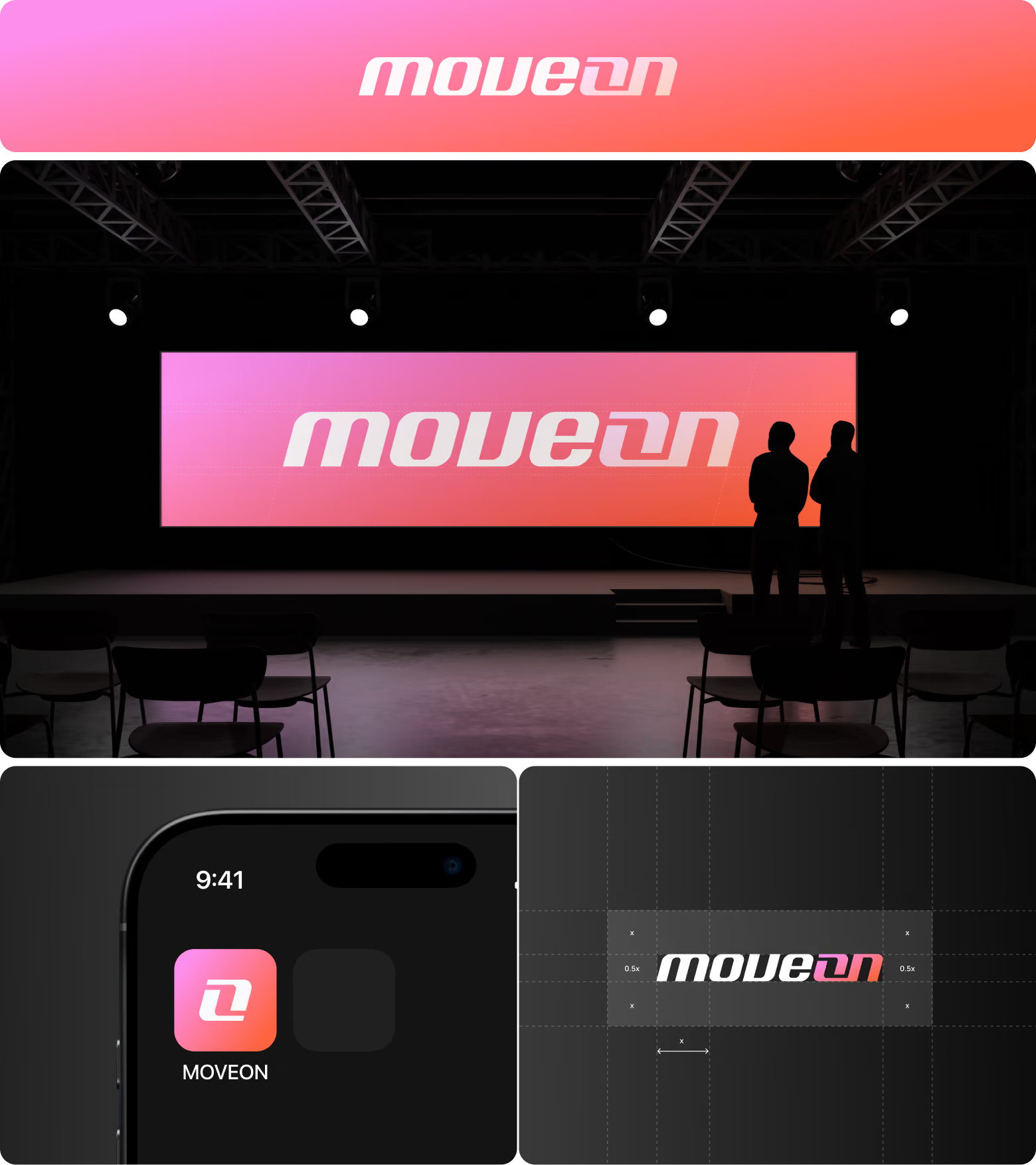
Guidelines need to answer production questions: minimum logo size, clear space, exact color values in HEX, RGB, and CMYK, type hierarchy, photography style, and what tone of voice sounds like in a real sentence. For MoveOn, a fitness app, Arounda built guidelines covering everything from dark app screens to Instagram posts to printed handouts. As a result, the client received clear rules on color, type, and spacing, cutting design review rounds.
Stage 3: Priority-Based Asset Sequencing
Brand implementation planning means ranking assets. This is where customer-facing, high-traffic assets go first: homepage, product UI, top sales collateral, usually within the first two to four weeks. However, internal templates and low-traffic pages can follow once the core experience is locked.
Sequencing is the best way to save money. If every asset gets produced at the same time and a guideline changes halfway through, like a slightly different shade of blue or a new tagline, every finished piece has to be redone. If you start with the most important assets, you can test and finalize the new brand guidelines first. When they are stable, the remaining materials can be created with less risk of rework.
Stage 4: Production and Quality Control
Before anything goes live, run it against a checklist:
- Correct logo file and exact color values
- Typography set to the approved hierarchy
- Text contrast must meet accessibility standards
- Alt text on every image
- CTA language consistent with the guidelines
- For regulated industries like healthcare, a compliance sign-off on any claims
The Arounda team suggests: one person must be responsible for this checklist. When you don't have a clear owner, the review gets skipped when deadlines get tight.
Stage 5: Phased Rollout With Change Management
The best approach is to release to one channel or region first, usually for two to four weeks, and only after that plan to expand. That window is enough to analyze if your strategy is effective enough and give feedback. Plus, you'll be able to find mismatched assets before they reach a broader audience.
Alyona Deieieva, Lead Brand and Marketing Designer at Arounda
On top of that, employees need the update before customers do. Give sales and support teams a short FAQ with the new messaging, so they're not caught off guard by a customer question the day the change goes live.
Stage 6: Brand Governance and Ongoing Compliance
Keep in mind that brand management doesn’t stop after the release. The team should keep the latest assets in one shared library, with clear version control to make sure that everyone is working with the right documents.
New templates should be reviewed before they are used, with a brand compliance check carried out every quarter. It’s also useful to include the main brand guidelines in the onboarding process, so new team members understand how to use the brand correctly from the start.
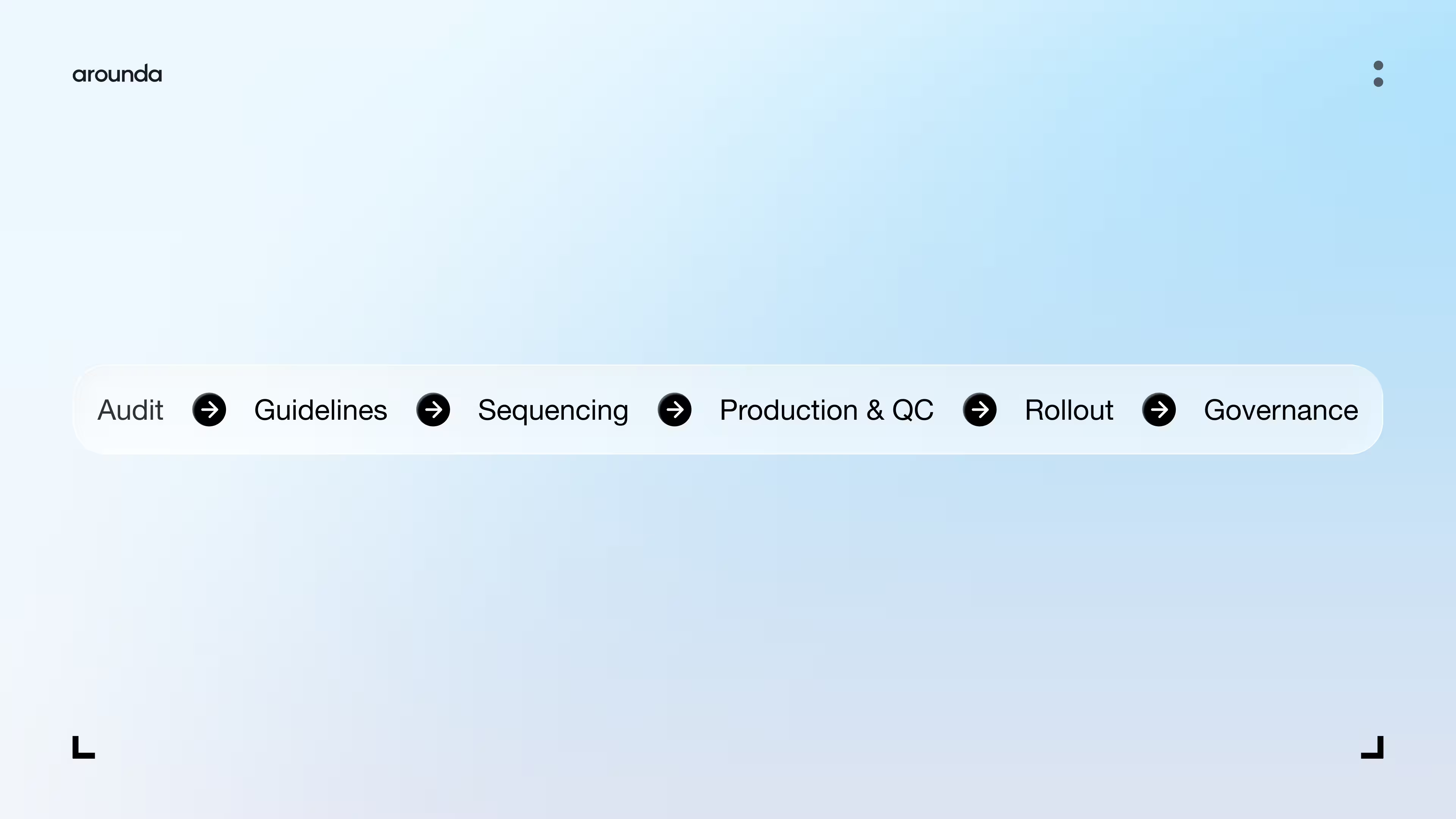
The Brand Implementation Plan
A brand implementation plan with timeline and owners turns the six stages into something a team can work from. See the table below for more details.
Of course, some stages overlap. Production on top-priority assets can start as soon as guidelines are signed off, while lower-priority pages are still being ranked. Governance isn't the last box to check, but it requires an owner named before launch.
The size of the company changes the math too. Arounda's own branding packages scale like this:
Brand Implementation Checklist: 45 Points
This brand implementation checklist for a rebrand project covers every surface a brand touches. Everything is grouped by category.
Pre-Implementation (must be complete before production begins)
1. Brand guidelines signed off by leadership
2. Logo files exported in every required format (SVG, PNG, EPS)
3. Color palette documented in HEX, RGB, and CMYK
4. Typography licensed and installed for the whole team
5. Asset inventory complete, and every channel has an owner
6. Budget and timeline approved
Digital Surfaces
7. Website header, footer, and page templates are updated
8. App icon, splash screen, and in-app UI elements are updated (or a full product redesign if the app's structure needs to change)
9. Email signature template updated across the company
10. Social media profile images, banners, and highlight covers updated
11. Favicon updated across all domains and subdomains
12. Active digital ad templates updated
13. Landing page templates updated
14. Third-party listings updated (app stores, Clutch, G2, directories)
Sales and Marketing Collateral
15. Sales deck and one-pagers updated
16. Case studies and portfolio pieces updated
17. Trade show or event booth materials updated
18. Business cards reprinted
19. Proposal and contract templates updated
20. Email marketing templates and newsletter header updated
Content and Communications
21. Blog header graphics and author bylines updated
22. Press kit and media assets updated
23. Legal disclaimers reference the correct company name
24. Help center and FAQ pages updated
25. Video intros and outros updated
26. Patient- or client-facing messaging re-cleared by legal
Internal
27. Internal wiki or brand portal updated
28. Slack, Teams, or internal tool branding updated
29. Employee email signatures updated
30. New hire onboarding materials updated
31. Internal presentation templates updated
32. Staff briefed before the external launch
Physical
33. Office signage and reception area updated
34. Building or storefront signage updated
35. Branded merchandise and swag updated
36. Packaging updated, if applicable
37. Vehicle wraps or fleet branding updated
38. On-site print materials updated (waiting rooms, menus, directories)
Governance
39. Central asset library set up with version control
41. One person or team named as brand gatekeeper
42. Approval process defined for new templates
43. Brand training added to onboarding
44. Retirement process documented for old assets
45. Feedback channel open for teams to flag inconsistencies
Brand Implementation Across Different Scenarios
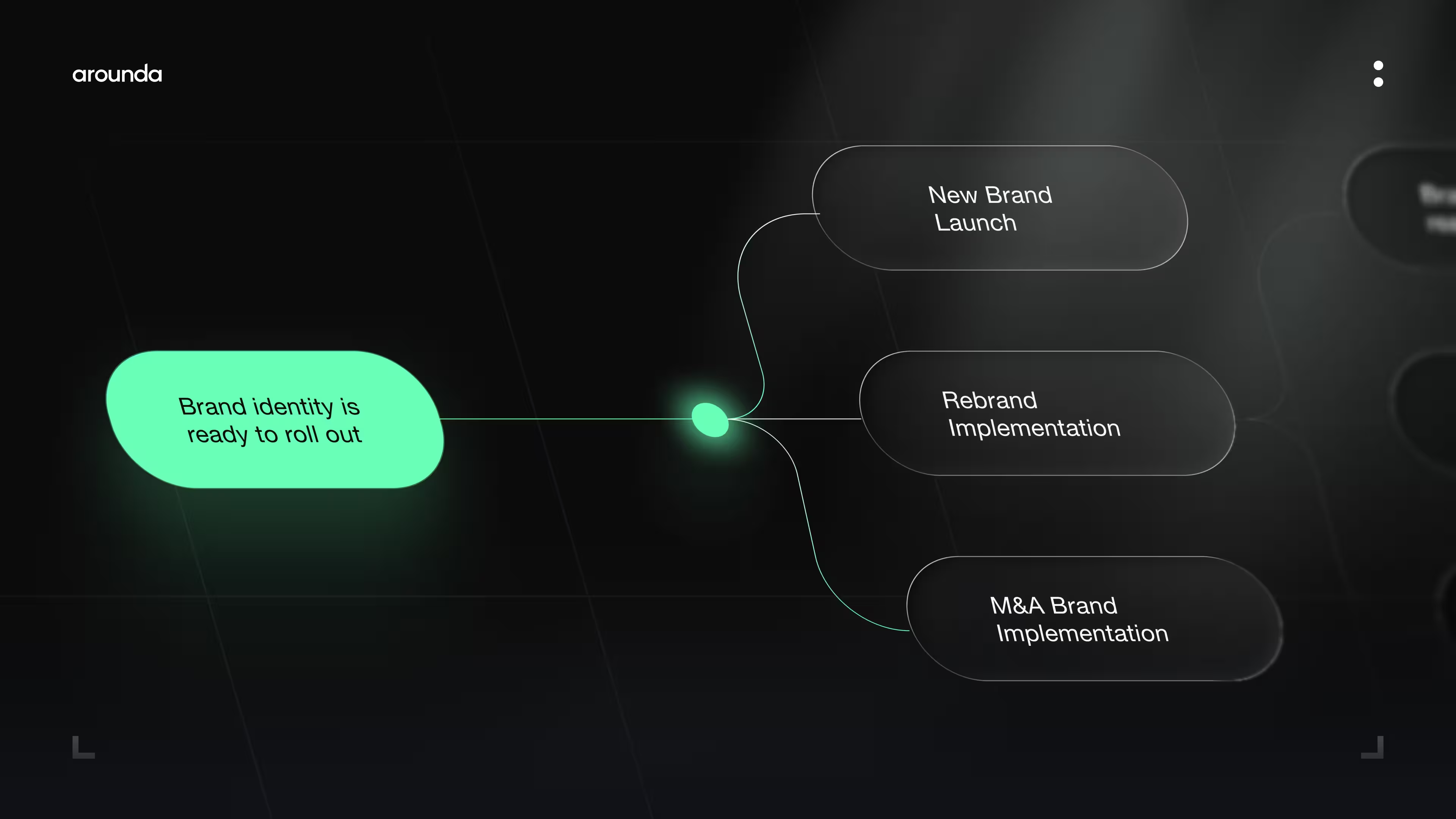
The six stages remain the same, but the starting point may change depending on what is more important. A company launching a brand for the first time has a clean slate and no old habits to break. A company that wants to merge two brands has two logos, two teams, and two sets of customers who need to land on one identity. Here's what each situation looks like in practice.
New Brand Launch
There's no old logo to phase out, but there's also no existing recognition to rely on. Here's how to roll out a new brand identity across all marketing channels:
- Launch the website and app on the same day
- Turn on top paid channels (search, social ads) at the same time as the website
- Update social profiles and templates as soon as possible (better during the first week)
- Roll out print and lower-priority pages during the first two weeks after launch
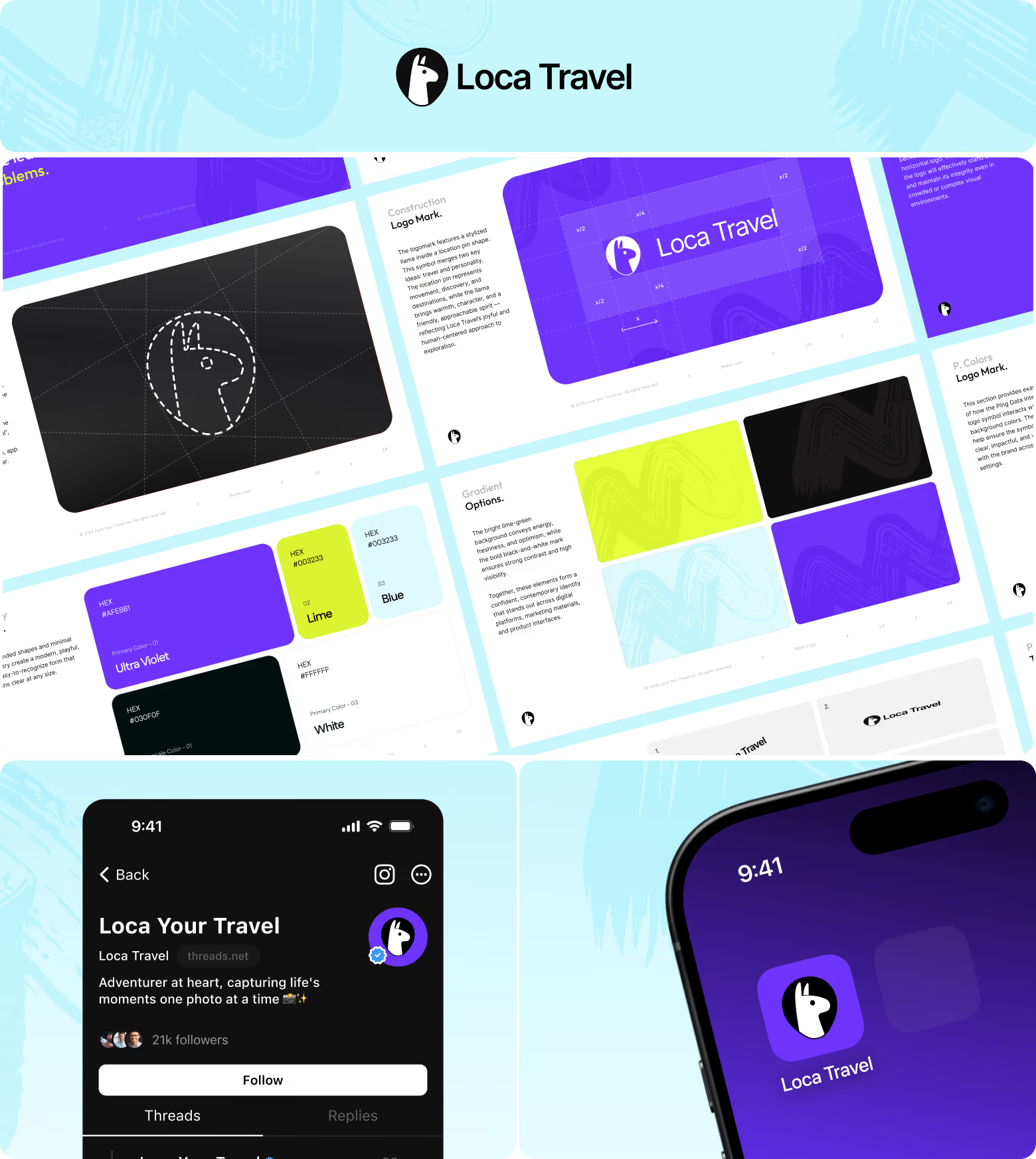
For example, Arounda's work with Loca Travel followed this order. The travel platform was entering a category full of near-identical visuals, sunsets, maps, wanderlust fonts. Therefore, our expert team built a mascot-led identity and a matching template system for social, outdoor ads, and digital campaigns. Everything shipped in one four-week production cycle. Brand recall rose 60% in user testing, and the template system cut marketing asset production time to a third of what it was before.
Rebrand Implementation
A rebrand is brand strategy implementation that customers see. All the positioning work becomes real the moment someone opens the app and finds a different logo. The most challenging part here is the stretch of time when the old and new versions still exist side by side. We also offer rebranding services if you'd rather have a team handle that transition for you.
The Arounda team suggests: set one cutover date for the website and app, as these are the assets people check most often. Then, you should redirect old domains and social handles, so nobody hits a dead link. Inform your existing customers before all changes go live because a surprise redesign when people log in to their accounts creates more problems. You will have more support tickets than a heads-up email sent a week earlier.
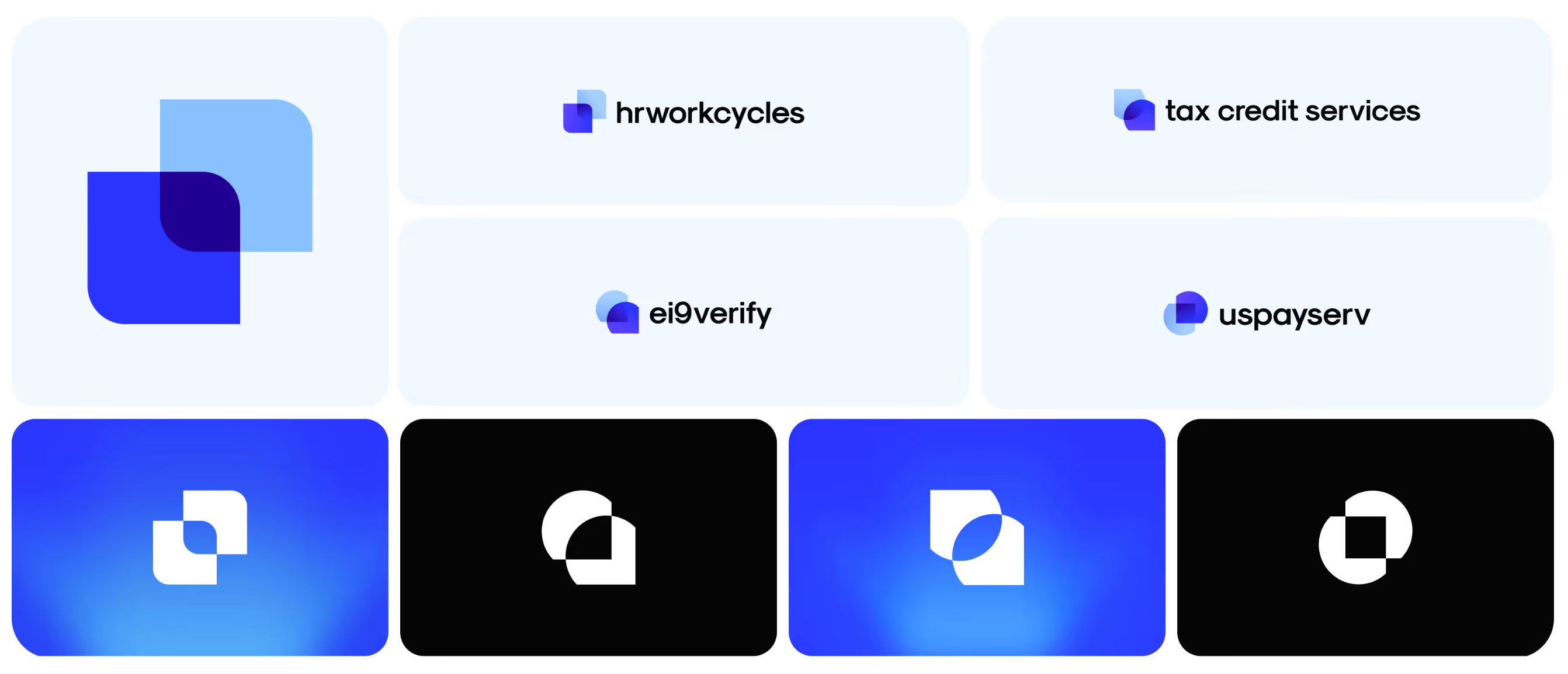
HRWorkCycles is a good example. The HR platform had three separate products, each with its own site and its own look, and it was hurting how recognizable the brand was overall. Arounda gave them one shared logo system so each product could feel distinct but clearly belong to the same family. Brand recognition went up 35% after launch. Moreover, the redesign received two Behance awards.
M&A Brand Implementation
When two companies merge, someone has to decide what happens to both brands. Here we have a few options: keep one and retire the other, build something new, or run both in parallel for a while. You need to decide before any design work starts.
Once it's made, a few things need to move on the same timeline as the visible rebrand:
- Legal entity name updated on contracts, invoices, and terms of service
- Sales and support teams retrained to talk about the merger the same way
- Email domains and customer account systems merged or redirected
- Signage, uniforms, and physical locations updated to match the new decision
A store sign that gets updated on schedule doesn't help much if the invoice a customer receives two months later still has the old company name on it.
Arounda team suggests: name one owner for the rollout before design work starts. That's the step every failed launch, rebrand, or merger skipped.
How to Measure Brand Implementation Success
Success typically shows up in speed, consistency, and how people respond to all the changes. A brand implementation strategy for a company rebranding next quarter should track these metrics from the first day.
- Asset coverage rate. The share of the 45-point checklist updated versus what's still pending. A rollout at 60% coverage three months in is behind schedule, even if the highest-traffic pages are done.
- Time to full rollout. Actual weeks against the timeline set in the implementation plan. Slippage here usually traces back to a missing owner at one of the six stages.
- Brand recognition. The best approach is to ask customers to describe (identify) the brand before the launch, and ask again after. Compare the two answers. For example, Loca Travel saw a 60% jump in recall after its new identity went live, which shows people were noticing and remembering the new look. A rollout can hit every deadline and still fail this test if nothing about the new brand sticks with people.
- Conversion and engagement shifts. Analyze store conversion, sign-up intent, and how long people stay engaged (before the rollout and after). You should also check each channel individually. If the website is converting well but the app isn't, an average of the two will hide that problem instead of showing it.
- Internal compliance. Ask marketing, sales, and support teams which templates they're using. Some will still be pulling old logo files from a shared drive only because nobody told them where the new versions are stored (or because the old file is faster to find). The best approach is to have an audit each month and double-check recent decks, emails, and social posts against the current guidelines.
- Customer confusion signals. Watch support tickets and social comments for questions like "did we get hacked?" or "is this a scam?" right after launch. A few of these are normal, but if you see a steady stream of them for more than a week, it means the change wasn't communicated clearly enough before launching.
Arounda has over 10 years of field experience and has successfully completed more than 180 projects for various companies. Our customers rate our work 5.0 on Clutch, and we'd be glad to add your project to that list. Contact us if you want to build a rollout plan around your team and your timeline!
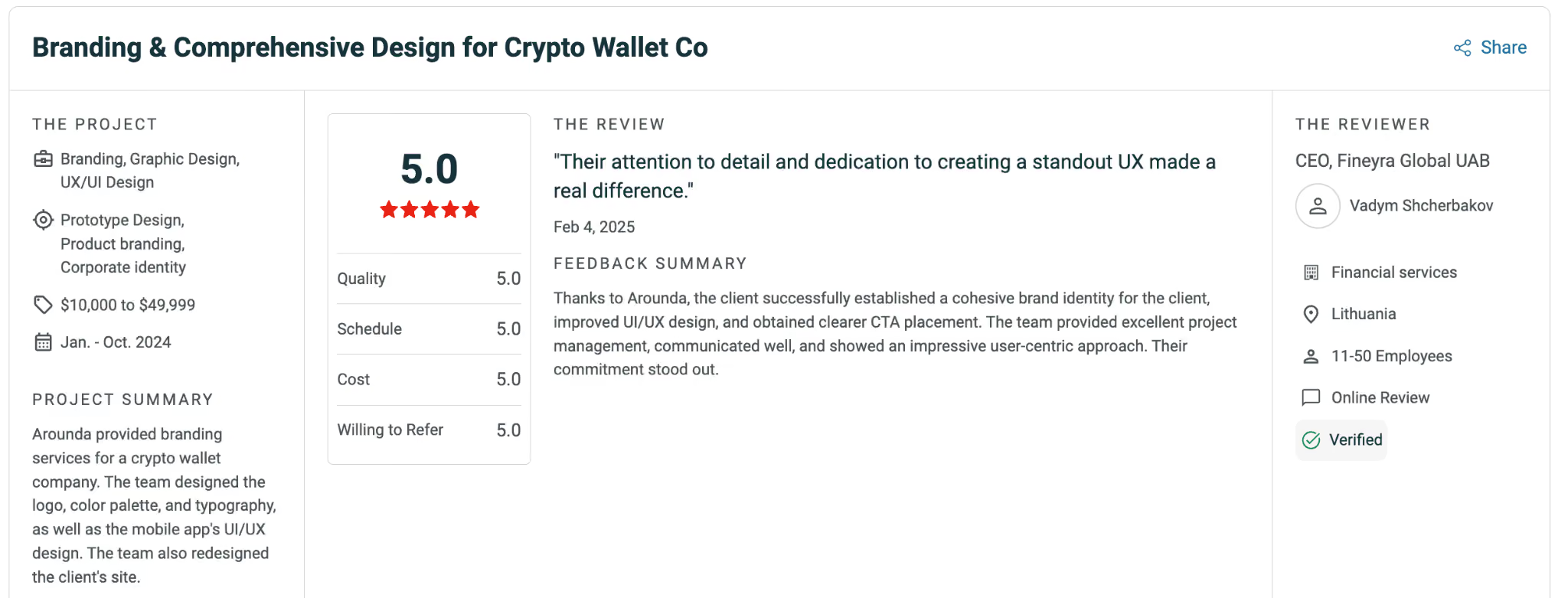



Table of contents





FAQ
It includes an asset inventory, finalized guidelines, a list of what gets updated first, named owners for each stage, and a timeline with deadlines. If there are no dates and owners, it is a checklist, not a plan. The difference between brand strategy and brand implementation is of utmost importance here: strategy sets the direction; the plan is what turns it into assigned work.
Guidelines and core brand assets take 3 to 5 weeks: about 3 weeks for a small business, up to 5 weeks for a large enterprise or healthcare organization with compliance reviews. That's production only. Sequencing, rollout, and governance add more time on top.
The biggest issue is when business owners try to launch everything at once and don't spend enough time on testing.
Assign one owner per department who reports to a single project lead. Marketing, sales, product, and support each update different assets. However, one person needs to confirm if all of it matches the same guidelines.
The visual side is the easy part. The harder work is everything underneath it: updating the legal entity name on every contract and invoice, merging two email systems into one, and getting sales and support teams to give customers the same answer about what happened. All of that has to move on the same timeline as the new logo, or the merger looks unfinished no matter how good the new brand looks.


89+ Reviews
on Clutch

Top Rated Plus Agency
on Upwork

Top 50 Trending team
on Dribbble

Projects are Featured on Behance platform
