UI/UX Design Agency in Washington DC
Our UI/UX design company in Washington, DC helps SME and enterprise teams make complex digital products easier to navigate, support confident decisions, and improve adoption, conversion, and retention.
on Clutch
completed in various niches
rating on Clutch



Design Services We Offer in Washington DC
Companies choose our UI/UX design services in Washington, DC to guide complex products from discovery through launch or redesign. Arounda keeps each decision tied to business goals, technical requirements, and user needs.
Selected Work for Washington DC Enterprises
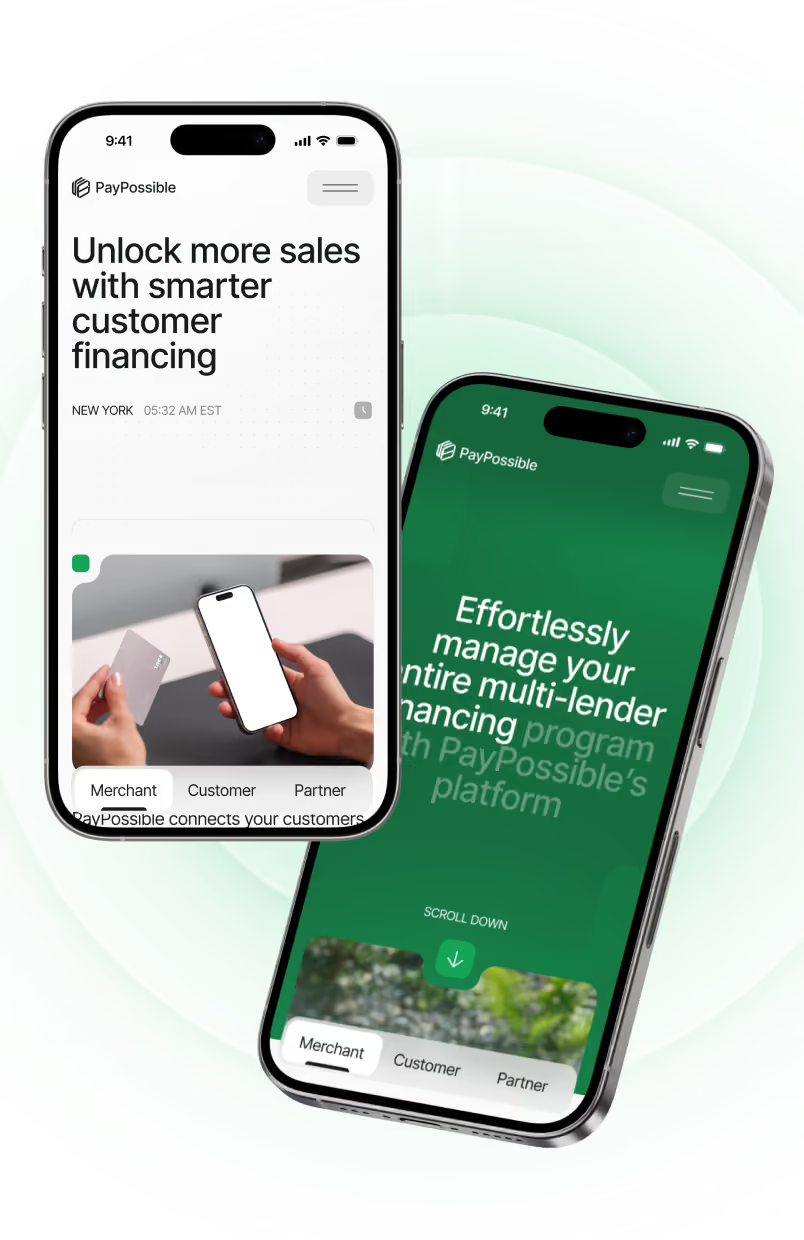
Arounda has worked on 500+ digital products, including platforms with complex workflows, large amounts of information, and high expectations for usability. These cases show how our team addressed the product issue that mattered most in each project.

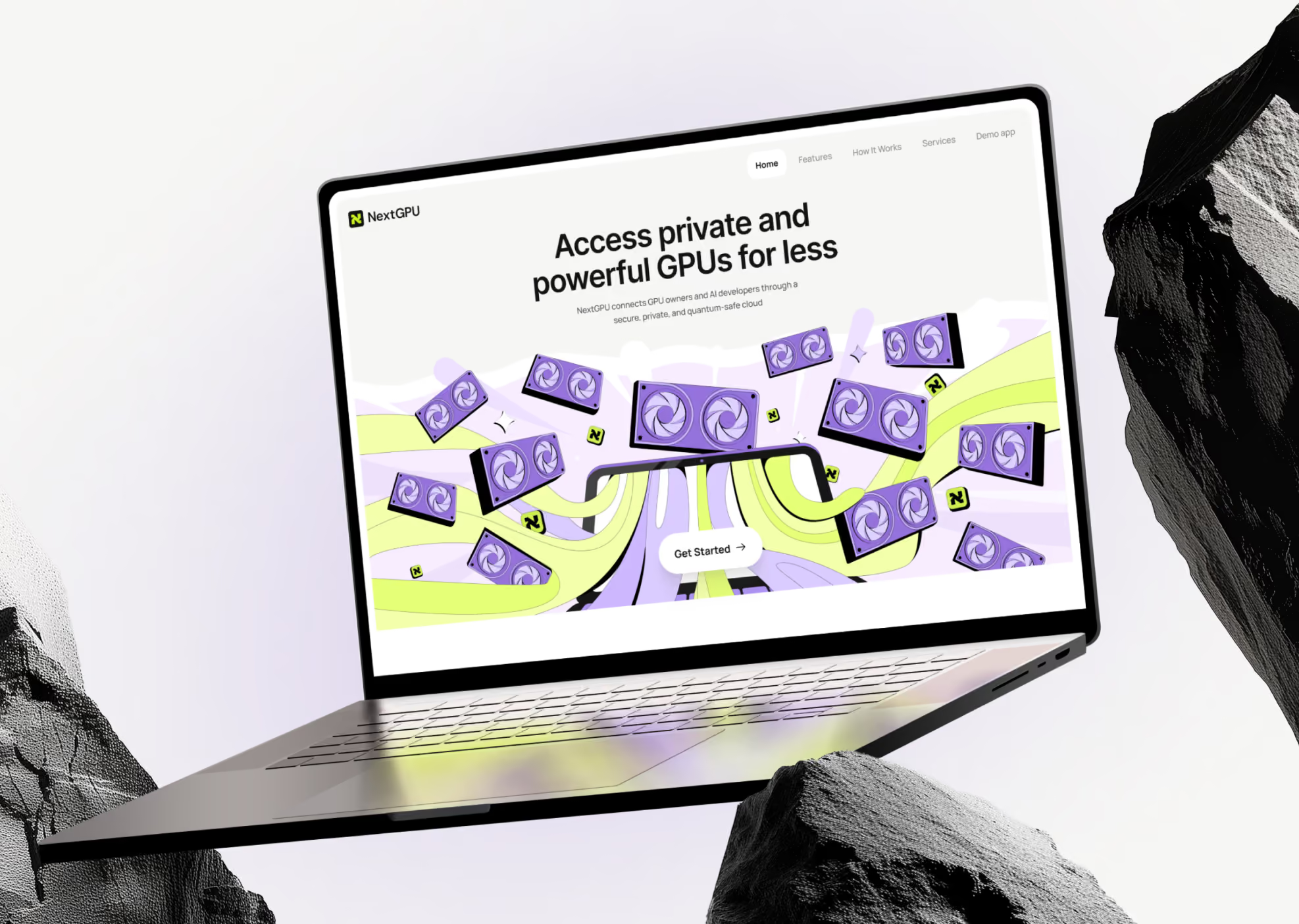
Brand and Website Redesign for a Decentralized GPU Network
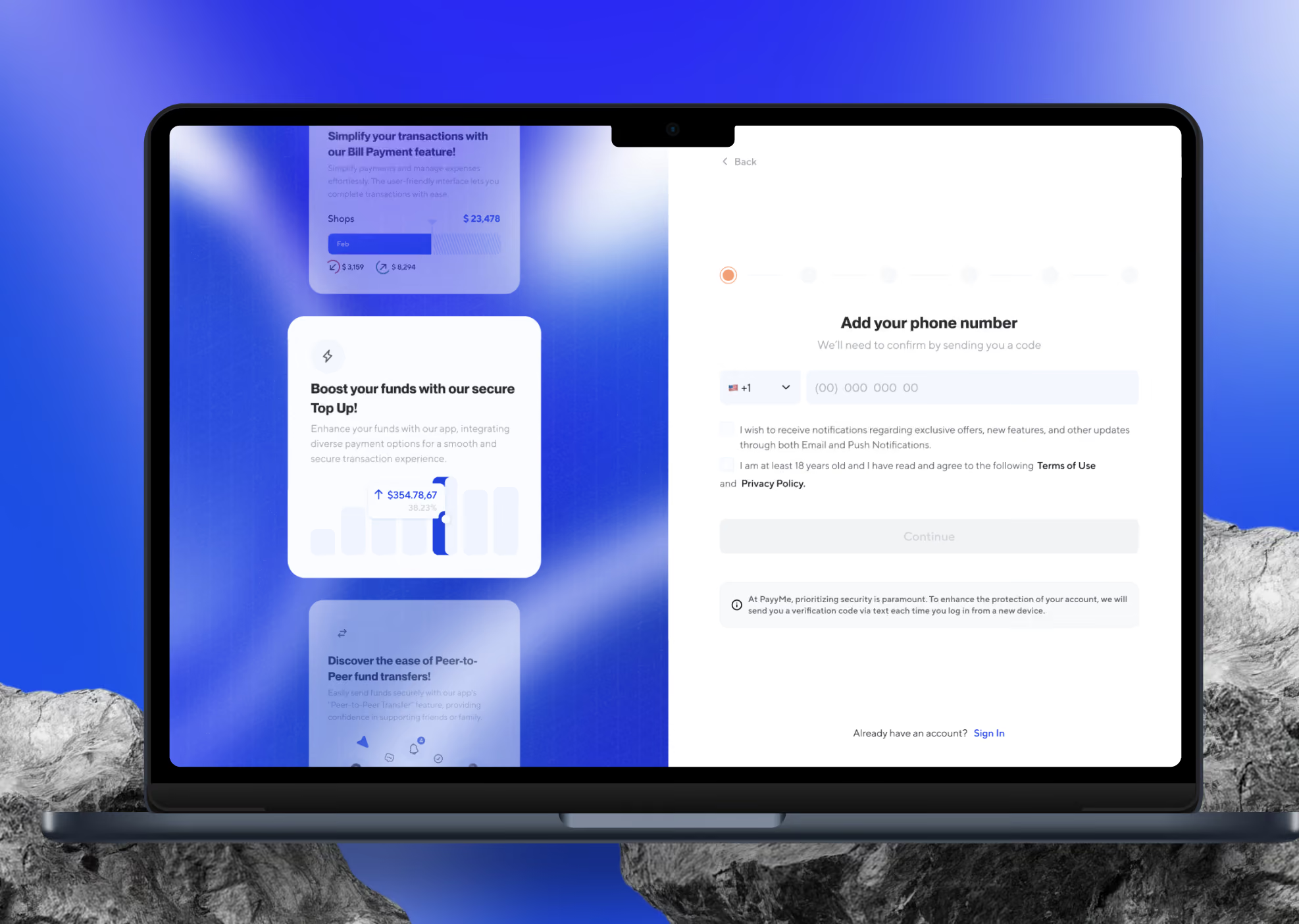
Web App Design for an Inclusive Digital Banking Platform

Results We've Delivered Across Products
After 10+ years of design work, our team knows where complex digital experiences start costing businesses users and revenue. We improve the steps that create hesitation, slow completion, or weaken repeat use, then track the impact on adoption, conversion, and retention.

+62%
Lead Conversion
The redesigned website clarified the platform's value and shortened the path from initial interest to a qualified lead.

2x
Merchant Signups
The number of merchants who signed up doubled after the redesign made financing choices clearer, increased trustworthiness, and made setting up an account easier.
42%
Fewer User Errors
At each stage, PIIFUND provides first-time digital banking users with a clear action to take. Clearly marked items and guided confirmation cut down on mistakes when doing important financial tasks.



While the growth of our clients is what matters most, it`s nice to get awards




89+ Reviews
on Clutch

Top Rated Plus Agency
on Upwork

Top 50 Trending team
on Dribbble

Projects are Featured on Behance platform

How We Approach Every Project in Washington DC
Every Arounda engagement follows a structured framework with defined stages and deliverables. We tie design decisions to your business goals and product strategy.

What Strong UI/UX Design Does for Your Product

Helps Users Get Value Faster
We simplify onboarding and key flows so users understand the product sooner and complete important actions with less effort.

Makes the Product Easier to Trust
Users gain trust in the product and are more likely to return when they see predictable behavior and consistent interactions.

Supports Product Growth
Teams may add new features with the support of a scalable design framework, which also helps to reduce future rework and maintain a consistent experience.


Clients recognize many reasons to trust our services





“I was impressed with the high levels of detail and polish for all the features.”

Jimmy Hosang
Founder & CEO

“Their professionalism, dedication, responsiveness, and determination are commendable.”

Emil Ljesnjanin
Founder & CEO

“Their expertise and guidance were instrumental. They demonstrated their commitment to creating a product that resonated with our target audience, which led to improved user satisfaction.”

Aetienne Sardon
Founder, MYSO Finance


“Working with Arounda is really smooth in terms of communication and workflow”

Stephane Heip
CMO, Enzyme

Our partners who chose structured execution



We get things done With Quality

HIPAA compliance and WCAG accessibility

End-to-end product delivery

Enterprise-grade design systems

Retention-focused user flows
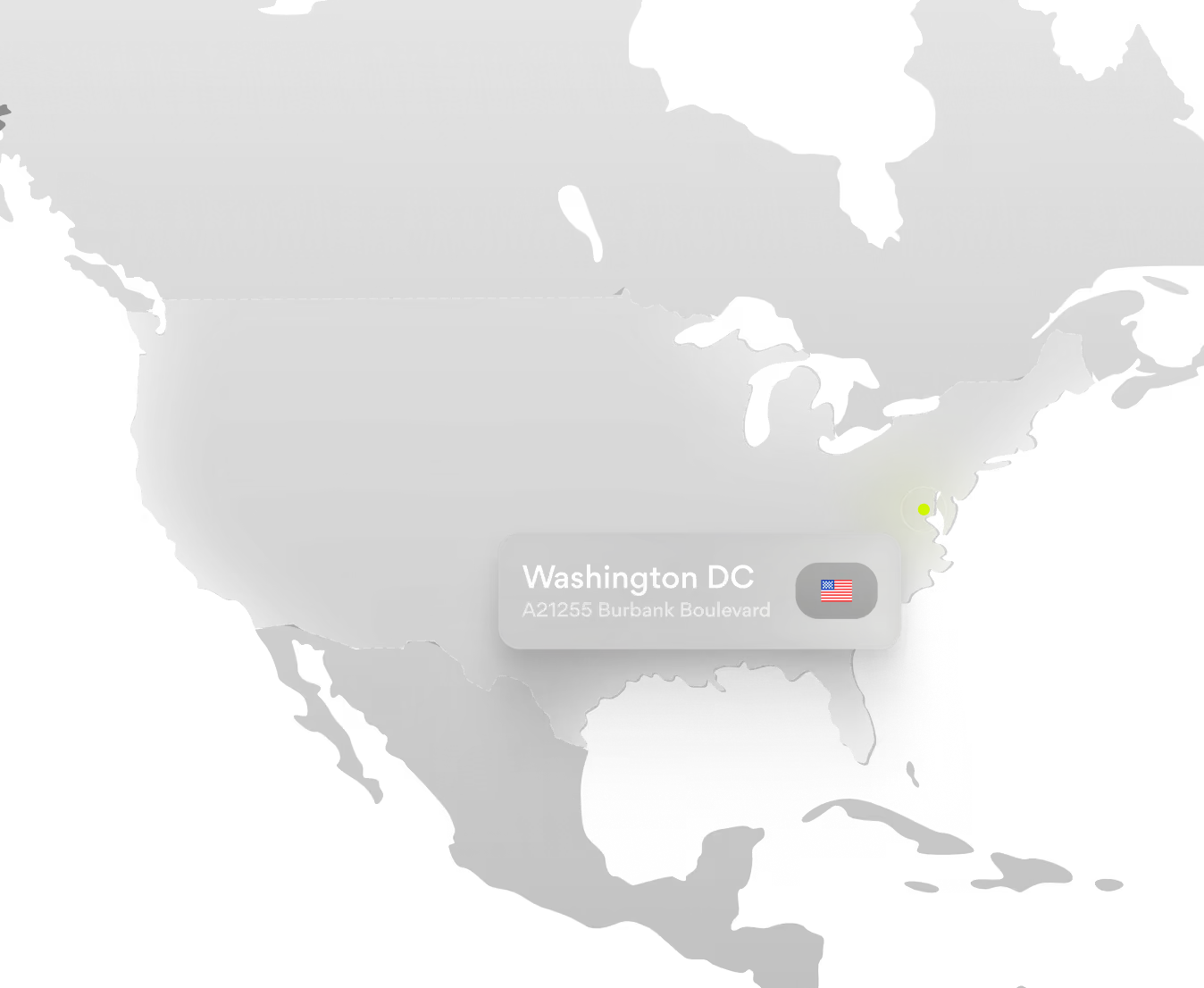
Our location
89+ Reviews
on Clutch
Top Rated Plus Agency
on Upwork
Top 50 Trending team
on Dribbble
Projects are Featured on Behance platform
FAQ on UI/UX design services in Washington DC
What does a UI/UX design company in Washington, DC do?
As a UI/UX design agency Washington DC companies work with, Arounda helps businesses improve existing digital experiences and design new ones from the ground up. We look at how the product supports user tasks, where the experience breaks down, and which design decisions can improve adoption, conversion, retention, or operational efficiency.
Our work can cover the full engagement or one specific part of it:
- UX research and product discovery: Our designers speak with stakeholders and users, review available data, test assumptions, and define the problems worth solving before design begins.
- Web and mobile UI/UX design: We design user flows, navigation, screen layouts, interactions, and responsive behavior around the actions people need to complete.
- Website design and redesign: Our team restructures content, improves hierarchy, and builds a more direct path from the first visit to inquiry, signup, purchase, or another priority action.
- UX/UI audit: We review the current experience to find where users lose context, hesitate, make errors, or leave an important flow.
- Design systems: To ensure that internal teams can ship new work consistently, we design reusable components, interaction rules, and practical documentation.
- Mobile app design: We account for smaller screens, touch behavior, interruptions, and the way people use mobile products throughout the day.
- Branding and visual identity: We develop the visual language behind the company, including typography, color, logo design, illustration, and brand guidelines.
- Web and MVP development: Our developers build approved designs with ongoing input from the design team, which helps the implemented experience stay true to the original decisions.
Arounda has worked on 500+ digital products, websites, and platforms. That experience helps us recognize common structural problems early, understand complex workflows faster, and recommend work based on the company's actual situation rather than a preset package.
How do you measure the success of a design project?
We measure success through the business and user metrics connected to the part of the experience we are changing. As a UX design agency Washington DC companies work with, Arounda defines those metrics before design begins, so the team knows what improvement should look like and how to evaluate it after launch.
Depending on the project, we track:
Business performance
- Conversion rates
- Lead generation and signups
- Revenue-related metrics
- Operational costs
Product performance
- Feature adoption
- Task completion
- Navigation speed
- Time spent on key actions
User experience
- Satisfaction scores
- Product comprehension
- Content readability
- Retention and repeat use
Our completed projects show how these metrics connect to specific design decisions.
- PIIFUND focused on first-time users completing banking, loan, insurance, and KYC tasks with less confusion. The redesigned flows led to 42% fewer errors, 31% faster onboarding, an 87% task completion rate, and an 84% mobile usability score.
- The most difficult part of shopping in NetGet's crowded marketplace was locating the correct products. A 53% increase in brand memory, a 45% boost in usability, a 41% increase in content readability, and a 55% improvement in navigation speed were all results of the redesign.
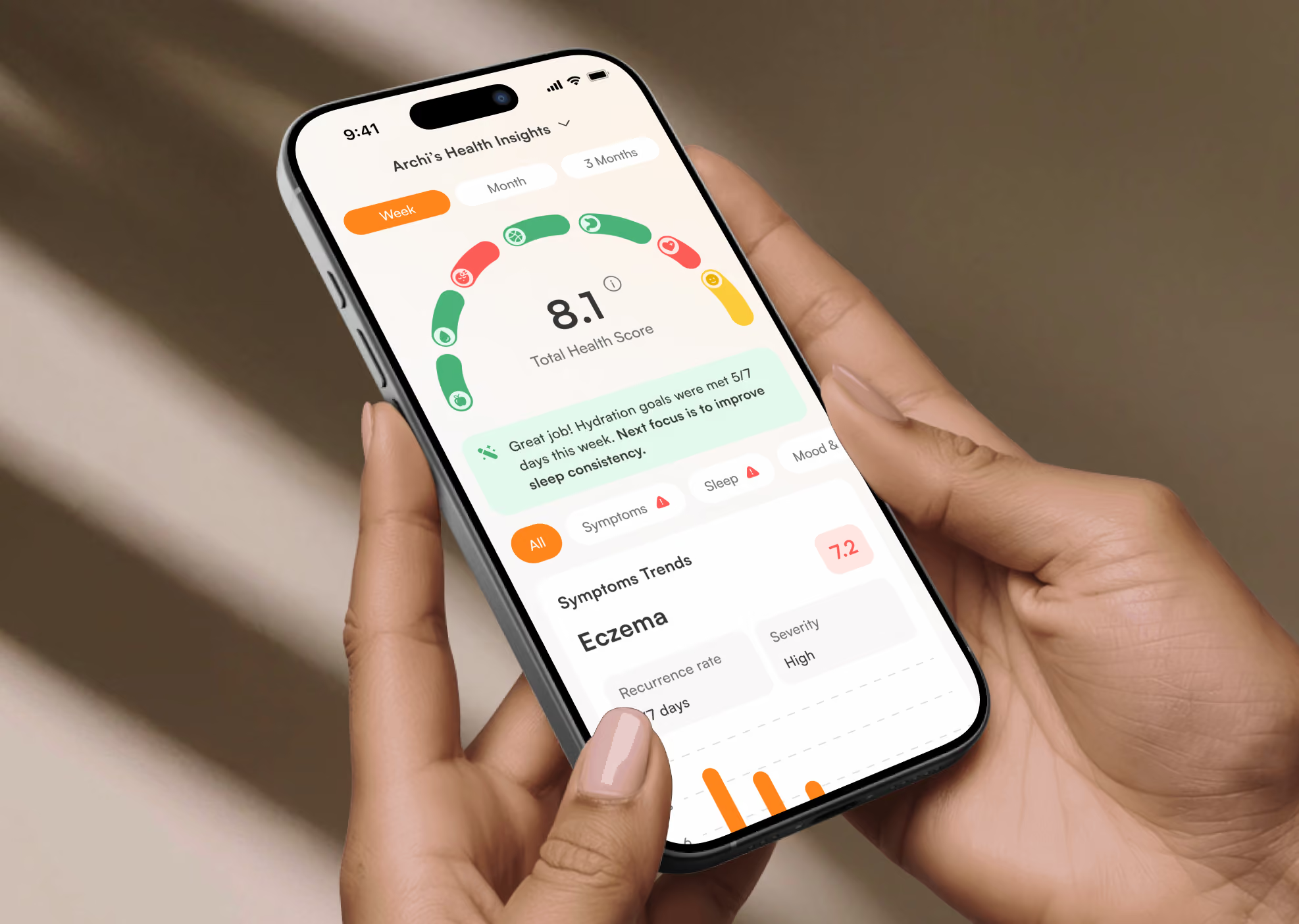
- A dense healthcare dashboard created a different challenge for Sellution. Users could locate primary vitals in 0.8 seconds and understand key health metrics three times sooner. Thirty-day retention reached 62%, supported by a design system with 120+ reusable components.
Examining the product's post-release performance, we find out where users are still hesitant and how well internal teams can add new features without affecting the experience. With these findings in hand, we can refine the design and focus our future work.
What is your approach to product redesign for established companies?
Years of feature releases leave behind extra steps, overlapping patterns, and workflows that don't match how the business operates. As a UX design agency in Washington DC, Arounda studies the current experience before deciding what should change.
Our redesign process typically covers four areas:
- User friction: Analytics, help desk inquiries, and session behavior show when users pause, make mistakes, or give up on crucial tasks.
- Product structure: There may be a great deal of supplementary logic underlying role-based access and navigation. We simplify such connections before we refine the user interface.
- Interface decisions: Layouts, hierarchy, interaction states, and responsive behavior change where they can reduce effort or make the next action easier to understand.
- Future releases: A stronger design system gives internal teams reusable patterns for adding features with less rework and fewer inconsistencies.
Familiar interactions stay when they still serve users well. The redesigned experience should feel easier from the first session and give the company a more reliable structure for future releases.
How do you handle design decisions when stakeholders disagree?
Disagreement usually means each stakeholder sees a different risk. As a UX design company Washington DC teams work with, Arounda helps the group define the decision in terms of product impact.
- First, we identify the concern behind each position. A proposed change may affect delivery time, user behavior, or a key business metric. Making the underlying concern explicit keeps the discussion focused on the product.
- Next, we review the evidence available. A possible direction may be backed up by research results. Product information can show an alternative problem. We need technical input to figure out what the team can build and keep up with in the current scope.
- When the team needs more information to choose a direction, we test both options. By having users go through the identical process in every prototype, we can easily compare their levels of understanding, mistakes, and completion. Arounda makes a recommendation based on the results and explains the decision's implications for development.
The final decision includes written reasoning, so the team can move forward without reopening the same discussion later.
What does the onboarding process look like when starting a new project in Washington, DC?
The first step is a working session focused on the product goal, current constraints, and the decisions the project needs to support. As a UX design firm Washington DC companies work with, Arounda uses this session to define scope, responsibilities, deliverables, and the approval process.
Project setup follows right after:
- Team and ownership: We put together a team of designers for the job and introduce the project manager who is in charge of getting it done.
- Shared workspace: Throughout the project, your team has access to the Figma files, documentation, and communication channels.
- Product context: Existing designs, analytics, research, and technical documentation help us understand what has already been tested or built.
- Feedback process: Review dates and decision owners are agreed on early, which keeps approvals moving and prevents conflicting input.
The amount of product context that already exists determines the following step. Some teams jump right into thinking about user flows or interfaces. Sometimes, prior to beginning design, an audit, interviews with stakeholders, or discovery work is necessary.
Most projects produce their first tangible output within one to two weeks. This can be an audit summary, an updated sitemap, wireframes, or an initial UI direction.Teams can also begin with a free three-day trial on a real design task before committing to a full engagement.
How do you ensure design consistency across platforms and touchpoints?
As a UX UI design agency Washington DC companies work with, Arounda creates one shared system for the product, website, and mobile experience.
It defines:
- How buttons, forms, and navigation should work
- How layouts adjust across screen sizes
- Which visual rules stay consistent across product and marketing pages
- How new screens should use existing patterns
Using the same Figma library as the design team, developers can collaborate on states and responsive behavior with practical notes. To further aid in the early detection of component mismatches or interface difficulties, our designers also evaluate important screens during development.
What engagement model works best for long-term product teams?
Long-term work benefits from designers who stay close to the roadmap and carry product context from one release to the next.
- Dedicated product design team. Choose this model when design is part of the ongoing roadmap. The team supports planning, feature work, UX improvements, design system updates, and handoff throughout each sprint. Arounda works much like an internal design team with continuous ownership.
- Design team extension. This works better when your company already has design or product leadership and needs added capacity in one area. An Arounda specialist joins the existing workflow and takes ownership of a defined scope, such as onboarding, a mobile app, an audit, or a new feature.
How do you collaborate with in-house design or development teams?
Arounda joins the way your team already works and takes ownership of a clearly defined part of the product.
- With in-house designers. We can support active feature work, improve complex flows, strengthen the design system, or lead a separate product area.
- With developers. Our team prepares implementation-ready Figma files, documents key states, and stays available during development to answer questions or review the build.
Depending on how you do things, we can join sprint planning, async reviews, backlog discussions, and handoff calls. All teams, including product, design, and engineering, are working from the same page thanks to collaborative tools like project boards and shared files that illustrate decisions.