
Global Branding in Enterprise SaaS and Fintech with Unified Identity


74% of consumers choose brands that reflect their needs and point of view. This expectation creates pressure on companies as they expand across markets. Each new region introduces different requirements, and a global brand must stay recognizable while sounding relevant locally. Strong global branding helps maintain this balance across product, content, and experience. This challenge defines modern global brand building. Arounda team prepared this guide to show how to handle it.
Article Key Takeaways
This guide explains how global branding strategies work in enterprise SaaS and fintech:
- How companies keep one brand identity across markets with different regulatory and cultural requirements
- Expert thoughts from Vlad Gavriluk, CEO & Founder, and Alona Deeva, Lead Brand & Marketing Designer, on strategic and execution-level decisions
- Tips and industry insights from the Arounda team based on real projects and market experience
- What breaks consistency across product, marketing, and sales during global expansion
- Real examples from SaaS and fintech that show how global brands scale without losing clarity
Why Generic Global Branding Frameworks Fail
Expansion exposes gaps in brand systems that were built for simple structures. Enterprise SaaS and fintech operate under regulation, multiple stakeholders, and constant product updates. Each market introduces changes in messaging, flows, and compliance layers. These adjustments accumulate and create inconsistent outputs across regions. This pattern breaks alignment during global brand building.
How to fix it:
Enterprise teams need a system that accounts for these variables. Define fixed elements such as positioning, tone, and core design logic. Set clear rules for local adaptation. Run regular audits across markets to detect drift early and keep the brand aligned.
What Makes SaaS and Fintech Branding Different
Global branding for enterprises already involves long sales cycles, layered decision-making, and high expectations for trust. SaaS and fintech add another level of complexity. Product logic changes faster, regulation shapes communication, and regional expansion affects both onboarding and positioning. Global brand development for SaaS and fintech must also account for compliance, product experience, and market-specific expectations.
Regulated markets that require brand adaptation
Regional expansion brings legal and operational limits that affect how the brand appears in each market.
Fintech products face licensing rules, disclosure requirements, and restrictions on financial claims. SaaS companies working with sensitive data face local expectations around privacy, security, and procurement language. These conditions shape global brand building at the message and experience level.
Arounda tip: Build a market-entry content layer before launch. Include approved claims, restricted phrases, required trust signals, and UI elements that cannot change. This step gives local teams a clear boundary and reduces risky improvisation.
Multiple buyer personas per market
Regional growth rarely means one buyer with one priority. Enterprise SaaS and fintech brands speak to procurement, operations, compliance, product leaders, and end users at the same time. Each group reads value through a different lens, and this split becomes sharper across markets.
Arounda tip: Create a persona-message matrix for each target market. Match every buyer group with its main concern, proof point, and preferred wording. Then check product pages, sales materials, and demos against this matrix. This process reduces message drift across regions.
An example of how multiple personas affect branding appears in Arounda's work with WordPress. The platform serves different user groups across products, which has created fragmented communication across marketing assets. WordPress approached Arounda to improve how its products present value to each audience while keeping a consistent structure.
Our team worked on product landing pages, social media content, and marketing materials for different WordPress solutions. We aligned messaging with each user group and built a system that maintains consistency across all touchpoints.

This work led to measurable results:
- Engagement rate reached 5%
- Traffic increased by 22%
- Customer retention doubled
- Bounce rate dropped by 20%
Product velocity that outpaces brand consistency
Fast release cycles create visible gaps between the product and the rest of the brand system. New features, revised flows, and updated use cases reach the market before brand assets catch up.
The result affects trust. Messaging starts lagging behind product reality, and global brand building loses coherence across touchpoints. Strong brand identity needs a system that can move at product speed.
Arounda tip: Connect release management to brand review. Add one checkpoint before every major launch. Review naming, UX copy, visuals, and sales messaging together. This step keeps product changes aligned with the brand before inconsistencies spread.
The Core Tension in Global Brand Strategy
Expansion introduces conflicting requirements across markets. Each region demands local adaptation, while the brand must stay consistent across all touchpoints. These forces create pressure on global branding strategies and expose gaps in the system.
Consistency that builds enterprise trust
Buyers face conflicting signals across product, pricing, and service information. This friction slows decisions and weakens confidence. 40% of consumers now spend more time verifying brand information than five years ago, which increases pressure on global branding.
What breaks consistency:
- Different product descriptions across regions
- Misaligned pricing logic and offer structure
- Conflicting value propositions in sales and marketing materials
Arounda suggests: Run a UX audit across key markets and compare product pages, pricing logic, and messaging side by side. Identify where information conflicts and fix structure, wording, and hierarchy to restore trust.
Flexibility that survives local compliance
Regulation forces teams to adjust messaging, flows, and disclosures in each market. These changes affect how the brand appears and create pressure on global brand management within a single global brand strategy.
What breaks consistency:
- Local changes to claims and product positioning
- Additional disclosures that alter message clarity
- Region-specific flows that shift user experience
Arounda tip: Define a compliance-ready content layer for each market. Include approved claims, restricted language, and required disclosures. Connect this layer to brand guidelines so local teams adapt safely without changing core elements.
Global Brand Development Across Market Entry Stages
Pressure on the brand increases at each stage as new markets add constraints and variations. Early decisions shape how stable the system remains during expansion, since gaps at the start create inconsistencies that spread across regions and grow harder to fix over time.
Arounda suggests:
- Define positioning, tone, and core messaging as fixed elements
- Create approved claims and restricted wording for each market
- Build design rules and templates that teams reuse across regions
- Connect brand assets to product, marketing, and legal workflows
The Three Brand Models Enterprise SaaS Companies Use Globally
Global expansion forces companies to choose how the brand scales across markets and products. Teams face trade-offs between control, flexibility, and speed of rollout. Different markets, products, and acquisition paths create conflicting requirements that a single approach cannot cover. Each model defines how these constraints are managed in practice. The right global brand implementation depends on structure, growth model, and acquisition strategy.
Monolithic brand with regional execution
One brand stays consistent across all markets, and local teams adapt execution within defined rules. This model works for companies that need strong recognition and clear positioning across regions. It requires strict control over messaging, UX, and visual identity to keep global branding stable.
Where it works:
- Single-core product with consistent value across markets
- Strong central brand team with clear ownership
- Limited need for product or naming variation
Arounda suggests: Build a strict design system and content framework. Define what cannot change and document how local teams adapt language, examples, and compliance layers.
Master brand with local sub-brands
A single brand starts losing clarity once products, markets, and audiences diverge. Teams need a structure that keeps trust at the top level and allows precise positioning below. This model supports global brand development in companies that scale across segments and markets. It often appears after partial rebranding, when the core identity stays stable, but new layers are added for clarity.
Where it fits and why:
- Multiple products target different use cases and require distinct messaging → sub-brands clarify value without diluting the master brand
- Regional markets interpret the same product differently → sub-brands adjust positioning to local expectations
- Expansion into new verticals introduces unfamiliar audiences → sub-brands create relevance while the master brand carries trust
This model performs better than a monolithic brand in complex product environments. It avoids overloaded messaging and keeps each offer clear for its audience.
Arounda tip: Define naming logic and message hierarchy before launching sub-brands. Map how each sub-brand connects to the master brand and where variation is allowed. This prevents overlap and keeps positioning clear across markets.
Portfolio approach for acquired products
Acquired products bring their own users, positioning, and recognition. Forced alignment under one brand can break trust and reduce retention. A portfolio model keeps these brands independent and connects them at the ecosystem level.
Where it fits and why:
- Acquisitions include strong brands with existing market trust → keeping identity preserves user confidence
- Products serve unrelated audiences or industries → separate brands prevent confusion
- Integration speed matters after acquisition → portfolio model avoids delays caused by full rebranding
Arounda tip: Align critical experience layers across products. Standardize navigation, onboarding patterns, and support logic. Keep brands independent, but make the ecosystem feel connected where users interact with multiple products.
"The logo is the primary anchor of recognition, supported by a cohesive system of typography, color, patterns, and illustration that ensures consistency across the portfolio.
When a product already has strong brand equity, the focus is on preserving its distinctiveness while connecting it to the broader ecosystem through shared principles rather than identical visuals."
Alyona Deeva Lead Brand & Marketing Designer
Global Branding Examples From SaaS and Fintech
Global expansion forces products to follow new market rules and adjust messaging, flows, and communication. These changes affect consistency and shape how users perceive the product experience across regions, which puts pressure on global branding. Strong teams react quickly and rely on clear guidelines to keep decisions aligned. These global branding examples show how companies handle this pressure and maintain clarity at scale.
How Stripe maintained clarity across 46 countries
Stripe is a fintech company that provides payment infrastructure and financial tools for businesses worldwide. The company operates across dozens of markets, which makes consistency a critical part of its global brand strategy.
The platform maintains clarity by keeping its core message stable while adapting execution at the product and documentation level. Their brand focuses on developers and businesses, so communication stays precise and consistent across regions. This approach makes Stripe one of the strongest global brand examples in fintech.
What Stripe does right:
- Keeps one clear value proposition across all markets and products
- Uses consistent language and tone across documentation, product, and marketing
- Aligns product UX, APIs, and content into one system
- Adapts only compliance-related elements without changing core messaging

This approach reduces friction for global users and builds trust through a predictable experience.
Arounda observation: Stripe treats brand, product, and documentation as one system. This structure prevents inconsistencies during scaling and keeps communication clear across markets.
How to achieve similar clarity:
Define one source of truth for messaging and product language. Align UX copy, documentation, and marketing into a single system before scaling. Limit local changes to compliance and required adaptations, while keeping the core message stable across markets.
How Wise reframed without losing credibility
Wise is a fintech company that provides international money transfers and multi-currency accounts. The company operated for years under the name TransferWise, which clearly described the product but limited positioning as the offering expanded. This shift required careful global brand development to support growth without losing trust.
Wise reframed its brand by simplifying the name and broadening the message while keeping core signals intact. The company moved from a functional description to a brand that reflects a wider financial platform. At the same time, it preserved transparency, pricing clarity, and product logic that users already trusted.
What Wise did right:
- Changed the name without changing the core value users rely on
- Kept pricing transparency and product clarity consistent across markets
- Updated messaging to reflect a broader product scope
- Maintained the same tone and communication style across regions
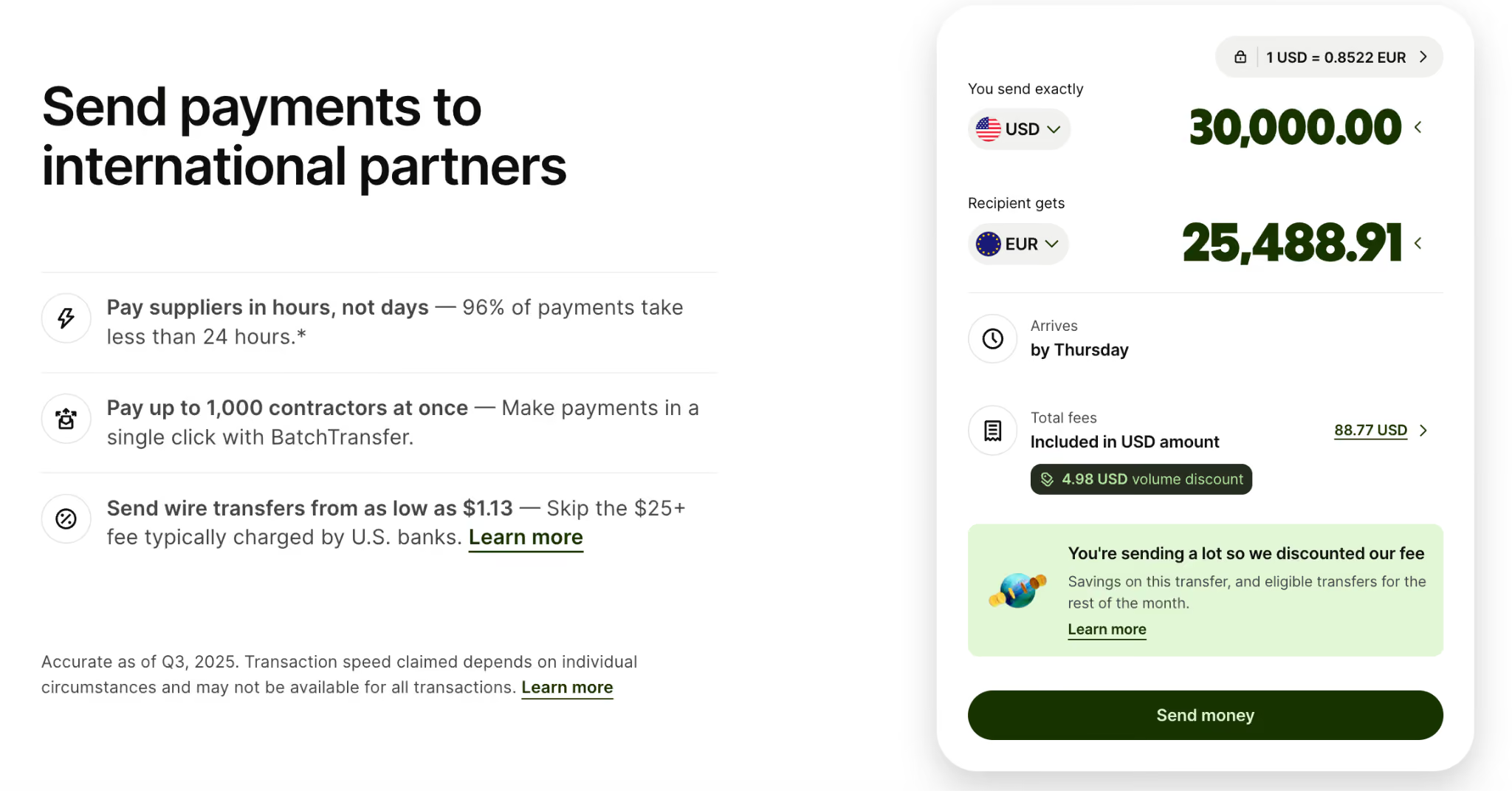
This approach allowed Wise to expand perception without breaking existing credibility.
Arounda observation: Wise aligned rebranding with product evolution. The brand change reflected real capabilities instead of leading them, which kept user trust stable.
How to achieve a similar outcome:
Start with product reality and define what must remain unchanged for users. Keep core value, tone, and trust signals stable during rebranding. Expand messaging only after the product supports the new positioning.
What Salesforce had to rebuild regionally
Salesforce is an enterprise SaaS company that provides CRM and cloud-based solutions. The company operates across markets and industries, which creates pressure on consistency as products, acquisitions, and regional needs expand. This scale requires strong global brand management to keep alignment across regions.
The platform faced challenges as regional teams adapted messaging, product positioning, and customer experience to local markets. Over time, these variations created gaps between regions and reduced clarity across the ecosystem. The company responded by rebuilding parts of its brand system to restore consistency and improve coordination.
What Salesforce had to fix:
- Misaligned messaging across regions and product lines
- Inconsistent experience across product interfaces and marketing assets
- Fragmented positioning after multiple acquisitions
- Different interpretations of brand guidelines across teams
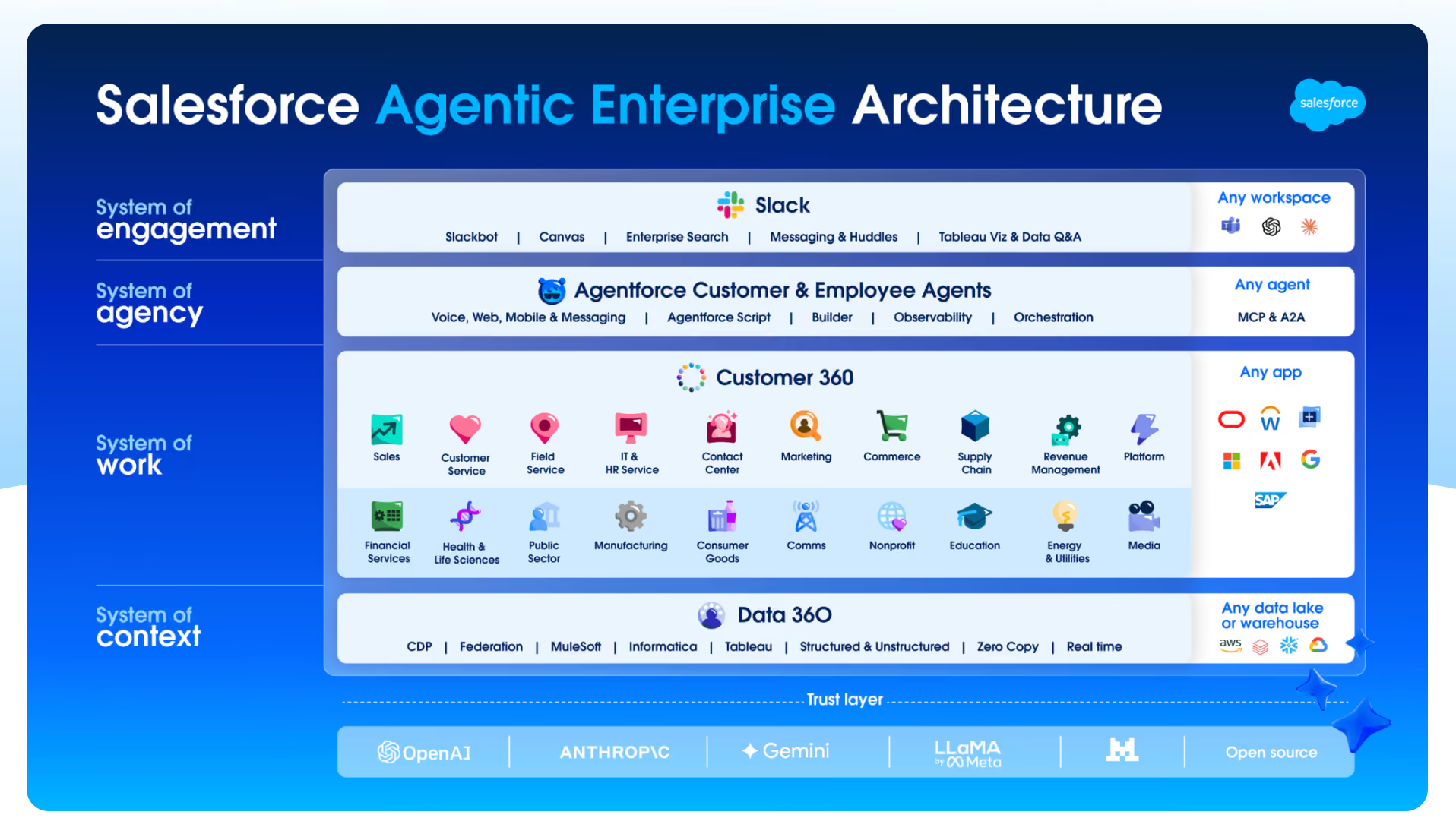
This effort helped Salesforce restore a unified structure while still allowing regional adaptation.
Arounda's observation: Salesforce shows how fast growth and acquisitions can break alignment without strong control systems. Regional flexibility needs clear boundaries to prevent fragmentation.
How to approach this at scale:
Set global rules for messaging, UX patterns, and product naming. Introduce shared systems that teams must follow across regions. Review regional outputs regularly and correct inconsistencies before they spread.
How FundedIQ built a unified fintech brand system
FundedIQ is a prop trading platform that evaluates traders based on performance data and structured assessment rules. The product requires trust, clarity, and precision across every touchpoint, which made consistency critical for scaling. This project focused on building a system that supports global brand management across product, marketing, and offline channels.
FundedIQ approached Arounda to create a brand identity and UI/UX that reflects analytical depth without relying on typical fintech visuals. The challenge required balancing technical precision with accessibility while keeping the experience clear for different user levels. Our team delivered a unified system that connects product, landing pages, social media, and print into one coherent structure.
What FundedIQ does right:
- Uses one visual system across product, marketing, and offline materials
- Aligns UI structure, typography, and color logic into a consistent experience
- Keeps messaging focused on clarity, discipline, and measurable performance
- Applies the same design principles across web, mobile, and content formats

Arounda observation: FundedIQ treats brand identity as part of the product system. Visual decisions support user flow and help traders move through complex steps without confusion.
How to build a similar system:
Start with a clear visual and structural logic that connects product and marketing. Define grids, typography, and interaction patterns as one system. Apply these rules across all channels so users experience the same structure at every step.
Results:
- 1.8 min average time to first action
- 37% drop in onboarding abandonment
- 3x faster content production
- 89% brand recall rate
Where Global Brand Management Breaks Down
Teams introduce changes in product flows, pricing logic, and messaging across different regions. These updates move without coordination and create gaps between touchpoints. Users face conflicting signals across journeys and lose clarity during evaluation.
Where brand management breaks down:
- Product releases introduce new terms that never reach marketing or sales
- Regional teams rewrite value propositions instead of adapting delivery
- Pricing and packaging differ across markets without a shared logic
- Acquired products keep separate UX and naming without integration rules
- Teams rely on outdated assets that no longer match the product
Here's what our CEO advises leaders to do to avoid breakdowns:
“I see this problem when regional teams adjust pricing, claims, or onboarding flows to hit short-term targets. These changes improve local metrics and quietly break the overall product story. A few months later, the same product looks and feels different across markets, and trust drops during evaluation.
Fix it early. Review regional changes every two weeks at the leadership level. Check what changed in messaging, pricing, and UX across markets, and roll back anything that breaks consistency. This habit keeps global brand development under control as you scale.”
Vlad Gavriluk, CEO & Founder at Arounda
Global Brand Consistency Across Touchpoints
Gaps appear in the handoffs between touchpoints. A landing page frames value one way, onboarding asks for different inputs, and pricing introduces new logic. Users reconcile these differences on their own and lose confidence during critical decisions.
Strong global brand implementation defines how information flows across these moments. Teams need shared rules for terminology, data structure, and interaction logic that persist from first touch to product use.
Signals Your Global Brand Is Losing Coherence
Certain signals show that the brand starts losing alignment across markets and touchpoints:
- Product, marketing, and sales describe different versions of the same value
- Pricing logic changes across regions without a clear explanation
- New features introduce terms that do not match the existing product language
- Regional teams adjust messaging beyond local adaptation
- Users ask the same clarifying questions at different stages of the journey
These signals often stay unnoticed inside the company. Teams focus on separate parts of the product and lose a full view of how everything connects. As a result, it becomes harder to catch where global brand implementation starts breaking down.
Our Arounda team has 10+ years of experience and has delivered 180+ projects for enterprise companies. This perspective helps us detect gaps that internal teams may overlook. Clients consistently rate our work 5.0 on Clutch.
We can help you identify what breaks your global brand system, connect product, messaging, and UX into one structure, and restore consistency across markets.
Final Thoughts
Global expansion can strengthen your brand and build trust across markets. Yet, one misstep can break clarity and push enterprise buyers away. Protect consistency across product, messaging, and UX at every stage. If you want your product to stay clear and trusted at scale, contact us, and we will help you build a system that supports it.



Table of contents







FAQ
Regulatory changes affect flows and messaging in each region. Strong brand management sets fixed rules for positioning, tone, and design. Local teams adapt only surface elements. регулярные audits show drift early and keep outputs aligned.
Expansion to a second regulated market creates conflicting requirements across teams. Each launch adds variations in messaging and product logic. Early formalization sets clear rules and prevents fragmentation before it spreads.
Brand management controls daily execution across assets and channels. Brand governance defines who approves changes and how decisions scale across regions. Governance protects consistency as the organization grows.
Local requirements push teams to adjust content and flows. A fixed core keeps positioning and tone stable. Teams change only language, examples, and compliance layers. Design systems enforce consistency across markets.
Teams launch fast and skip alignment with global standards. Assets get copied or rebuilt without shared rules. Messaging splits across regions and weakens trust. Early coordination and clear guidelines prevent this.


89+ Reviews
on Clutch

Top Rated Plus Agency
on Upwork

Top 50 Trending team
on Dribbble

Projects are Featured on Behance platform
