
Stages of Branding for Organizations With More Than One Decision Maker


A branding process becomes harder to manage once legal, leadership, and marketing shape decisions at the same time. Each change affects how the brand is perceived across markets and touchpoints, directly impacting trust.
61% of B2B marketers named building trust and credibility as the most important benefit of their content efforts, ranking it above engagement and lead generation.
This guide, prepared by the Arounda team, explains how to structure branding when multiple stakeholders are involved.
Article Key Takeaways
This guide explains what are the stages of the branding process in organizations where multiple stakeholders influence decisions and outcomes:
- How the brand creation process changes when legal, leadership, and marketing shape the same decisions across different stages
- Industry insights, practical advice, and real-life examples that make the branding process more useful in complex organizations
- Expert thoughts of Vlad Gavriluk (CEO & Founder at Arounda) on strategic brand decisions and risk signals, and Olena Obidovska (Brand/Graphic Designer) on design decisions, review processes, and creative alignment
- A structured view of each stage, common points where the process slows down, and how teams keep alignment across markets and departments.
Why Standard Branding Guides Assume the Wrong Reality
Most frameworks describe a branding process as a linear sequence with one decision maker and a clear path from strategy to execution. Large organizations operate differently. Leadership, legal, and marketing review the same decisions from different perspectives, which changes how each stage moves forward.
The stages of branding for large organizations with multiple decision makers rarely stay linear for long. One team approves the direction, another questions the wording, and a third reopens the discussion once the work reaches rollout.
Standard guides do not account for this structure. They explain the order of steps, but real branding work depends on decision ownership, review timing, and coordination between teams across the full process.
Who Is in the Room at Each Branding Stage
The same brand decision passes through different groups with different priorities. Each group interprets it through its own context, which gradually shifts the original meaning. A strong branding process controls how decisions move across teams, keeps criteria visible, and preserves intent from strategy to execution.
Stage 1 – Discovery and Strategic Alignment
This stage sets direction before any visual or messaging work begins. As the first step in brand building steps, it defines goals, constraints, and decision roles across teams. A structured branding design process at this point prevents conflicting inputs later and reduces the risk of rework across stages.
Why alignment takes longer than the brief suggests
A brief rarely captures how many decisions need validation across teams. Each stakeholder checks the same inputs through their own constraints, and the process slows down at every approval step.
- Leadership evaluates positioning against long-term strategy and risk
- Marketing checks how messaging will perform across channels
- Product teams review clarity in relation to actual features
- Legal validates claims, wording, and compliance details.
Arounda team suggests:
Start with a shared decision map. List key decisions, assign owners, and define approval criteria for each item. Record outcomes after every meeting in a single document used by all teams. This removes repeated discussions and keeps decisions consistent across stages.
When sales and marketing define the brand differently
Sales works with objections, pricing, and deal context. Marketing shapes perception through positioning and campaigns. A gap between these perspectives breaks consistency and complicates a branding process that works when legal marketing and leadership all have input. A clear branding design process keeps both sides aligned before rollout.
Where misalignment starts:
- Sales explains value through deal context, objections, and pricing logic
- Marketing defines value through positioning, messaging structure, and channels
- Teams use different terms to describe the same features and outcomes
- No shared source of approved language across teams
Arounda team suggests:
Use recorded sales calls and win/loss analysis as a source for core messaging. Select a fixed set of deals and extract arguments that influenced decisions. Turn these into approved language for positioning and communication.
Stage 2 – Brand Positioning Across Multiple Markets
Local adjustments to messaging, offers, and tone add variation to the branding process and make consistency harder to control.
This challenge sits at the core of brand building steps for companies operating across multiple markets and regions, where one idea must hold across different markets without losing clarity.
Where positioning starts to break:
- Regional teams rewrite core messages to match local campaigns
- Translations introduce meanings that were never approved
- Pricing models force different explanations of the same value
- Sales teams adjust positioning during deals without syncing with marketing
Arounda team suggests:
Create a single source of truth for positioning. Fix one core message with approved wording, then define allowed variations for pricing, market conditions, and audience. Limit edits outside this structure and require approval for any change that affects the core meaning.
Stage 3 – Visual Identity Under Committee Review
Positioning differences do not stay on the strategy level. They surface during visual work, as teams interpret the brand through design decisions. Each input changes layout, color, tone, or hierarchy and gradually shifts how the brand is perceived. This stage in the brand creation process defines whether those inputs turn into a coherent system or a set of inconsistent visuals
"The first review sets the pattern for all following decisions. Approve 3–4 evaluation points before any design review and use them for every decision. Anything outside these criteria should not affect the outcome."
Vlad Gavriluk, Founder & CEO at Arounda
How design by committee kills good creative
Visual work becomes unstable when different teams push the same concept in different directions. Marketing may ask for visuals that match campaign messaging. Product teams can push for clarity tied to features. Leadership may request a tone that feels safer or broader. Each request looks reasonable on its own, but together they pull the design away from a single direction and weaken the branding design process for organizations that cannot afford creative misalignment.
Where creative starts to lose direction:
- Marketing pushes visuals to match campaign messaging instead of the core concept
- Product teams request changes based on feature clarity without considering the system
- Leadership adjusts tone to reduce perceived risk
- Feedback is added in parallel without a single decision flow
- New changes appear in each round without resolving earlier ones
Arounda team suggests:
Define one decision owner for visual direction and fix the evaluation criteria before review. Check every comment against the core brand identity and remove changes that do not support it. Collect feedback in one place and approve updates in a single step.
What a structured creative review actually looks like
Design holds direction when every review follows the same logic. Teams evaluate the same version, use the same criteria, and see the same context before making changes.
What defines a structured review:
- One version is presented to all stakeholders at the same time
- Evaluation criteria are defined before the review and used in every comment
- Feedback is collected in one shared document with full context
- Each comment is tied to a specific goal, such as clarity or consistency
Arounda team suggests:
Create a review doc with three fixed sections: goals, criteria, and decision log. Limit each stakeholder to a set number of comments and require each comment to reference a criterion. Review all feedback in one session, approve changes, and move to the next version without reopening the same points.
A clear example of how structured decisions protect visual direction comes from our work with Kessoft, a consulting and software development company.
The client needed to replace an outdated website that no longer reflected its expertise or credibility. We approached this as a UI/UX design and rebranding project with a focus on clarity, consistency, and scalability across the entire product experience.
We built a custom design system with defined layouts, hierarchy, and visual rules. Every iteration followed fixed review criteria, which kept decisions aligned and prevented visual drift during feedback rounds.
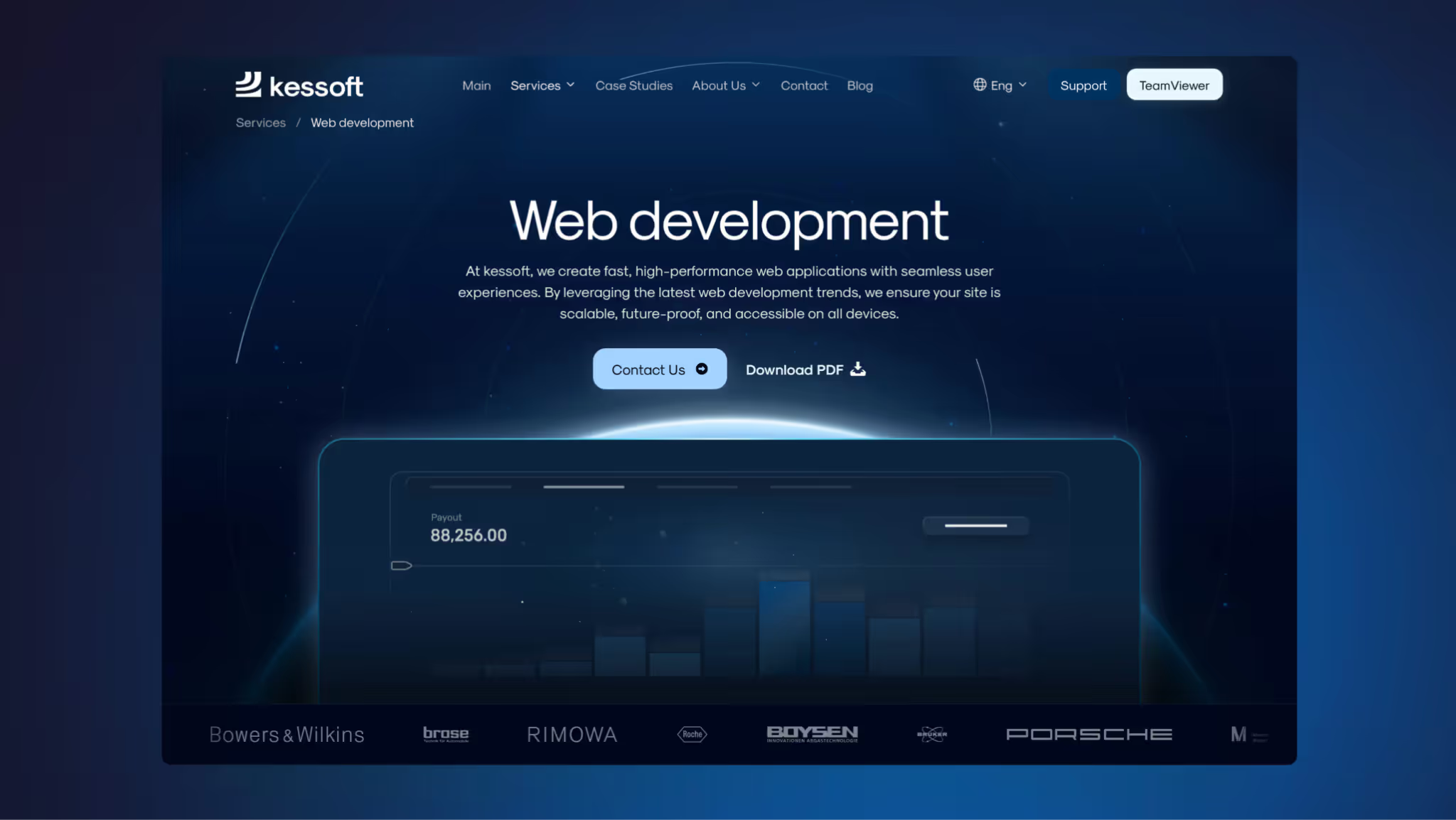
Results:
- +47% user engagement
- +38% faster task completion
- +29% higher conversion rate
Stage 4 – Internal Alignment Before External Launch
Teams prepare for launch while internal understanding still varies across departments. This stage in the brand creation process aligns messaging, visuals, and usage before the brand reaches users. A clear branding design process at this point prevents inconsistencies during rollout.
One of the key risks here is how teams interpret the brand differently in daily work. On this point, our expert designer notes:
“Internal alignment means the team not only agrees on the brand but applies it the same way in real work. Issues appear at the detail level, where design, marketing, and product interpret tone or visuals differently, even with shared guidelines.
I worked on a project where marketing used a more emotional tone while the product stayed technical, since teams relied on different materials. Before launch, I check for a single source of truth and whether teams can apply the brand consistently in practice.”
Olena Obidovska, Brand/Graphic Designer
Why internal rollout is the stage most organizations skip
40% of consumers spend more time verifying brand information than five years ago, comparing product details, pricing, and messaging across touchpoints before they trust what they see.
Internal rollout shapes this experience directly, since teams define how the product appears in decks, pages, and product flows, where differences in wording and logic start to surface.
These inconsistencies weaken the process of branding and grow in a brand creation process when internal teams and external agencies work together, where each group produces its own version of the same message.
Where internal rollout starts to fail:
- Teams use their own versions of messaging across materials
- Product, website, and sales content describe the same feature differently
- External partners work without access to updated materials
- New assets get created without shared review
- Differences remain until users encounter them
Arounda team suggests:
Test consistency through real touchpoints before launch. Compare one feature across a landing page, a sales deck, and the product interface. Align wording and logic across all three and fix mismatches before release.
What happens when employees hear about it last
52% of consumers stopped buying from a brand after a single bad product or service experience. A mismatch between what the brand promises and what teams deliver creates that experience.
Employees become the last link in the chain and define how the product is explained and supported. Late updates force teams to rely on previous materials and familiar wording, and this creates mixed signals across touchpoints.
Where issues start to surface:
- Teams improvise explanations during calls and demos
- Edge cases get handled differently across departments
- New features are explained without connection to the updated positioning
- Internal shortcuts replace agreed logic in real scenarios
Arounda team suggests:
Treat internal rollout as one of the final steps to branding, not a follow-up task. Run live scenario checks before launch, compare how different teams explain the same situation, and align responses in one session.
Stage 5 – Brand Launch Across Channels and Regions
At this point, the brand appears across websites, product interfaces, campaigns, and sales materials at the same time. This is one of the stages in brand development that defines how consistently the brand shows up when different teams and markets act in parallel.
The main challenge comes from scale. Each channel and region applies the brand in its own context, and small differences begin to appear once materials go live. Without control, these differences grow and affect how the brand is perceived.
Where the launch starts to break:
- Channels go live at different times with different versions of messaging
- Regional teams adjust content without shared validation
- Campaigns introduce new visual or tone variations
- Product, website, and marketing assets diverge in how they present the same features
- External partners apply the brand without full context
Arounda team suggests:
Teams push updates across channels at the same time, so different versions of the same message go live. Define one source version for each key touchpoint, release it first, and use it as a reference for other channels. Require teams to match it before publishing to keep messaging consistent.
Our work with Senzo, a Web3 crypto neobank, shows how a consistent brand system supports growth.
The team needed a branding system that works across product, marketing, and investor touchpoints within a tight timeline. The goal was to present one clear and trustworthy direction for both early adopters and a broader audience.
We delivered a full system, including logo, app icon, brand guidelines, social layouts, and print assets. Each element followed the same visual logic, which kept communication consistent across all touchpoints.
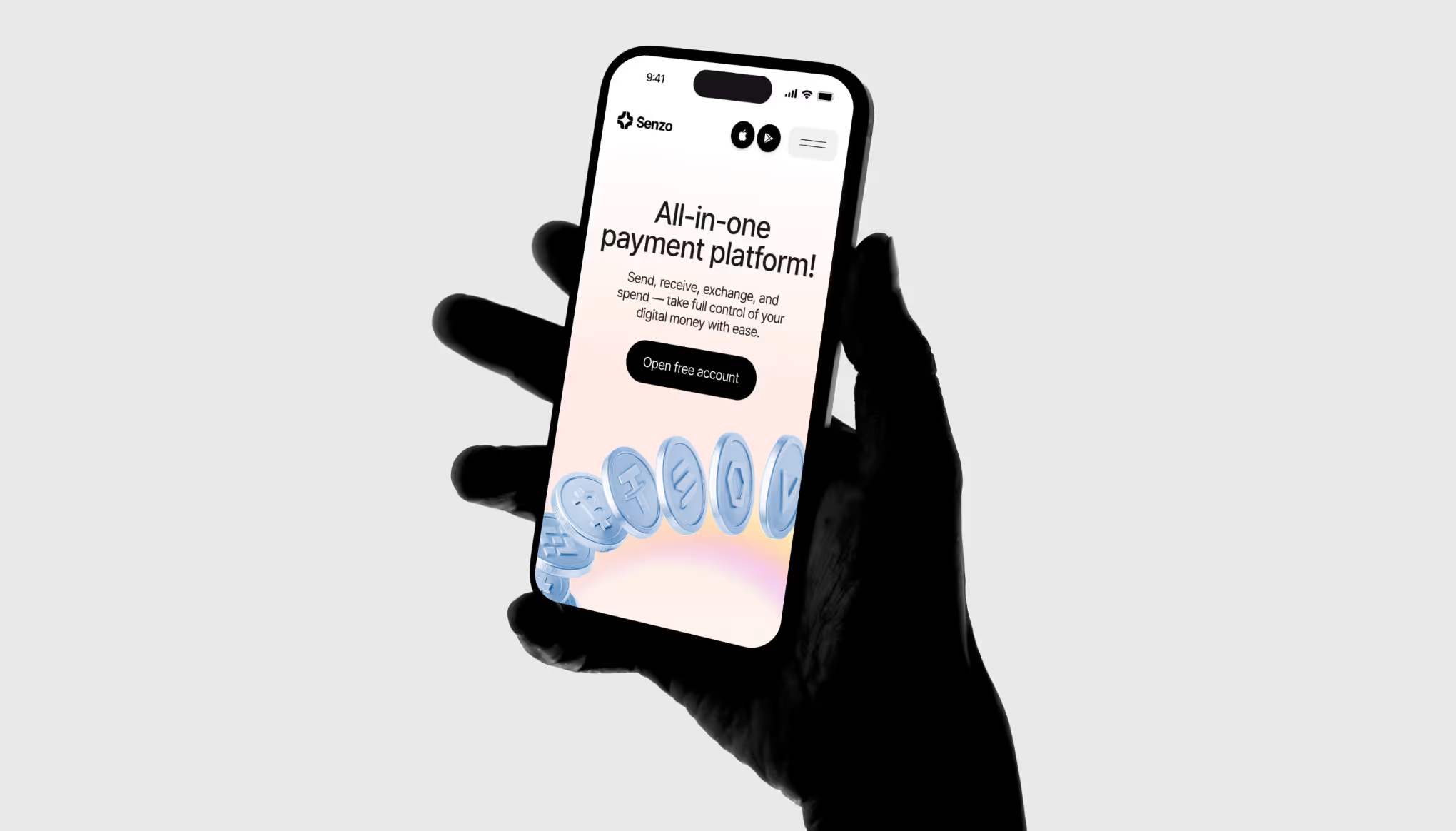
Results:
- +47% brand recognition
- +34% social media engagement
- +31% app download conversion
Stage 6 – Governance and Brand Management After Launch
This is the sixth and final stage in the Stages of Branding. It keeps the brand consistent as teams create new materials, release features, and expand into new markets. Governance supports continuity across the process of branding, defines ownership, and prevents fragmentation across product, marketing, and communication.
Who owns the brand when the agency relationship ends
A professional agency defines the brand, builds the system, and hands it over to the team. This is the moment when responsibility shifts. The question becomes practical: who owns decisions once the agency steps out?
Teams continue to update pages, launch campaigns, and adjust messaging. Without clear ownership, each team moves in its own direction, and the brand starts to change across touchpoints. These differences grow over time and affect consistency across the stages in brand development.
Where ownership starts to break:
- Several teams approve changes without a single decision owner
- Updates depend on the availability of specific people
- External partners continue work without clear authority
- Teams delay decisions due to unclear responsibility
Arounda team suggests:
When the agency hands over the brand, assign one internal owner with full authority over all updates. Route every change through this person, from messaging to visuals to new materials. This keeps decisions consistent and protects the brand as teams scale and evolve.
How brand guidelines become outdated faster than expected
Guidelines reflect a specific moment in the product and business. Teams move forward, release updates, and expand into new channels, while the documentation stays unchanged. This creates a gap in the process of branding, where real usage no longer matches the defined rules.
When guidelines start to lose relevance:
- New features appear without updated visual or messaging rules
- Teams create new patterns without adding them to documentation
- Campaigns introduce variations that stay outside the system
- External partners work from outdated versions of guidelines
Arounda team suggests:
Update guidelines through real usage. Review recent materials such as product screens, campaigns, and sales assets every few weeks. Add new patterns, remove outdated rules, and keep one shared version that teams use in daily work.
Where the Branding Process Most Commonly Stalls
Branding slows down in moments where teams move forward without noticing small shifts in decisions. One change seems harmless, then another appears in a different context, and over time, these changes stop matching each other. This is how gaps form between the stages of branding that start affecting the process as a whole.
If you start noticing these patterns in your product, the issue rarely sits at one stage. Small inconsistencies accumulate and begin to affect perception, decisions, and overall performance. Isolated fixes do not solve this, since the problem spreads across the system.
Our Arounda team can run a focused UX audit or lead a rebranding effort to identify these gaps, align decisions, and restore consistency across the process of branding.
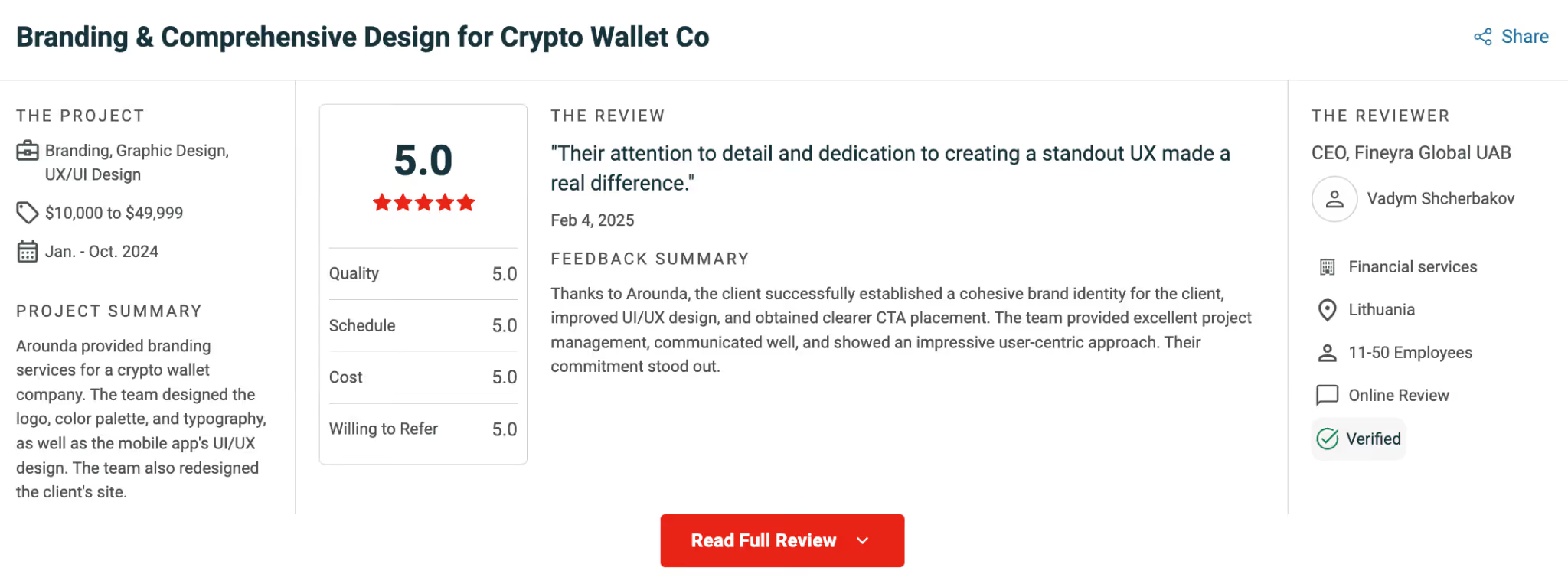
With our 10+ years of experience and 350+ completed projects across complex products and markets, we know how to turn these challenges into results. We work closely with each client and stay focused on real outcomes, which is reflected in our 5.0 rating on Clutch.
Final Thoughts
Brand consistency shifts across the Stages of Branding as teams make decisions in different contexts and at different speeds, and these small gaps grow into issues that affect trust, clarity, and performance.
Arounda works with complex products to align branding, UX, and real usage, helping teams build systems that stay consistent and support growth. Contact us to make your brand clearer, stronger, and easier to scale.



Table of contents







FAQ
A typical process includes discovery, positioning, visual identity, internal rollout, launch, and governance. In companies with layered approval structures, the stages of brand development for companies with complex stakeholder structures take longer due to alignment cycles between leadership, legal, and regional teams. Each stage may range from a few weeks to several months, depending on decision speed, number of stakeholders, and market scope.
Branding slows down when feedback comes without limits. Teams move faster once decision roles are fixed and each round has a clear goal. In large organizations, the process of branding stays manageable only when leadership agrees on what can be changed and what stays locked after approval. Without this, the same discussions repeat, and timelines stretch.
Brand creation starts from zero: new positioning, new structure, new identity. A refresh works with what already exists and adjusts parts that no longer fit current goals or markets. The choice depends on how much of the brand still holds up under real use, not on how outdated it looks visually.
External teams work best when they join before key decisions are locked. Early involvement helps avoid situations where strategy and design move in different directions. In complex environments, brand building steps often require someone outside the organization to connect inputs from leadership, marketing, and regional teams into one system that can actually be executed.
After launch, the work shifts from creation to control. Someone inside the company needs to own updates, approve changes, and keep materials aligned across teams. Without this layer, small changes accumulate, and the brand drifts. Governance keeps decisions consistent when new markets, products, or teams enter the picture.


89+ Reviews
on Clutch

Top Rated Plus Agency
on Upwork

Top 50 Trending team
on Dribbble

Projects are Featured on Behance platform
